Alcoa in Iceland
 
Environmental FAQs - Overview

How did Alcoa become involved in the project?
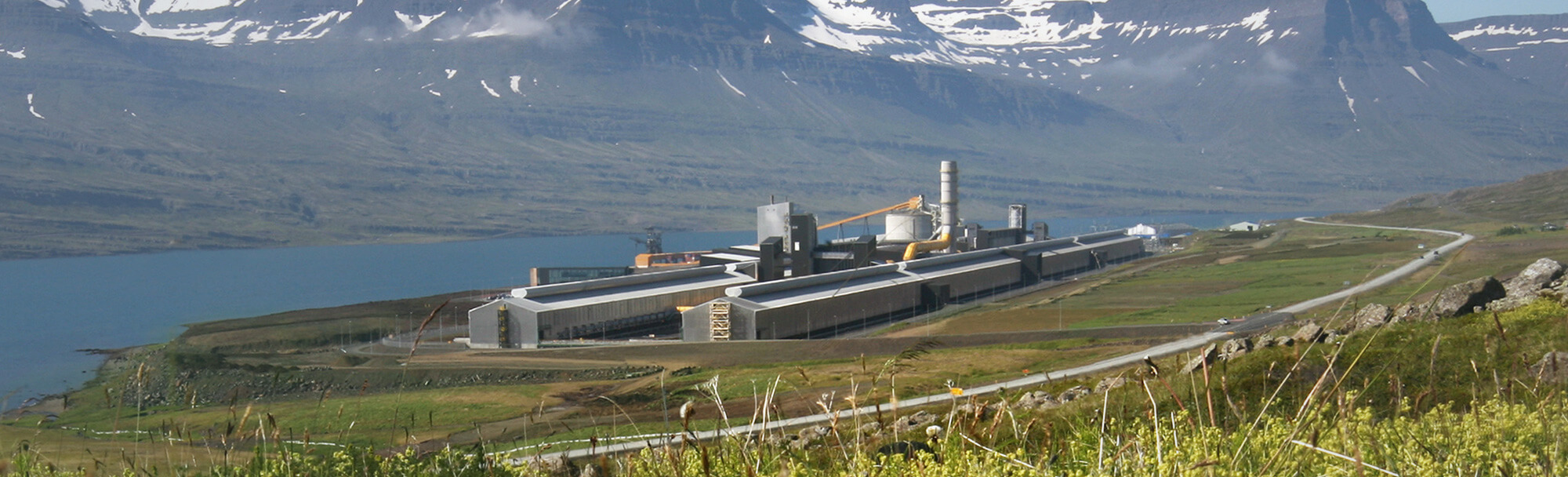
The Icelandic government has been planning industrial development in East Iceland for decades. Another aluminum producer first explored the feasibility of establishing an aluminum plant at Reydarfjordur in 1975, and then again in 2000, but delayed the project after it made a significant acquisition elsewhere. Early in 2002, the government invited Alcoa to participate. In July of 2002, a Memorandum of Understanding was signed between the Icelandic government, Iceland's national power company and Alcoa. In March of 2003, Iceland's Environmental Agency issued an Operating Permit for Alcoa's Fjarðaál primary aluminum smelter. (Read detailed history at http://www.lv.is)

What is the relationship between Fjarðaál and the Karahnjukar hydropower project?
The Karahnjukar hydropower station in the Icelandic highlands is being designed and built by Landsvirkjun, Iceland's national power company. When it takes delivery of energy from Landsvirkjun in 2007, Alcoa's aluminum facility will be the first and major customer for the power generated by the project.

Why does Alcoa want to build an aluminum facility in Iceland?
From an environmental perspective, this plant will enable Alcoa to rely less on fossil fuels, which are a major source of carbon dioxide emissions. Globally, Alcoa is working to replace fossil-fuel-based power with natural, renewable energy sources that will help the company lower its CO2 emissions, thus contributing to the fight against global warming. (Find out more at http://www.alcoa.com/global/en/environment/climate_change.asp)

Do the people of Iceland support these projects?
Both the hydroelectric project and Alcoa's Fjarðaál aluminum facility are supported by a majority of the Icelandic people, along with a majority of the elected representatives in Althingi (the Icelandic Parliament) In March of 2003, Althingi approved legislation that will allow the conclusion of a contract to construct Fjarðaál. The vote passed by a strong majority: 41 votes in favor, 9 votes in opposition and one abstention. (Find out more at http://www.alcoa.com/iceland/en/news/polls.asp)

This support is based on recognition that Fjarðaál will help diversify and strengthen the Icelandic economy. In particular, it will help strengthen the economy in East Iceland where traditional industries such as fishing and agriculture employ fewer people than in the past. The aluminum facility will create about 750 jobs in East Iceland.

There continues to be, however, opposition from certain groups. (Find out more at http://www.inca.is/)

Although there will be many environmental challenges involved in the construction and operation of the Fjarðaál aluminum facility, Alcoa is doing its best to minimize them.

If we're invited to do so we will lend Alcoa expertise to the environmental management activities that will follow the construction of the hydroelectric project. Alcoa has earned global recognition for its land rehabilitation and revegetation activities in Australia, South America and North America. The company also has a sound reputation for working collaboratively with industry, government, landholders and members of the community in those regions.

Alcoa has spoken with representatives of the major groups that oppose this development. The company continues to welcome any ideas they offer for ensuring that economic and social development and environmental protection go hand in hand as the project proceeds.

Didn't the Iceland Planning Agency originally oppose this project?
The Iceland Planning Agency originally opposed the first environmental impact assessment for the hydro proposal by Iceland's national power company because of, as the Minister for the Environment said, 'considerable environmental impact along with insufficient information on individual factors of the construction and its environmental effects.'*

Landsvirkjun appealed against the Agency ruling as did the Regional Association of Local Authorities in Eastern Iceland, Fjardabyggd, the eastern community where Fjarðaál is to be built, labor organizations in East Iceland and a number of individuals. Under Icelandic law it is possible to appeal a Planning Agency ruling to the Minister for the Environment; if the Ministry rules, the administrative process ends with the ministerial decision.

To address concerns raised by the Planning Agency and to make a more comprehensive assessment, the Icelandic Minister for the Environment sought evaluations and opinions from the Marine Research Institute, the Icelandic Institute of Natural History, the Planning Agency, and from other independent Icelandic and international experts. Landsvirkjun also provided additional data. Months of research concluded in a ruling of around 150 pages. The Ministry approved the project, but presented 20 conditions, requesting changes to the power station that would minimize its environmental impact. At the same time, the ruling of the Planning Agency was invalidated.

The Minister of Industry introduced a bill in the Icelandic Parliament on consent for Landsvirkjun to build the Karahnjukar power station. A strong majority approved the legislation in March of 2003.

*Extracted from 'Minister for the Environment allows Karahnjukar Power Plant - Short report' (for full report see http://www.karahnjukar.is/EN/article.asp?ArtId=500&catID=335

What about Alcoa's environmental activities around the world?
Alcoa is well regarded in every country where it operates. The links below will take you to references about Alcoa's activities within web sites of government, industry, or community organizations in Australia, South America, and North America.

Related Sites
United Nations Environment Program
Related Site

World Environment Center
Related Site

Greening Australia
Related Site

Landcare Australia
Related Site

Murdoch University
Related Site

Department of Conservation and Land management
Related Site


Copyright © 2008 Alcoa Inc.
country sites

customer login