March 24, 2026
Secret Spies inspiring scientists of the future
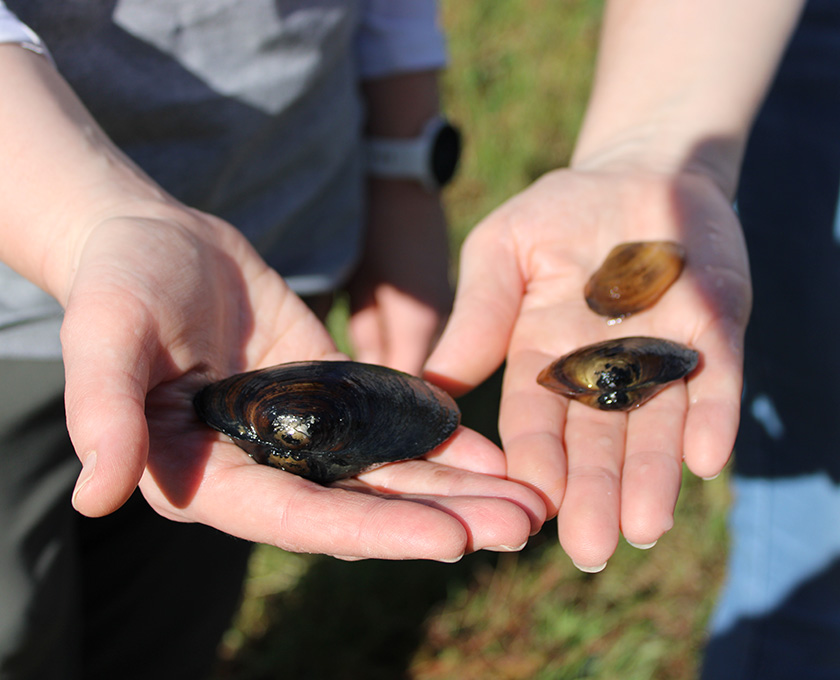
What if the key to healthier waterways, and inspiring the next generation of scientists, was hiding in plain sight? For a group of year nine students in the coastal Western Australian town of Mandurah, the answer is surprisingly small, and very clever.
Students at John Tonkin College are gaining hands-on science, technology, engineering and maths (STEM) experience on local waterways through the Cybernetic Water Monitoring Project, a unique initiative supported by the Alcoa Foundation and led by aquatic scientist Dr Alan Cottingham from Murdoch University’s Harry Butler Institute.
Now in its third year, the program uses sensors attached to mussels to capture live data from waterways across the Peel and South West regions. By monitoring how often the mussels open and close their shells - a natural stress response - the sensors can provide early warning signs of environmental issues such as algal blooms and low oxygen levels, which are often linked to unexplained fish kills.
Dr Cottingham affectionately refers to the sensors as “Secret Spies”.
“Mussels close their shells when they encounter stress,” Alan explains. “By monitoring these shell closure signals, we can proactively detect changes in water quality before bigger problems occur.”
Each of the six monitoring stations located at Mandurah Marina, the Murray and Serpentine rivers, Harvey and Waroona, is linked to a local school group, giving students a direct connection to their local environment and access to real time data from their own waterways.
What makes this project especially powerful is its close alignment with the year nine STEM curriculum. Introduced last year, the program gives students practical experience analysing numerical data, modelling shell movement using applied geometry, and explaining biological responses and evolution, all grounded in real-world environmental challenges.
“Schools are increasingly expected to build students’ data literacy, scientific reasoning and systems thinking,” Alan says.
“Traditional textbook examples often lack authenticity and fail to show students how STEM learning connects to real environmental challenges. This project does exactly that.
“Water testing is a key focus at this year level, so students head out on site to examine water chemistry themselves. It’s a great way to bring science to life.”
For the Alcoa Foundation, supporting local scientific and environmental research, particularly work led by people who live and work in the Peel and the South West regions, remains a priority, Alcoa Foundation President Caroline Rossignol said.
“The collaboration with Murdoch University’s Harry Butler Institute strongly aligns with the Foundation’s objectives to advance positive environmental outcomes,” Caroline said.
“Just as importantly, it’s helping to educate and empower young people to care for their local waterways in a meaningful, practical way.
“And if a few Secret Spies spark an interest in a future STEM pathway, that’s a win for our waterways and our future.”
For further information about the project, visit Murdoch University’s Water monitoring using mussels webpage.
View other articles in this edition.