March 24, 2026
Building knowledge through research
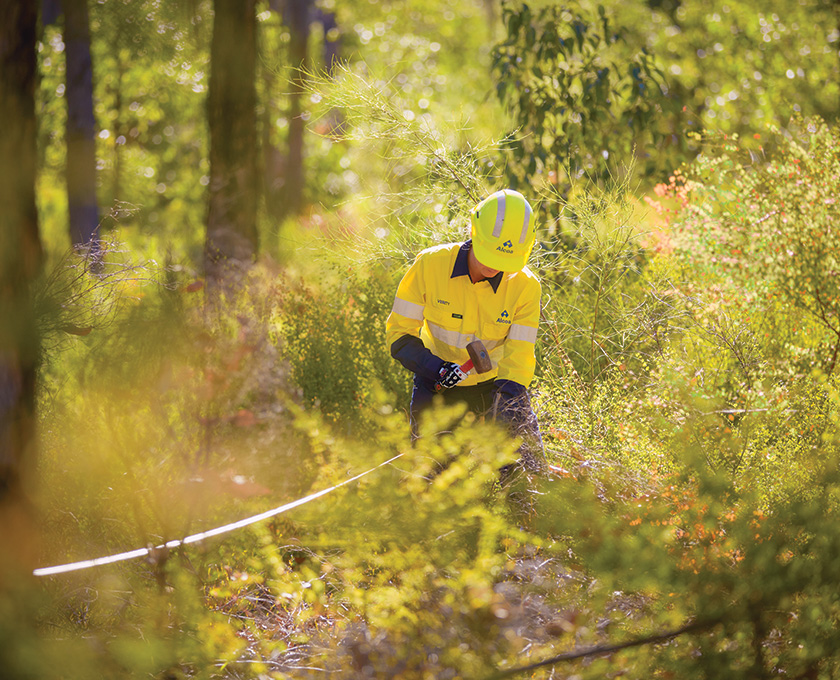
The Alcoa Forest Research Centre is delivering research-driven insights that support informed decision-making and improved on-ground practices across its five core research pillars: fauna protection and return; enhancing forest flora knowledge; leading practice rehabilitation; water stewardship; and First Nations two-way science.
The recently released Forest Research Centre 2025 Summary Report showcases a series of case studies drawn from each of the Centre’s core research pillars, highlighting the breadth and depth of work undertaken during the past year.
Two case studies are featured below. View the full Summary Report to read the remaining three.
Noongar management of NJF: Indigenous Biocultural Knowledge (IBK) – literature review
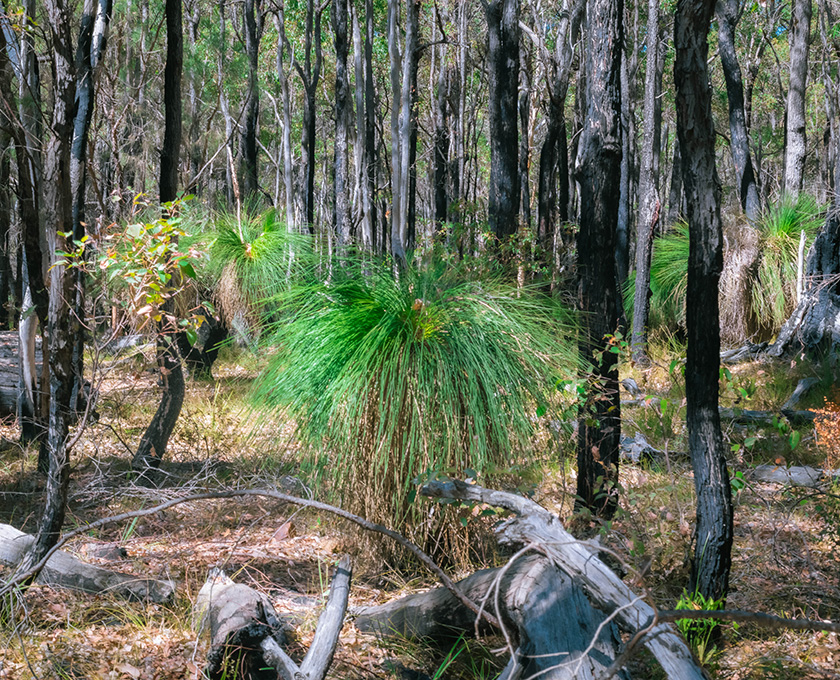
The Noongar people, as Traditional Owners of the land, have carefully managed the forests, waterways, and biodiversity of this area for tens of thousands of years.
Their long standing stewardship has given rise to a rich body of ecological knowledge, and, in recent years, international and national conservation policies have increasingly led to the inclusion of Indigenous peoples and their knowledge in environmental management.
The potential contribution of Indigenous knowledge to contemporary ecosystem science and management is widely acknowledged.
Therefore, IBK has been increasingly recognised as a vital resource for effective ecosystem management. The aim of this project is to develop a comprehensive literature review for the creation of species and reference databases to identify culturally significant flora, fauna, and traditional land management within the NJF.
Online and physical resources will be consulted to include as many references as possible. Findings will be summarised in a memo covering the main topics (flora, fauna, fire, culture) to inform Alcoa staff about biocultural knowledge and traditional management of the landscape.
Predator in the patchwork: Examining how chuditch navigate a post-mining landscape
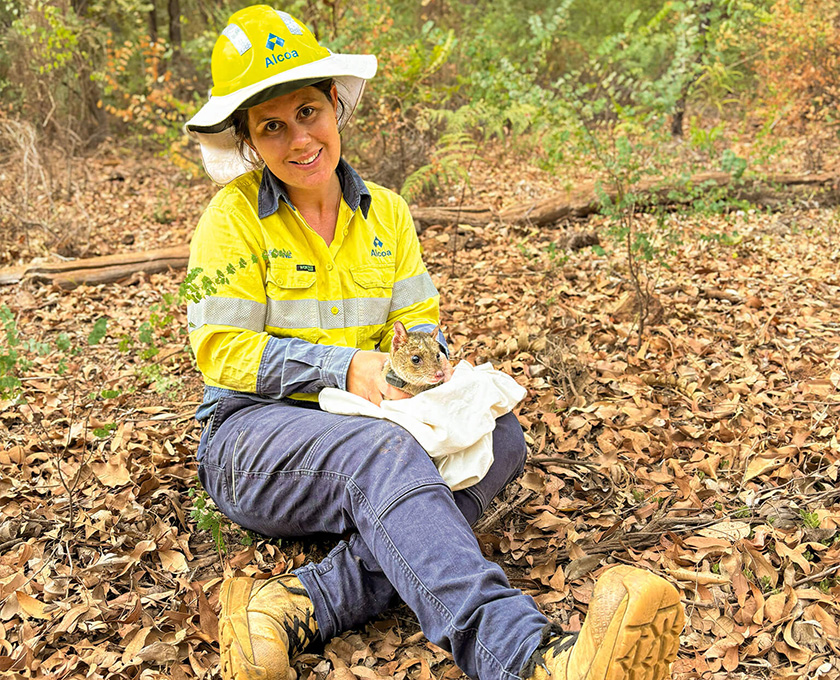
In 2025 we conducted a study using GPS collars to track chuditch across a post mining landscape with a mosaic of disturbance histories. This is the first time GPS technology has been used for this species, allowing us to collect fine scale movement data far beyond what was possible with previous VHF based studies.
Over 12 months, up to 14 individuals per season were fitted with custom GPS collars, providing detailed information on habitat use, home range size, den selection, seasonal behaviour, and sex based differences. We also located daytime dens via VHF tracking and collected microclimate and habitat data for each site.
Preliminary results show chuditch are highly adaptable, with home ranges far larger than earlier estimates — over three times larger for females and nearly 15 times larger for males — and regular use of both remnant forest and areas under rehabilitation.
Individuals moved through active mining areas, used roads and culverts as travel corridors, and utilised a range of den substrates, including constructed habitat piles in areas where rehabilitation work had been carried out. Notably, we recorded the first evidence of chuditch raising young within areas under rehabilitation. With fieldwork now complete, the next phase will focus on analysing microclimate data, activity patterns across habitat types, and behavioural changes in females during the denning period.