 |
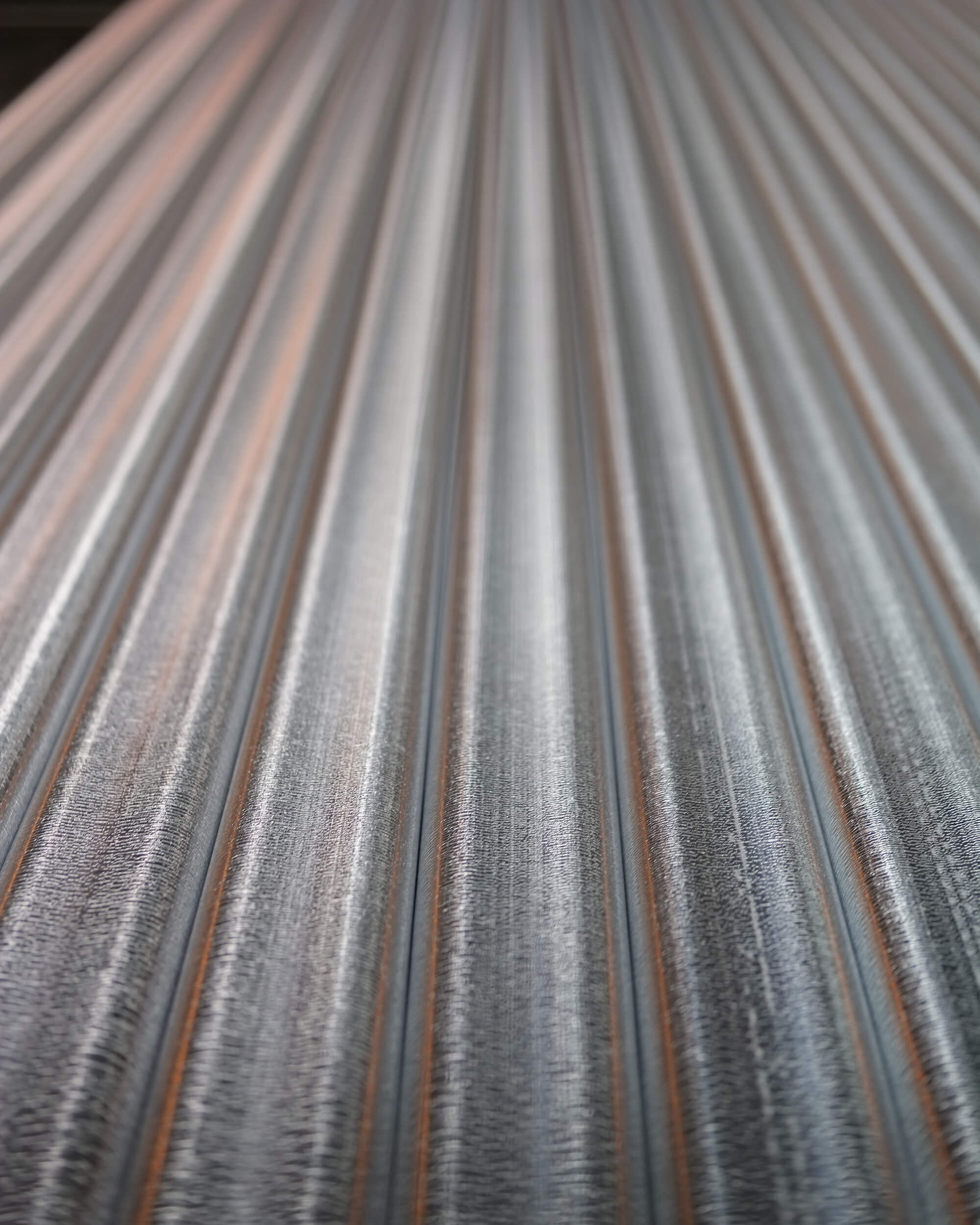
The aluminum coils arrive at the can plant and are loaded one at a time onto an "uncoiler" — a machine that unrolls the strip of aluminum at the beginning of the can making line and feeds it to the line, where it is first lubricated. Lubrication helps the aluminum flow smoothly during the can shaping processes that follow. |
|
|
|
 |
A large machine called a cupping press starts the can shaping process. The press cuts circular discs from the aluminum sheet and forms them into shallow cups. The cups drop from the press onto the cup conveyor. These two metal-forming operations are performed at high speeds and make 2,500 to 3,750 cups per minute. The scrap (or skeleton) aluminum left over from these operations is removed and recycled. |
|
|
|
 |
From the cupping press, the cups are drawn up into higher cups through a series of iron rings. Now the aluminum is starting to look like a can. |
|
|
|
 |
The tops are trimmed off to make them even — each can is the same height and width. |
|
|
|
 |
A washer cleans and dries the can bodies so they can be decorated. |
|
|
|
 |
The cans proceed to a printer, where six to eight colors of ink may be placed on a can at the same time. The can spins around as the label is applied. Finally, a coating is applied that makes the outside of the can shiny and protects the newly applied paint. |
|
|
|
 |
Next, the can goes to an oven, where the paint and coating are baked onto the can to prevent chipping. |
|
|
|
 |
Next, the can's inside is coated with a spray to keep what is in the can from touching or reacting with the metal. |
|
|
|
 |
The can is baked in an oven again to seal the coating onto the can. |
|
|
|
 |
The top of the can is now made narrow. The narrow neck is where the lid of the can will be placed once the can is filled. A lip is formed, called a flange, that will help seal the lid in place after the soft drink is put in the can. |
|
|
|
 |
The bottom of the can is also reformed at this point. A machine makes a small dome that helps improve the strength of the container. |
|
|
|
 |
Finally, all finished cans are tested for leaks. A light tester can find holes smaller than a human hair. |
|
|
|
 |
The cans are put on pallets. The pallets are shipped to soft drink companies, which will put the soft drinks in the cans. |
|
|
|
 |
The lids of the cans, called can ends, are made separately and shipped separately to the soft drink companies. Like can body manufacturing, the end making work starts with a coil of aluminum. The aluminum is uncoiled, lubricated and fed to a machine that makes it into a round shell. |
|
|
|
 |
The shells are coated with a sealant and dried. This way, none of the soft drink will actually touch the metal. Next, a machine makes a button on the end where an easy-open tab can be secured into place. The easy-open tab makes it possible for you to open the canned soft drink by simply pulling up and pushing the tab back. |