Alcoa in Iceland
News Releases 
2/1/2005

Alcoa’s Commitment to the Environment in Iceland

Tómas Má Sigurðsson, Managing Director, Alcoa Fjardaál

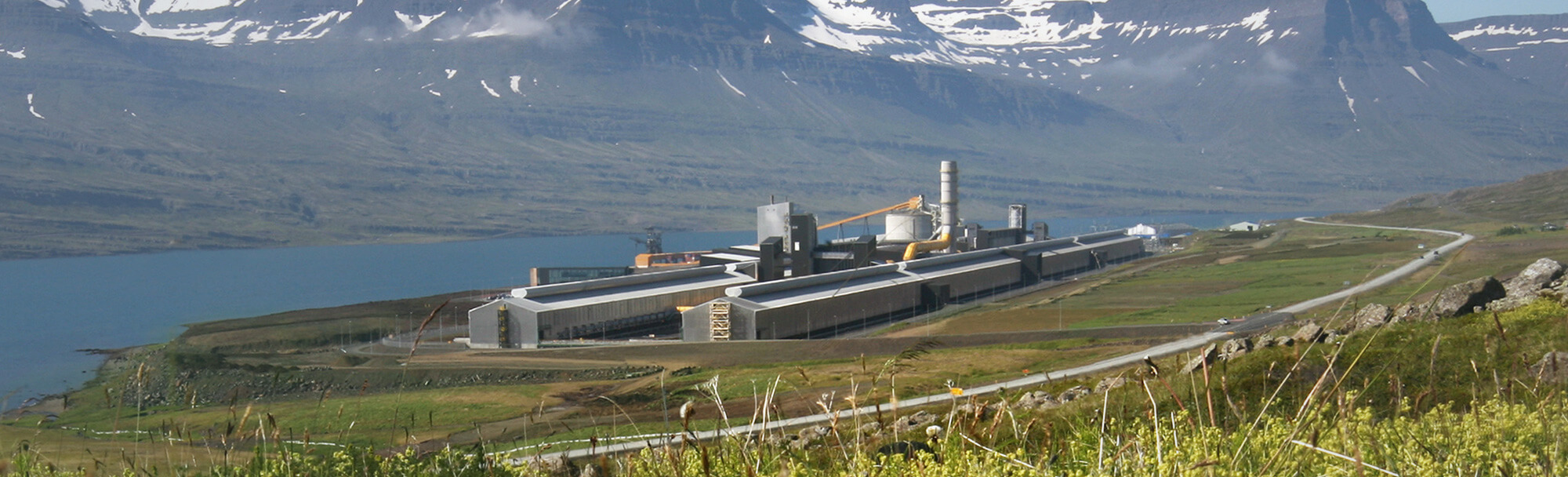
The District Court of Reykjavik recently handed down the judgment that the Ministry for the Environment should have demanded that the intended Alcoa Fjardaál smelter in Fjardabyggd undergo an Environmental Impact Assessment (EIA).  I want to reiterate a few facts and explain briefly Alcoa Fjardaál’s point of view.
 
The Planned Project
The Planning Agency and the Minister for the Environment had earlier approved the EIA submitted by Reydarál for a 420,000 metric ton smelter and an anode plant to be constructed in Fjardabyggd. In November 2002, Alcoa took over the project from Reydarál. The EIA was included in the purchase.
 
Alcoa modified the design of the smelter. Alcoa’s Fjardaal smelter is smaller, with a production capacity of approximately 322,000 tpy. Alcoa also abandoned previous plans to build an anode plant and decided to recycle all spent pot lining (a hazardous waste) abroad instead of using it on-site as landfill.  Alcoa has also designed the plant to eliminate all discharge of process water into the sea.
 
The EIA Confirmed
According to the act and regulations on environmental impact assessment, Alcoa announced the change in plans to the Icelandic authorities and submitted a detailed report to the Planning Agency to get a decision on whether a new EIA had to be submitted, or if the previous assessment for a larger smelter and a more extensive project would suffice. The Planning Agency reviewed the report, consulting with 15 different institutes.
 
The conclusion of the Planning Agency as supported by the relevant experts was, in brief, that the changes in the project represented equal or less environmental impact than the previous project and, therefore, were not of the kind that would require a new EIA. The Minister for the Environment confirmed this verdict of the Planning Agency.
 
Lower environmental impact of the Alcoa Fjarðaál Aluminum Smelter
In the originally planned Reyðarál Aluminum Smelter the emissions were to be cleaned by wet scrubbing. This means that emissions are first passed through dry scrubbing where particulate matter is filtered for recycling, and the pollutants are then passed through seawater and discharged into the sea. Part of the emissions are always airborne, so the area impacted by the plant includes both land and sea. The approved environmental impact assessment for the Reyðarál plant included an impacted area that extended 2.6 km to the west and 2.6 km to the east from the potrooms.  Due to the wet scrubbing, an impact area was assumed in the fjord, covering an area 1.7 km by 600 m out.
 
The present aluminum smelter of Alcoa Fjarðaál does not include wet scrubbing.  That is in accordance with Alcoa’s policy to prevent all discharge of pollutants into the sea from its aluminum plants, of which there are 27 on five continents.  Although wet scrubbing can be acceptable as a pollution prevention measure, it can entail a certain risk to the marine environment. The importance to Iceland of safeguarding its marine environment cannot be overemphasized.  On the other hand, Alcoa’s Fjarðaál Aluminum Smelter does include an efficient dry scrubber and a tall stack -- so efficient that the impact on land, as measured by highly technical air dispersion calculations -- is the same as was planned for the Reyðarál smelter, even though the Reyðarál smelter had wet scrubbing as well.  The difference, however, is that the Alcoa Fjarðaál Smelter does not discharge anything into the sea.
 
During the discussion, it has been correctly pointed out that the total quantity of sulfur emitted into the atmosphere will be greater from the Alcoa Fjarðaál Aluminum Smelter than it would have been from the Reyðarál aluminum smelter, based on the original plans. However, with the antipollution measures planned for the Alcoa Fjarðaál Aluminum Smelter and the dispersion from a high chimney, the concentration of sulfur in the atmosphere around the aluminum smelter will be no greater than under the former plans, and the environmental impact will therefore not be greater. In addition, nothing will be discharged into the sea (former plans included provisions for the discharge of up to 9500 tons of sulfur dioxide into the sea annually); the total emission of fluoride (in gaseous and particulate form) will be the same; the emission of greenhouse gases will be less and the emission of all other substances similar or less; no pot fragments will be buried, and the impact area of the factory on land will be the same as provided in the older plans. Alcoa Fjarðaál’s goal is to design and operate an aluminum smelter at the leading edge of environmental performance.
 
The appropriate path taken
In the preparation of Alcoa’s Fjarðaál plant, the owners have followed the procedures stated in the Environmental Impact Assessment Act and followed official rulings by authorities.  The National Planning Agency’s ruling was based on a thorough and careful comparative evaluation by specialists.  Fifteen official parties gave their evaluation of the report that the National Planning Agency used in its ruling.  This ruling was later confirmed by the Minister for the Environment, and the whole procedure was in accordance with the Environmental Impact Assessment Act. 

Copyright © 2008 Alcoa Inc.
country sites

customer login