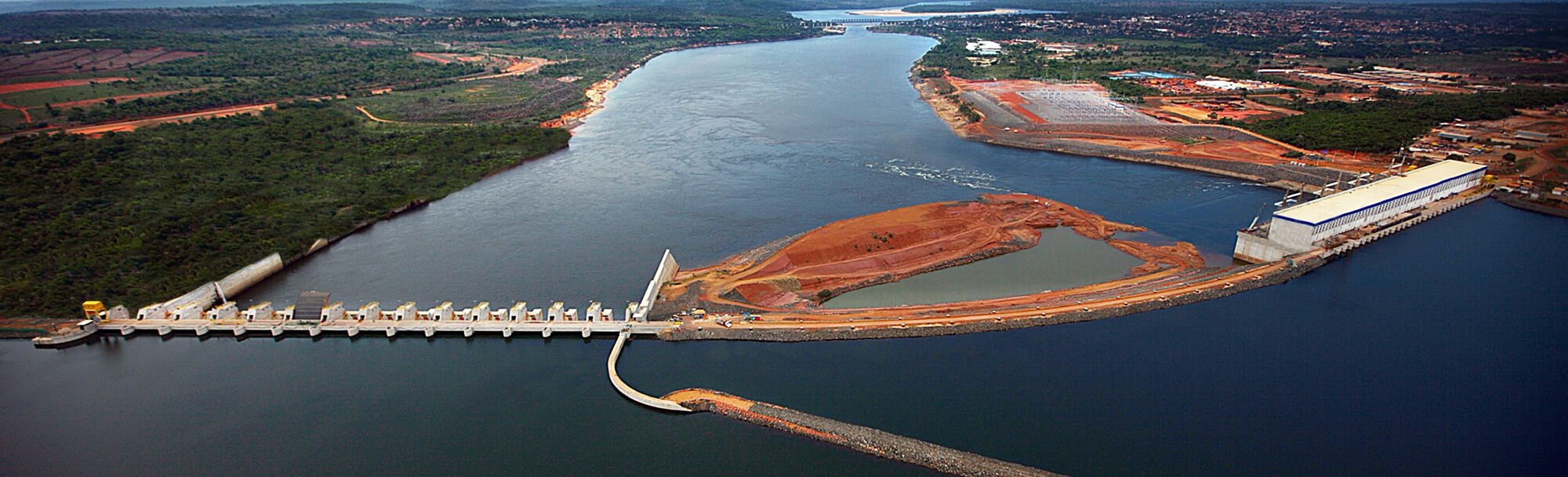
Alcoa in Brazil
 
Update January 5, 2005:
Stakeholders reach agreement
Brazilian government allows project to move forward


  • 200 more families to be compensated; total 1140
  • 5740 hectares to be donated for conservation
  • 100,000 araucaria and 800,000 other trees to be planted
  • New environmental investment $9.3 million; total $30 million
  • New community investment $7.8 million; total $51 million

Construction at Barra Grande has resumed after the conflict between the venture partners (BAESA), environmentalists, and the Movement of Affected by Dams (MAB) was finally settled.

Under the agreement reached last week between BAESA and MAB, more than 200 additional families will be compensated at a cost of 21 million Brazilian reais (US$7.8 million.) The agreement provides for relocation of the families, donation of the wood from the reservoir area for construction of houses in the community, financial support for the crops of 1,140 families, and acquisition of 200 hectares of land for the community. This new investment brings BAESA's total community investment to 138 million reais (US $51 million).

On the environmental side, the venture reached an agreement with the environmental agency (IBAMA), and several Federal Government Agencies. BAESA agreed to acquire 5,740 hectares of native forest for conservation and transfer that area to IBAMA for stewardship. BAESA will plant 100,000 araucaria trees and 800,000 trees of other species in the preservation area surrounding the lake, make a donation to the Joao Costa ecological park, and create a partnership with ecological organizations in the region. BAESA will also create a germplasm bank with 14 species of trees threatened by extinction to guarantee their perpetuation. And the venture will invest more than 5% of its total investment in compensation measures to mitigate the environmental impact, including a donation to the São Joaquim Park in the state of Santa Catarina. All told, these environmental measures will increase BAESA's environmental investment by 25 million reais (US $9.3 million) for a total of 79 million reais (US $30 million).

At this point, BAESA has invested 1.1 billion reais (US$409 million) in the project since it was launched in 2002, and the hydropower facility is now 95% complete. The work on the social and environmental issues will delay the launch of initial operations, scheduled for October 31, 2005. When complete the plant will have a capacity of 690 MW, accounting for approximately 30% of the electricity demand in the southern Santa Catarina state and the neighboring state of Rio Grande do Sul. The plant is situated on the border between the two states.

Index


Background
Alcoa is a shareholder in BAESA, a company granted the right to build and operate the Barra Grande Dam in Brazil.

This project is part of the Brazilian government's long-term overarching strategy for hydroelectric development in that country in accordance with the government's projected needs for energy and economic development. That strategy is subject to the Brazilian strict environmental protection laws.

Individual projects are considered, based on the national strategy, and judged by whether they can create long-term economic value, be shown to protect the environment, and support the social expectations of all the stakeholders.

This process is aligned with Alcoa's Values and sustainability strategy of integrating environmental, social and economic considerations into decision-making processes.

Alcoa believes that well-designed and operated hydroelectric projects represent an important way for Brazil and other countries to develop the energy needed for an economy that provides opportunities and improved quality of life.

Below are frequently asked questions about the hydropower project in Brazil and Alcoa's response to those questions. Additional questions can be addressed via email. We will continue to publish our answers to frequent questions on this website.

index

Does Alcoa own the Barra Grande hydropower project?
Alcoa with several other companies has formed a company that was granted the right to build and operate the Barra Grande dam in 2000. This company is called BAESA. BAESA submitted the highest bid in an auction conducted by the Brazilian federal power agency and has been building the dam over the last three years. The total investment of the project is US $450 million. Ownership in the consortium is: Alcoa Alumíno S.A. 42.18%; CPFL - Geração de Energia S.A. 25%; DME Energética Ltda 8.82%; Camargo Corrêa Cimentos S/A 9% and Companhia Brasileira de Alumínio (CBA) 15%.

index

Was Alcoa involved in the initial Environmental Impact Study?
No. The first environmental impact study of Barra Grande was commissioned by ANEEL, the federal government agency responsible for energy in Brazil, in 1997. The federal environmental agency, IBAMA, and the state environmental agencies for the states of Rio Grande and Santa Catarina made a visit to the site in 1998, and set conditions to guide the work on the Environmental Impact Study. Alcoa was not involved in this process, and only became involved after ANEEL auctioned the license to build and operate the dam in 2000.

index

What was the result of the initial Environmental Impact Study?
ANEEL, the federal energy agency, was granted a preliminary permit in 1999 by the Brazilian Federal Environmental Agency. This permit certifies the environmental feasibility of the project. That permit followed public hearings by the municipalities in the Barra Grande area. ANEEL then proceeded to auction off the right to build the project the following year. At that point, Alcoa became involved through its participation in the consortium that submitted the highest bid at the auction.

index

Why is Brazil auctioning off the right to build hydropower dams?
Brazil needs energy projects to satisfy increasing demand as its economy grows and the standard of living improves. Barra Grande is one of several projects designed to expand Brazil's energy supply to meet private consumer and business needs within a sustainable development context. The government alone does not have the capital to meet all the expected demand. Brazil's current energy consumption is modest compared to that of the developed world. For example, per capita, Brazil today uses only about 10 percent of the energy used per capita in the U.S. In 2001 Brazil's economy was affected by severe energy shortages. As the prospects for economic growth continue, so does the need to develop sources of clean and renewable power. Brazil has developed only 24% of its potential in hydropower, as compared to over 65% in economically advanced countries.

index

What environmental work did BAESA do after it won the auction to build Barra Grande?
The consortium submitted an environmental plan based on the preliminary work that had been done by the government agencies. On the basis of that plan, the government issued BAESA an installation permit, which allowed the consortium to move forward on construction of the hydropower project. The consortium conducted a detailed forestry inventory in March 2003 that identified some discrepancies from the earlier environmental impact studies that had been contracted by the government. The differences related to the qualification and typology of existing vegetation and corresponding areas. In particular, the BAESA study showed that the reservoir area included the presence of primary forests and araucaria trees.

index

What primary forests and araucarias are affected by the Barra Grande dam?
The area to be flooded is 8,138 hectares, of which 2077 hectares have primary vegetation; 2158 hectares have secondary vegetation in advanced stage of regeneration, 2565 hectares have riparian and other secondary vegetation and 1,338 hectares have pasture and agriculture areas. Within the 2077 hectares with primary vegetation, there are 300 hectares with around 5,000 araucaria trees.

The clearing of vegetation is necessary to preserve the water quality in the reservoir.

According to the studies approved by the Brazilian Federal Environmental Agency, (including detailed inventories and water quality modeling), 1,437 hectares should be completely cleared and 1,800 hectares will be subject to selective extraction of wood with economical value.

All land that will be flooded was acquired by BAESA after the installation permit was issued. The acquisition value took into account the price of the land, properties, betterments and economic value of the land including wood and crops.

index

If such a large stand of araucarias was somehow omitted from the environmental assessment, how can you be certain that no other rare or endangered species are not being overlooked?
There's a safety net in this process. A condition of the concession granted to the consortium is the requirement for a detailed forestry inventory to be conducted before any permit is issued to clear vegetation in the area that would be flooded by the dam. It was this detailed study that led to the identification of the araucarias.

index

How can any environmental organization place credibility in a process that somehow omits such a large stand of araucaria?
It's not just environmental organizations that need to have confidence in this process; we do too. Our reputation and our license to operate depend on us continuously demonstrating our ability to meet increasingly high environmental and social expectations. Clearly, we would have preferred for the araucarias to have been identified from the beginning but we think this highlights the complexity and the need for diligence in any environmental assessment of this kind.

The World Commission on Dams (WCD) considers the Brazilian process as sound, with the final decision on licensing being taken by the Federal Environmental Agencies "only after public hearings are held with various segments of society, in order to discuss the conclusions of the studies." The WCD goes on to say that "The current Brazilian environmental law is considered among the most complete in the world, consisting of standards regulating the use of environmental assets and activities that may effect them, as well as standards that introduce environmental protection tools..."

Alcoa shares this independent assessment of the current Brazilian process but that does not remove the need to proceed with caution. Part of this process is the requirement for a detailed forest inventory that was undertaken by BAESA and approved by IBAMA before any clearing is done. This study revealed the existence of the araucaria stand. The identification, disclosure and compensation plans for the primary forest areas and araucaria trees show that the process works.

index

Are araucarias common in Brazil?
Araucaria angustifolia tree is a type of pine typical of the southern areas of Brazilian Atlantic Coast forests. They are listed in the flora threatened species in Brazil as vulnerable. The Atlantic Coast forest has now around 7% of its original area in Brazil and there are several NGOs involved with protection of the remaining forests and the araucarias.

index

What mitigation measures have been put in place to compensate for the vegetation affected by the Barra Grande dam?
BAESA has agreed to help preserve and enhance the Atlantic Coast Forest conservation efforts as follows:

  • Buying 5,740 hectares with vegetation in a similar stage of preservation and diversity to the area that will be affected by the dam's reservoir and donating this land to IBAMA for stewardship.
  • Planting 100,000 Araucária trees (about 20 new trees for every one affected by the project) and 800,000 trees of other species in the preservation area surrounding the lake.
  • Making a donation to the Joao Costa ecological park
  • Making a donation to the São Joaquim Park in the state of Santa Catarina.
  • Creating a partnership with ecological organizations in the region.
  • Creating a seedlings bank with 14 species of trees threatened by extinction to guarantee their perpetuation.
  • All told, these environmental measures will increase BAESA's total investment by 25 million reais (US $9.3 million), for a total investment of R $79 million (US $30 million.)
  • Ultimately more than 5% of of BAESA's total investment in the project will be in the form of compensation measures to mitigate the environmental impact.

index

How many families are being compensated?
As of this update, a total of 1140 families are being compensated. This figure includes families qualified for compensation under the original terms, plus an additional 200 families to be compensated under the agreement that was reached in January 2005 between BAESA and MAB. The additional investment to support this new commitment is 21 million Brazilian reais (US$7.8 million.) The agreement provides for relocation of the families, donation of the wood from the reservoir area for construction of houses in the community, financial support for crops, and acquisition of 200 hectares of land for the community.

index

Has there been any violence at the site?
Yes. Groups have consistently blocked the access of contracted workers to the area. Unfortunately, a contractor for BAESA was shot and killed on November 9th, 2004, while he was in a bus that was shot several times while in the access road to the area that will be flooded by the reservoir. The police are investigating who is responsible for the murder.

index

Does Brazilian law prohibit the cutting of trees in the Atlantic Forest Area?
There are special legislative provisions related to the protection of the Atlantic Forest Area. The Forest Protection Brazilian regulations allow specific exemptions for clearing of areas for projects declared 'in the public interest' by the Federal Government. These can include construction of public utilities such as power transmission lines and hydropower plants. Under these regulations, IBAMA has the authority to specify mitigation measures and compensation programs for the loss of vegetation and associated biodiversity.

index


Alcoa's Vision and Values
go

Alcoa's Commitment to Sustainability
go


Alcoa Sustainability Reports


Download corporate sustainability report and reports from individual countries, including Brazil.
go

More questions?


Contact us by email.
go

Alcoa in Brazil


English
go

Português
go

Alcoa's environmental progress in Brazil
go

Hydropower in Brazil
go


Machadinho Dam Project


This Brazilian website explains the process now governing the development of hydropower projects in which Alcoa in Brazil participates.
Related Site

Information updated January 5, 2005


Click image to enlarge.


Alcoa is one of 5 partners in the BAESA consortium building the Barra Grande dam.


Consortium Investment in Environment and Community


Click image to enlarge.


Blue sections indicate additional commitment made January 5, 2005.


Copyright © 2008 Alcoa Inc.
country sites

customer login