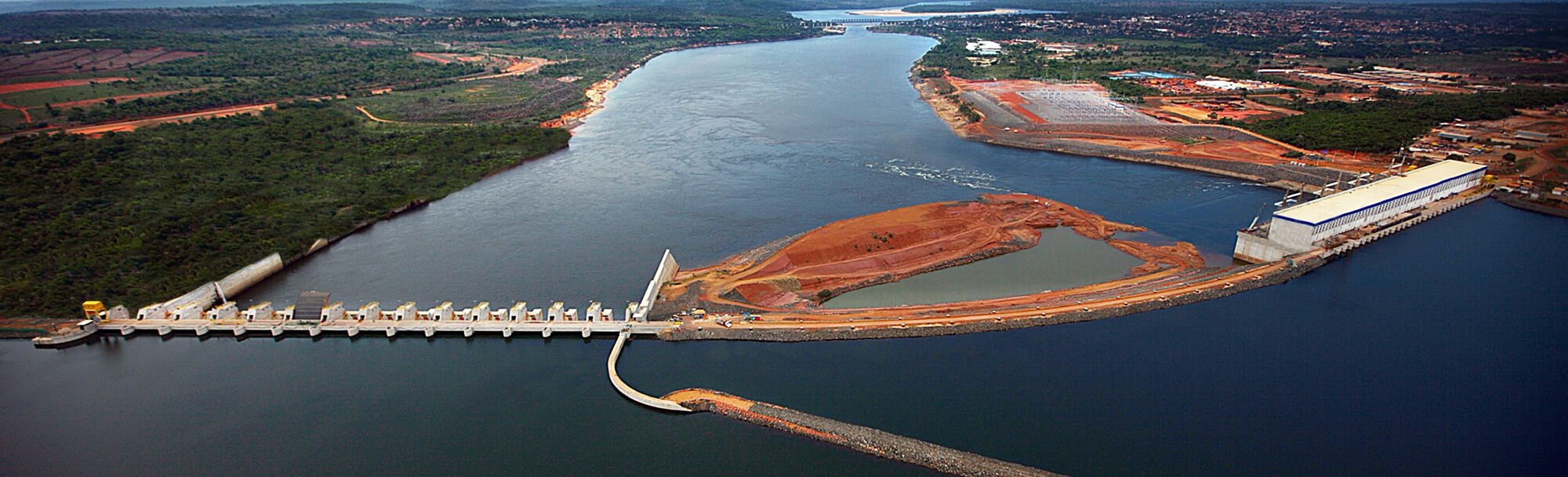
What is the Juruti Mine?
It is an Alcoa bauxite mining operation, located in the municipality of Juruti, in the west of the State of Pará.
At what stage is the undertaking?
The undertaking is in the implementation phase of its three installations: the mining unit, a railroad nearly 50 km long and a port. Work started in May, 2006. The Executive Department of Science, Technology and Environment of the State of Pará (SECTAM), the agency responsible for the environmental analysis of the investment, granted the Prior License (LP) and the Installation License (LI), in June and August, 2005, respectively, after a series of three public hearings held in Belém, Santarém and Juruti – the latter with nearly 6,000 people. A further 32 prior meetings were also held. The Operating License (LO), the third and final in the licensing process, will be obtained in accordance with the timetable established by SECTAM, with confirmation of compliance with the various stages of the undertaking and its respective environmental compensation actions. To do this 35 Environmental Control Plan (PCA) programs and, in partnership with the Juruti municipal administration and the community, other important undertakings of the Positive Agenda are under development.
When will bauxite mining begin? Operations are planned to start in 2008.
When and how did Alcoa obtain bauxite mining rights in the region? Alcoa obtained the right to mine bauxite in the Juruti region when it purchased Reynolds Metals Company (RMC) in 1999 that, in the 1980s and 1990s, had already carried out the first research to establish the potential of the deposits. The potential of ore reserves in Pará has been known for many years.
What is the size of the bauxite reserves found in Juruti?
Current estimates indicate these to be nearly 700 million tons. This undertaking will contribute to consolidating Brazil’s position as the leader in Latin America on the world’s bauxite producer scene.
What is the bauxite production capacity?
Initial production capacity is 2.6 million tons of bauxite annually, which may be expanded in the future in accordance with requirements. Current geological knowledge of the mineral reserves in the Juruti region allow for a forecast working life for the operation of at least 45 years.
What will be done with the bauxite mined in Juruti? Initially bauxite production will be sent to the Maranhão Aluminum Consortium (ALUMAR) in São Luís, MA.
How much is being invested in the operation? The estimated cost for installing the mining operations, which includes the beneficiation unit, the railroad and the port, is R$ 1.36 billion.
Does Alcoa intend installing a refinery in Juruti?
It is in Para State’s interests to add economic value to its natural resources. The refinery for transforming bauxite into alumina is an additional stage in the aluminum value chain, the feasibility of which is being evaluated by Alcoa.
How many jobs is the undertaking generating? Will local labor be used? Will there be training programs? Currently, nearly 2,600 employees are working on Alcoa’s site in Juruti. Of this total, 78.2% are from Para and 44.56% are from the municipality itself. This represents 1,175 Juruti residents that have been trained and are being employed in the implementation phase of the undertaking.
With regard to training labor, the Company, in partnership with the National Industrial Apprenticeship Service (Senai) of Pará, is developing a professional training program that has been applied since mid-2006. The goal is to train nearly 2,800 professionals over a two year period. The initiative will guarantee a series of courses directed specifically at the implementation phase of the mine and also other items indicated as being of priority in accordance with the workers’ calling and the municipal economy. The estimate is that some 4,000 direct and third party jobs will be generated, while in the operational phase there should be some 800 jobs.
Will the project benefit the development of local suppliers? As at March 2007 the introductory phase of the Juruti Mine had earned supplier companies from the State of Pará R$ 145.3 million. Of this amount R$ 17 million has already been specifically earmarked for firms established in Juruti and R$ 40 million for other suppliers from the State’s western region. The work is being closely monitored by the Supplier Development Program (PDF) of Fiepa that, along with the Commercial and Business Associations of Juruti (ACEJ) and Santarém (ACES), and the Instituto Esperança de Ensino Superior Pós-graduação, Extensão e Pesquisa [Hope Institute for University Teaching, Post-graduation, Specialization and Research] (IESPES) is developing a Corporate Management course for local suppliers. The first group of students was put together at the beginning of the year and another group is already being planned.
How much is forecast in tax generation and where will these funds be used?
In 2006 and until March this year nearly R$ 4.5 million was generated in ISS [Service Tax] and other charges and taxes. Of this total, just in the first two months of 2007 more than R$ 2.5 million in ISS were generated.
Furthermore, with the start of operations CFEM [Financial Compensation for Mineral Resource Mining] will be generated (6% of the primary gross revenues of the undertaking: 65% for the municipality, 23% for the State of Pará and 12% for Central Government), in addition to royalties for the land-owners (1.5% of primary gross revenues of the undertaking).
CONCEPTUAL AND CONTEXTUAL DEFINITIONS
What is bauxite?
Bauxite ore is a mixture of clay that is rich in aluminum oxide and hydroxides. It is the third most common mineral in the earth’s crust.
Is bauxite toxic? Does it cause skin allergies? Which other minerals are associated with bauxite?
To date no known cases of allergy caused by bauxite have been reported. None of the minerals that comprise the ore (gibbsite, hematite, kaolinite, and to lesser extents, nosean, quartz and anatasium) have the potential for damaging public health.
What is the importance of bauxite for aluminum production?
Bauxite is a mineral mixture (aluminum oxide and hydroxides) that is indispensable for producing aluminum. Even though it is the third most common element in nature, representing nearly 8% of the earth’s crust, the production of aluminum or alumina is only economically feasible if there are large volume deposits with good ore concentration. Four tons of bauxite are necessary to produce two tons of alumina, which in turn generates one ton of aluminum. More than 90% of the world’s production of alumina is used for manufacturing aluminum. The rest is used mainly in the paper and glass industries.
Brazil has the third largest ore reserves in the world – 5.9 billion tons, in major deposits in Pará and Minas Gerais. Pará has reserves in the municipalities of Oriximiná, Paragominas and Juruti, which together have a potential of 1.5 billion tons.
What is the bauxite mining and beneficiation process like?
In general bauxite is extracted by open cast mining in bands or strips, with removal of the topsoil. The process involves the following stages: careful removal of the vegetation and cleaning off of the area; storing of the topsoil (for reuse when the area is rehabilitated); removal of a strata of soil; initial breaking down of the ore’s structure; excavation and loading; ore transport; crushing to reduce size; washing the ore; transport from the plant to the place where it will be shipped out (port); storing and loading on the ship.
With regard to the tailings produced in the crushing and washing the steps are: disposal of the tailings, remodeling the terrain; rehabilitation of the mined areas and monitoring.
Bauxite beneficiation is the first phase in the primary aluminum industrial process and involves no chemical transformation of the ore, i.e. the concentrate has the same minerals (hydrated aluminum oxides, aluminum silicates, silica etc.) as those found in the subsoil.
What is the importance of the aluminum industry to the Brazilian economy? Aluminum and its by-products play an important economic role in Brazil. National production of the primary metal is the sixth largest in the world and in 2006 this production represented 1.1% of GDP and 4.3% of the industrial GDP, contributing with 3.1% of the exports in the trade balance, according to data from the Brazilian Aluminum Association (ABAL). The aluminum sector is also important when it comes to generating employment, with 58,200 direct jobs in 2006.
This performance is due to the fact that aluminum is the main input in a vast list of consumer goods in modern society. Use of the metal on a commercial scale started with the discovery of the metallurgical process by electrolysis (oxy-reduction reaction caused by an electric current) in 1986.
It is used in everything from domestic utensils, like cooking pans, one of the first applications of the metal, to the aerospace and naval industry. The aeronautical industry is a major aluminum consumer (the metal makes up nearly 65% of the structure of the Airbus A380), as is the automobile industry, where its use in vehicle engines, for example, reduces fuel consumption, thereby improving the automobile’s performance. It is also used by the electrical, electronic, packaging (it preserves the quality of food and medication), ceramics, textiles and construction sectors, etc.
Because of its versatility aluminum has established its position as the second most important metal in the world’s economy and has a fundamental characteristic: it is infinitely recyclable. Light and strong, aluminum weighs only a third as much as iron and like copper is corrosion-resistant. It is also a good conductor of electricity, heat and cold, is a reflector of light and heat and is not magnetic. In addition to making it look good these characteristics make the metal easy to work with.
How does the Juruti deposit compare to other regions?
Most of the world’s bauxite deposits are located in tropical and sub-tropical regions. Australia has 30% of the global reserves of bauxite, followed by Brazil. With this find of deposits in Juruti, new investments are being made available for the state. By the end of the decade it is estimated that the annual bauxite production volume in the State will reach 30 million tons, almost double the initial capacity.
Other countries have proved to be highly attractive to the bauxite mining activity. Guinea, for example, which has enormous, still only partially explored reserves, has already received investments from Alcoa and from Russia. The Chinese are also studying the reserves in that country.
What benefits of this project for the communities, the municipality and the state? Alcoa is developing a sustainable development proposal for the Juruti region that is becoming reality via partnerships with the State Government, the Town Administration, non-governmental organizations and local communities. The work is based on the Company’s commitment to the Aluminum for Future Generations Program of the International Aluminium Institute (IAI) and the International Council on Mining and Metals (ICMM), a global entity that brings together mining and metallurgical industries for the benefit of the sector. Alcoa’s proposal is being made in partnership with the Brazilian Fund for Biodiversity (Funbio) and the Center for Sustainability Studies (CES) of the Fundação Getúlio Vargas (FGV).
According to the Ecological and Economic Zoning (ZEE) carried out in Pará, the area in which Alcoa has been doing its mineral research is considered to be a mining activity zone. The objective of the ZEE is to promote the state’s environmental, social and economic organization and is a fundamental instrument when it comes to guaranteeing that the region’s economic development be carried out in harmony with preservation of the environment and by the formation and consolidation of sustainable social and economic relationships.
How does mining differ from other economic activities, such as agricultural and livestock farming, soybean growing or wood extraction, for example?
The mining activity stands out from other economic alternatives because of its business model of temporary land use; after the ore has been extracted the area is reclaimed. From the point of view of sustainable development it is a legitimate activity carried out within strict environmental standards and approved by environmental agencies; it generates wealth for the state and the municipality and it favors the economic and social development of local communities.
RELATIONSHIP WITH THE COMMUNITY
Is the population of Juruti against Alcoa’s undertaking?
No. The community manifestations made during the meetings held on May 2 and 3, 2007, at the request of the State and Federal Public Attorney’s Office, are isolated and restricted to the Juruti Velho region. Alcoa respects these communities, is in permanent dialogue with them and has been developing compensatory activities to this end as expressed in the Positive Agenda, which comprises voluntary initiatives that go beyond any legal requirements.
Alcoa has never avoided debate with the population. Dialogues were always considered important for clarifying aspects of the undertaking, a posture it has maintained ever since the public hearings. The Company took part in the two meetings summoned by the Public Attorneys in May, even though it was only authorized to speak for 40 minutes out of a total of 16 hours of meetings. The Company readily accepted the suggestion of the Public Attorneys themselves to create a community council to monitor those company activities that have an influence on the community.
How did Alcoa establish a dialogue with the community?
Various communication instruments were created that make dialogue with the community feasible and that face up to the challenge of having a meaningful interchange with communities that are spread far and wide, especially in the rural areas.
There is a program, “Dialogue with the Community”, that gives clarification talks that cover, among other topics, the progress of the Juruti Mine building works, the activities of the Environmental Control Plans (PCAs) and the Positive Agenda. The Company is also arranging “Community Visits” to work-site areas that are monitored by professionals from the construction and environment areas and with whom residents can clarify their doubts and make suggestions.
Furthermore, a radio program (Sintonia) is aired weekly on Saturdays in Juruti, Santarém and Oriximiná, which is specifically designed to deal with questions sent in by listeners who use a form made available by Alcoa.
The Reference Center, which is situated in the center of Juruti, has already established itself as the most important source for dealing with community demands.
Is the undertaking bringing about any changes in local habits?
Alcoa recognizes the need to respect and support the local way of life and is working so that natural resources are not disturbed. There is no doubt that new business is being generated by the Company’s presence and the municipality of Juruti has become more attractive to the economically active population.
The region is characterized as having a variety of natural wealth and the communities are involved with the traditional activities that result from these resources, such as hunting and gathering, for example. To maintain these resources and expand their potential vis-à-vis the new reality Alcoa is developing activities within the scope of the Environmental Control Plans (PCAs) that focus on valuing and revitalizing the cultural heritage, supporting family agriculture and managing non-wood forest products.
The following actions have already been planned: 12 field trials in pilot-communities, involving the breeding of wild and small animals, seedling nurseries, the use of agricultural and forest systems for production diversification, fish-farming in network tanks, market gardens and agricultural, forest and livestock systems. The objective is to help with food safety and to seek to sell any excess to help the family income with resources that already exist in the community to extend the learning process on their own plots of land. In the first two years communities will also have technical help. Improvements will also be made to the roads and access tracks. In order to find out about the potential impacts associated with these activities and to manage them, with the aim of averting, eliminating, correcting or minimizing possible damage to people and to the environment, Alcoa is carrying out a prior evaluation of the direct and indirect environmental, social and economic impacts of all the proposed new undertakings so that they not only comply with Brazilian legislation but also with the own Company’s internal standards.
Alcoa, the Juruti Town Administration and Council have established a series of actions that help make up the Positive Agenda that was created for the municipality. Current priorities that have been selected for immediate actions and that should ensure improvements in the quality of life of the population are in the areas of education, health and infrastructure. The actions of the Positive Agenda, budgeted at R$ 50 million, should benefit the population of Juruti for the whole of the life of the mining enterprise.
Development of the town may cause social impacts. How does Alcoa intend to mitigate them?
Various actions in the area of Security and Social Assistance are provided for in the Positive Agenda, the Environmental Control Plans (PCAs) and in the environmental management of the Juruti Mine, such as the construction of the Juruti Law Courts, support for suitable installations for the Program for the Eradication of Child Labor (PETI), construction of living-quarters for the local police force, construction of the civil police station, development of the Prevention of the Undue Use of Alcohol and Other Drugs Program and traffic safety. Educational incentives are also one of Alcoa’s priorities in Juruti. These lead to better teaching conditions by means of programs that support the public educational system, encourage environmental education and promote professional training for young people and adults. All these actions work together to inhibit the spread of violence and criminality.
What is the Positive Agenda?
The Positive Agenda that deals with the priority actions that must be carried out during the period in which the Juruti Mine is being set up is budgeted at R$ 50 million. These are voluntary activities on the part of the Company that were presented to the population at the end of January, 2007, in partnership with the Juruti Town Administration, in a major event that was opened by State Governor, Ana Julia Carepa. They should benefit the Juruti population for at least 70 years, the minimum period of the life of the mine. Not just the emergency actions, but all of the works included in the Positive Agenda are of major social importance; some of them will resolve some of the municipality’s historic problems. The actions cover the areas of health, education, security, social assistance, urban and rural infrastructure and the environment.
Which of the Positive Agenda’s works are a priority?
A working group of professionals from the town administration and from Alcoa is leading detailed discussions into each item of the Positive Agenda, including a study into the order of priority of the works. Among the priority works already in progress and that are budgeted at R$ 6 million, are the macro-drainage system for rain water in the Bom Pastor district; construction of 16 classrooms in 8 municipal schools; improvements in the Pedro Vallinoto Hospital, with the purchase of X-ray equipment, an autoclave (equipment for sterilizing surgical instruments), a hospital washing machine and drying machine, a spin dryer and an ironing machine for all hospital bed-linen and clothes; improvements in the town’s unpaved streets and maintenance of neighboring roads; drilling of an 8 inch, 250 meter deep well for supplying water; the acquisition of two trash-collection compactor trucks, for use by the town administration and foundation work for the Juruti Community Hospital.
Is it possible that the undertaking will interfere with local biodiversity? In what way?
Bauxite mining, in general, interferes in the local biodiversity in a localized and restricted way, in a predetermined area and as a function of the characteristics that are intrinsic to the open-cast mining process. Mining companies adopt measures for restoring the natural conditions that existed prior to mineral extraction.
The Juruti Mine has been guided by the environmental impact studies and has authorization from the appropriate environmental bodies. Alcoa forms part of associations such as the International Council on Mining & Metals (ICMM), the International Aluminium Institute (IAI) and the Dow Jones Sustainability Index, which have rigid international standards of conduct and performance that will be monitored and published by the Company in a transparent way.
In Pará in particular, Alcoa has signed a partnership agreement with the non-governmental organization, Conservation International, to develop a Support for Conservation of the Biodiversity of the Amazon program, thus guaranteeing the sustainability of an extensive area of nearly 10 million hectares between the Madeira and Tapajós Rivers. In this way the initiative creates a type of “biodiversity corridor”, thereby ensuring the conservation of a vast area that extends far beyond the direct and indirect area of influence of the Juruti Mine.
Furthermore, an agreement has also been signed with the Emílio Goeldi Museum of Para that has a partnership with the Federal University of Pará, thus making it possible for specialist researchers to dedicate themselves to studies in the flora and fauna of the Amazon, especially in Juruti.
What will be done to minimize environmental changes and how will water, air, the climate, flora and fauna be conserved?
The Environmental Control Plans encompass specific programs that bring together all the actions and measures that either minimize, compensate for or amplify the positive aspects of the environmental impacts that are forecast by the Environmental Impact Study (EIA). A multidisciplinary team, comprising professionals from the different areas covered according to the measures to be implemented, will put them into effect.
In parallel with the setting up the Juruti Mine, and as part of its commitment, Alcoa is implementing 35 programs via the Environmental Control Plans (PCAs), with funds of the order of R$ 30 million.
For more (PCAs)
Does Alcoa own land in Juruti?
At present Alcoa only owns 5.86 km2 of land in the region where the Capiranga Base camp is today located. There is no bauxite in this area. The company does not need to own any of the areas where it has research licenses to extract ore. Alcoa only owns those areas where the industrial beneficiation unit and the port are located and the right-of-way and safety strip of land running alongside the whole length of the railroad.
Is it going to acquire more land in the municipality?
No. The process for acquiring areas for the setting up phase is practically concluded, and in the mining phase land is not purchased; royalties are paid to the owners of the mined areas.
Has Alcoa built any new roads? Will they not encourage the expansion of exploitative activities, like the removal of wood?
During the research activities the roads used had already been opened and Alcoa, with authorization from the bodies responsible, merely maintained them. The cutting of new roads through the forest is necessary to make it possible for people, products and resources for the undertaking to move around. Roads, in addition to facilitating local development, also facilitate the supervision and control of illegal extraction activities. As part of the programs provided for in the Positive Agenda Alcoa is investing in the improvement and maintenance of roads in the rural areas of Juruti and even in the town.
Is there any community located in the area from which the Juruti Mine will be removing bauxite?
No. No community has its center located within the mining area. Furthermore, the Environmental Control Plans, especially for the communities living closest to the mining area, provide for various compensatory actions in the areas of family agriculture, management of non-wood forest products and handicrafts, all of which have been identified as some of the main local vocations.
Are any actions specially directed at the Juruti Velho region?
Yes. Juruti Velho, which has a lot of communities falling within the direct area of influence of the mine, is receiving special attention from Alcoa. Vila Muirapinima, a large center in the Juruti Velho region, was one of the first to benefit from actions by Alcoa. There, the Company helped by building the Mixed Health Unit that guarantees that the community has the services of a doctor available to it. In addition, various actions are planned for several communities in this region that are related to encouraging family agriculture, non-wood forest management and revitalization of their public heritage. A family rural center will be built in Vila Muirapinima and an access road to the Pompom community, which will considerably improve distribution of the region’s agricultural produce.
Were archaeological sites preserved?
Before any activity in the region the archaeological sites were identified and mapped out in order to preserve them. All workers were trained and given guidance about the best procedure if they unexpectedly come across areas with these characteristics. As is provided for in Law 3,924 of 1961 on archaeology, all archaeological monuments in Brazil are under the safekeeping and protection of the Public Attorney and any destruction or mutilation of these areas is considered a crime against the National Heritage. Therefore, if Alcoa finds any archeological site it will immediately communicate the fact to IPHAN (Institute of National Historical and Archaeological Heritage) which, in partnership with the Emílio Goeldi Museum of Para, which operates in the Amazon region, will evaluate the area and check the historical value of the pieces found and rescue the objects from the site and preserve them.
ENIVIRONMENTAL MANAGEMENT AND THE MINE OPERATION
How will the mined areas be reclaimed?
The mining of bauxite deposits is planned in such a way as to make mining compatible with respect for the environment. The methodology used has to take into consideration the following aspects: physical reclamation (water and soil); visual attributes and biodiversity (fauna and flora).
The removal of the topsoil will be done carefully in such a way as to be able to replace it after the bauxite has been extracted. The soil is spread in a uniform way in order to be able to create the conditions necessary for revitalizing biological activity and the natural cycle of nutrients of the mined area. Flora is re-established in the eco-system and monitored by the Company so that it is reconstituted in the closest way possible to its natural state.
The conditions resulting from the quality of the rehabilitation following the planting of pioneering species will provide the satisfactory conditions needed for attracting key species of fauna and flora (indicators) from other successional stages (secondary and climax), and this will characterize the success of the strategy.
Alcoa uses best practices for reclamation of its bauxite mining areas. In Poços de Caldas, for example, where it has been for 41 years, a rehabilitation system was implemented that is a global benchmark and that has been twice awarded the Environmental Excellence Prize (1993 and 1999) by Alcoa Inc. Even before the Constitution of 1988, which obliged mining companies in Brazil to rehabilitate mined areas, this was common practice in Alcoa.
In Juruti, the reclaimed areas will adopt the same practices of excellence as those used by the Company worldwide.
How many years are necessary for reforested areas to return to their original state?
The reforestation of mined areas should happen simultaneously with the advance of the mining fronts. It is estimated that at most two years after the end of the operation of each mining front the area from which the bauxite will be extracted will be reforested (replanted). The development of vegetation, until it reaches an adult and stable condition, depends on the reforestation program and adaptation studies of vegetation species that will take place as the project progresses.
Can bauxite residue contaminate the soil or water?
The bauxite beneficiation planned by Alcoa in Juruti requires the use of no chemical products that might be added to the waste and that might create a risk of chemical contamination of the soil or water. The residue produced in the process is washed clay minerals that, because of their low concentration of alumina, cannot be used in the production of aluminum?.
Other materials, like fuel, lubricants, service maintenance waste and from machinery operations, exist in all industrial undertakings. These will be stored, handled and disposed of as appropriate, in order to avoid contamination of any nature whatsoever.
How will the mining waste be disposed of?
Alcoa will use technologies that minimize environmental impact. In general the mining industry uses appropriately sealed tanks where bauxite waste (resulting from washing the mineral) will be deposited until it reaches the solid concentration that is desirable for it to be sent to recompose the terrain. The following stage is that of replacing the vegetation itself. The absence of chemical products in the whole of the bauxite washing process, and consequently in the waste produced, has to be emphasized.
What will be done with the wood from the mined areas? Will Brazil-nut trees, rosewood or other native trees become extinct?
Alcoa recognizes the importance of the wood and its economic and environmental value. All of the Company’s actions are backed by authorization from the appropriate environmental agencies. Company workers are being trained in the correct removal of vegetation cover. Under no circumstances is vegetation burned.
As far as the wood that is extracted is concerned, Alcoa confirms the commitment it pledged in the preparatory meetings and public hearings. The Company is waiting for a definition from the Executive Department of Science, Technology and Environment of the State of Pará (SECTAM) regarding the destination of the wood extracted from the area. The wood should be used for social ends. It is public wealth and SECTAM is responsible for defining how it should be used. Furthermore, Alcoa is working to reduce the total amount of vegetation removed and has a goal of always removing less than the amount authorized. A practical example of this is the Port where only half the authorized area was removed. This same management practice will be applied in the beneficiation building works, which will seek to optimize the use and occupation of the soil and therefore to reduce vegetation removal by analyzing the layout, closeness of the installations and the establishment of connecting corridors between the patches of forest in order to guarantee conservation of the fauna and flora.
How many hectares of vegetation will be removed during the life of the undertaking?
The forecast for the first five years is 262 ha/year, increasing to 349 ha/year between the 6th and 10th years of operation and 437ha/year between the 11th and 15th years of operation. The total amount of vegetation removed over the 15 years of operation that are planned for in this phase is 2,183 ha. This area corresponds to 0.3% of the total area of the Juruti municipality (694,200 ha).
Is there any possibility that Alcoa’s Port activities will interrupt the flow of the Balaio River, thereby closing access to it?
No. The construction of the pier at Alcoa’s Port does not interfere with the access of the communities that use the Balaio River. In the same way the operation of the Port and pier will not affect traffic on the rivers and will have all the appropriate nautical signs and will also meet all the safety requirements of the relevant bodies (Port Authorities, River Police and others).
Will dynamite be used in the Juruti mining activities?
In no way, whatsoever. All mining will be mechanical, with the use of tractors.
Will the bauxite be transported wet?
The bauxite will be damp when it is transported, thereby avoiding the use of dryers and the risk of creating dust both during rail transport and when loading.
How will the bauxite be transported from the Mine to the Port?
By rail, in 40, 80-ton wagons pulled by a locomotive, on a railroad that is nearly 50 Km long.
What will happen to the ballast (water) of the ship that will carry the bauxite?
The law determines that every ship that enters the mouth of the Amazon River must exchange its ballast for water from the river itself around Macapá, Fazendinha (Ordinance 80/DPC, of October 3, 2005, in particular Article 9). Alcoa will strictly follow all its legal obligations. The recommendations of the National Health Surveillance Agency (Anvisa), the National Waterways Transport Agency (Antaq) and the Brazilian Navy about ballast water will be taken into consideration.
Will Alcoa leave the area after the bauxite reserves in the juruti region have been exhausted?
The bauxite reserves’ potential of the region is for more than 70 years, in other words, Alcoa does not intend leaving so soon. Even so, in building this undertaking the Company’s priority, regardless of its mining activity, is to create strong sustainable development structures in the region, by encouraging and valuing the Juruti’s economic vocation. To do so Alcoa is working in partnership with the Town Council and Administration, NGOs and community leaders, seeking to help with the search for solutions for historical demands and for new investments in potential areas.
Will Alcoa create a township just for employees, like in other mining projects?
Alcoa is not planning on creating a township, residential area or group of dwellings for employees. The model of the undertaking provides for the use of the infrastructure offered by the town of Juruti. This infrastructure is being improved with the support of the Company itself, in partnership with the Town Administration via the Positive Agenda.
Therefore hospitals, schools or squares for the exclusive use of employees will not be built. Alcoa, along with the Town Administration, will invest in the town’s public structures ,thereby offering quality of life to all those who live there.