Alcoa in Australia
 
October 24, 2006

Sustainability At A Time Of Rapid Industry Growth

Wayne Osborn
 
Minerals Council Sustainable Development Conference
24 October 2006

INTRODUCTION
 
The theme of this conference is highly topical.
Sustainability is critically important to the resources industry in Australia.
 
The nature of our operations - and our proximity to local communities - present unique opportunities.
 
Our ongoing licence to operate depends on us managing the social, environmental and economic aspects of our business.
 
This is particularly so at a time of rapid transformation and growth.
 
Across Australia, we are seeing unprecedented levels of investment as the industry expands to meet global demand.
 
Today, I’d like to share some of Alcoa’s experiences on sustainability at a time of rapid industry growth.
 
I’ll also touch on some of the longer-term issues relevant to our industry.

ALCOA IN AUSTRALIA
 
First, a little about us.
 
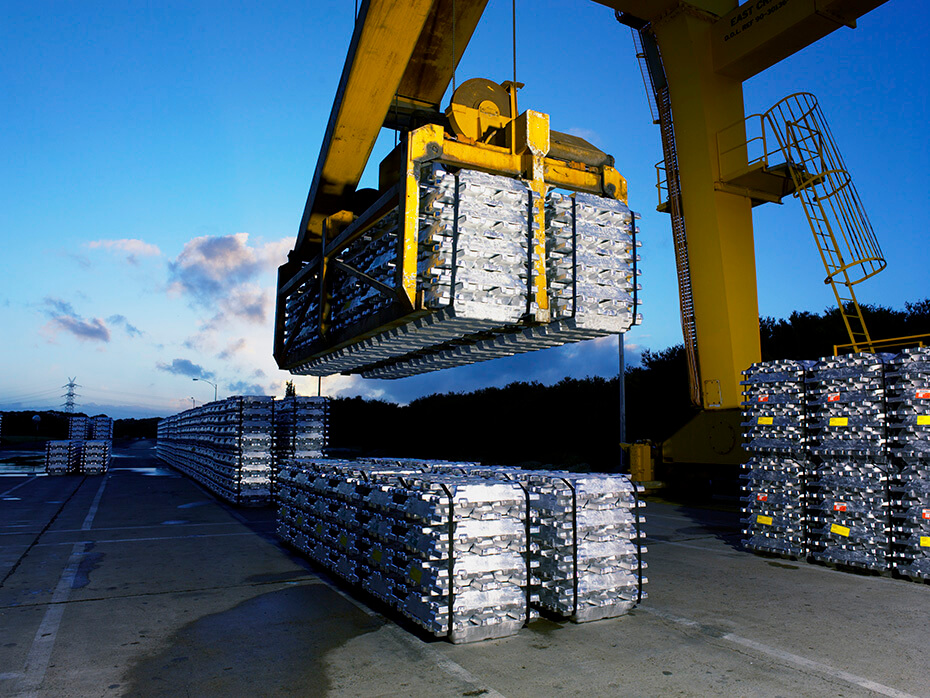
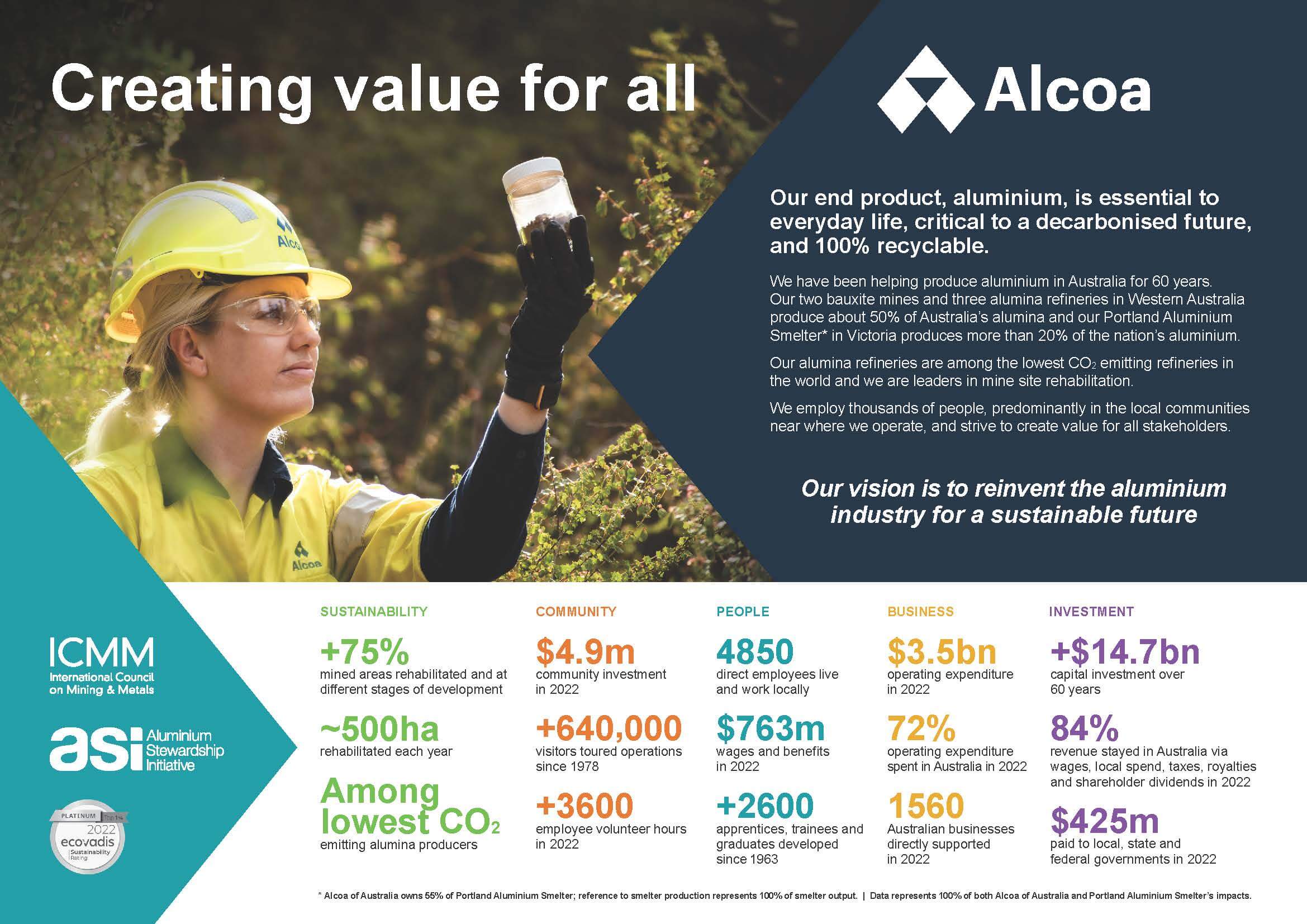
Alcoa is the world’s largest aluminium producer with operations in 43 countries and 130,000 employees.
 
Our products are used worldwide in packaging, building and construction, transport and aviation.
 
We’ve been investing in Australia for over 40 years and we helped drive the development of Australia’s aluminium industry.
 
Here in Australia, we operate:
 
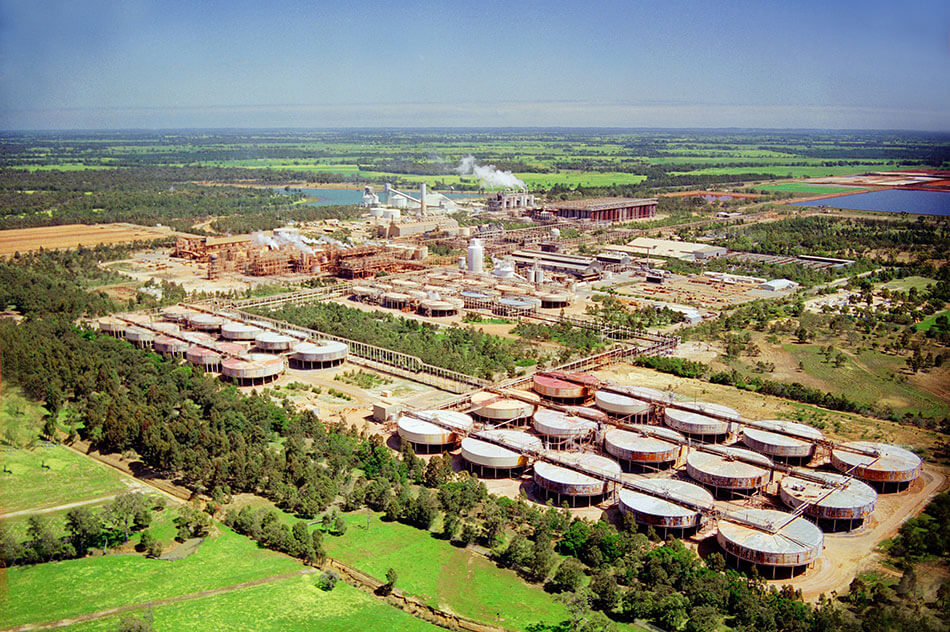
• alumina refineries at Pinjarra, Kwinana and Wagerup here in Western
  Australia
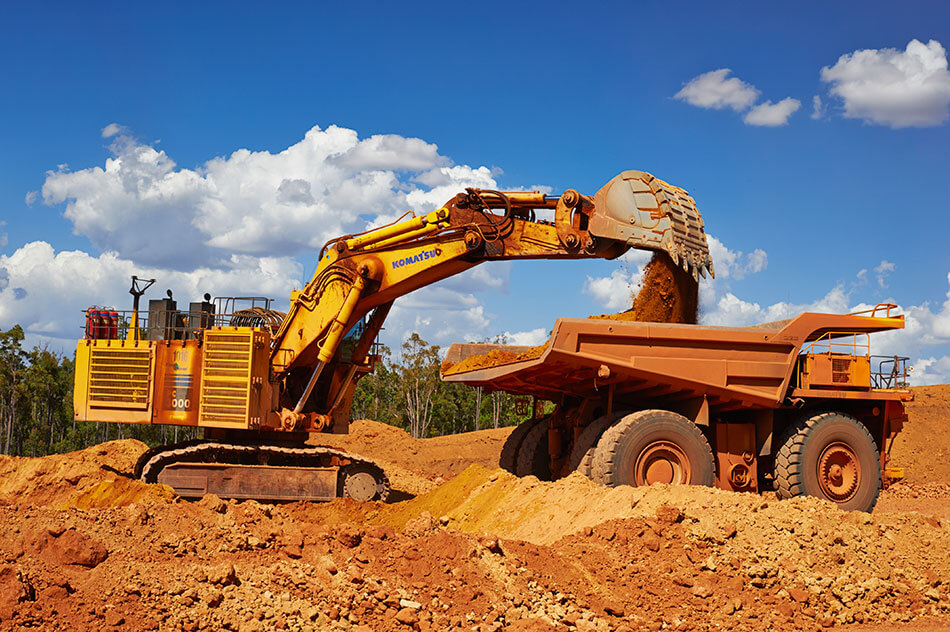
• bauxite mines at Huntly and Willowdale also in WA
• aluminium smelters in Victoria, and
• aluminium rolling mills in Victoria and New South Wales
 
We produce over 8 million tonnes of alumina in WA, accounting for around 13 per cent of world demand.
 
And we are a major exporter, including to the world’s fastest growing economies in Asia and particularly China.
 
Like other companies, Alcoa is investing to grow our operations in Australia.
 
This year, we completed a major upgrade of our Pinjarra refinery, making it the world’s largest alumina refinery.
 
Alcoa has also proposed an expansion of our Wagerup refinery.  We received environmental approval for the project only last month.
 
Together, these projects could earn more than $23 billion in exports and generate thousands of jobs.
 
GROWING WITH LOCAL COMMUNITIES
 
The Pinjarra and Wagerup growth projects are a timely lead-in to my topic.
 
The growth in global demand has created once-in-a-generation opportunities for the resources industry.
 
The business imperative is to expand production - and to do so in a timeframe that meets current market conditions.
 
This creates a strong incentive to cut corners and to rush investments through.
 
Our experience, however, is that growth can only be truly sustained if pursued in close partnership with local communities.
 
Pinjarra upgrade
 
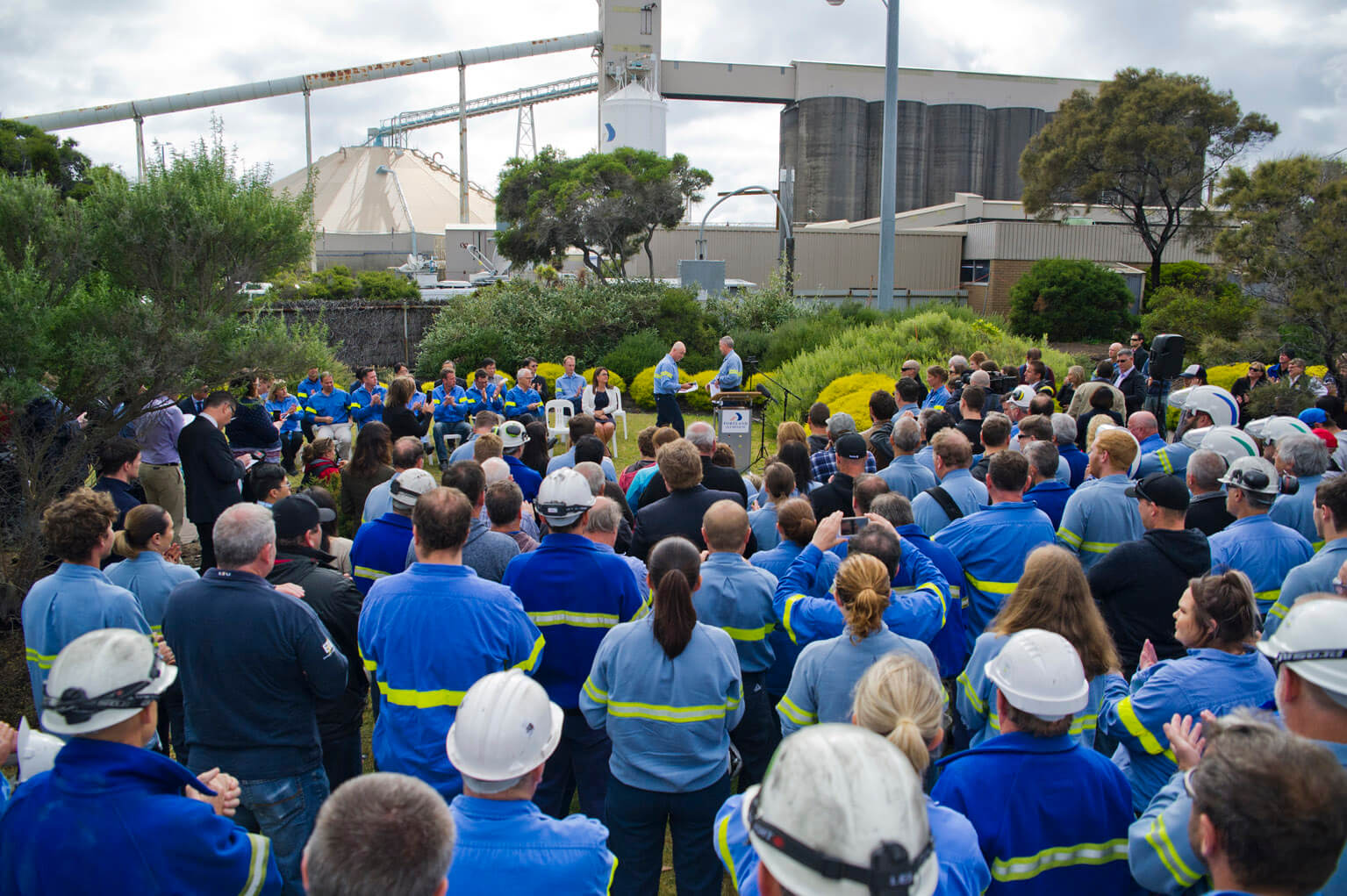
Alcoa undertook an extensive community engagement process for our Pinjarra refinery upgrade.
 
We approached the project with sustainability principles clearly in mind.
 
The process began with a community workshop attended by more than 40 stakeholders.
 
This led to the establishment of a Stakeholder Reference Group to work closely with Alcoa’s project team.
 
The group examined the environmental, social and economic aspects of the project, and reviewed our draft environmental assessment.
 
A key issue raised was the need to maximise local benefits.
 
Alcoa responded by implementing a new local purchasing policy to support local businesses and helping local firms do business with us.
 
We also opened a new office at the Pinjarra town site and widened opportunities for local youth through training programs.
 
The Pinjarra upgrade project has delivered real benefits to the region and this is something we’re very pleased with.
 
The WA Environmental Protection Authority described the community process as a ‘Best Practice Example’ of public engagement.
 
Wagerup expansion
 
We drew on these learnings when talking to the local community on our proposed Wagerup refinery expansion.
 
Some of you would know that the refinery has had a difficult relationship with the local community.
 
Alcoa made mistakes in the past and this is something we acknowledged and have worked hard to address.
 
The project provided an opportunity to move forward and to re-establish a positive working relationship with the community.
 
Stakeholder consultation began with an ‘open space’ workshop where participants determined the agenda.
 
Five working groups were established to examine key components of the project and to provide input into the environmental assessment process.
 
Over 60 working group meetings were held.
 
This was a substantial commitment by the community members involved and we’re very grateful for their contribution.
 
Issues identified by the community included for example:
 
• a lack of local training and employment opportunities, and
• Alcoa’s economic contribution to the region.
 
We responded with a 20 year Alcoa Sustainability Fund to support local infrastructure and projects.
 
To ensure the community shares in the benefits of growth, Alcoa’s contribution to the Fund is linked to production levels at the refinery.
 
This means that our contributions to the community will rise as the refinery expands.
 
In addition, Alcoa has committed A$ 3 million to establish a local Enterprise and Learning Centre.
 
The centre will provide youth training, skills development and adult education to the local community.
 
I’m pleased to advise that the Wagerup expansion project received environmental approval in September.
 
We’re now working with the community as we progress to the next stage of the project.

BUILDING A SUSTAINABLE WORKFORCE
 
Let me turn to an issue that many of you will be familiar with.
 
That is – how to sustain and grow our industry despite an ageing workforce and the current skills shortage.
 
The challenge is a real one. 
 
Rising costs are undermining Australia’s ability to attract new investment in the resources industry.
 
This investment is crucial if we’re to maintain the prosperity we currently enjoy.
 
A further challenge is that women, indigenous Australians and others don’t see the resources sector as a traditional career choice.
 
Young people also aren’t attracted to our industry and aren’t studying the necessary subjects.

Promoting awareness of industry careers
 
We therefore need to boost participation while improving retention rates. 
 
This is something that industry is already doing.
 
At Alcoa, we’re working to encourage more women into the workforce.
 
We’re doing this by promoting equal opportunity and awareness of what a career in resources can offer.
 
For example, we provide 50 scholarships to young women each year under the Alcoa Future Women of Industry program.
 
Participants take part in a mentoring and work experience program.
The program has been a success with many going on to apprentices or further study.
 
Encouraging older employees to stay
 
Turning to our older employees, Alcoa like many resource companies has an ageing workforce.
 
Over 60 per cent of employees have been with us for more than 10 years, and 20 per cent for more than 20 years.
 
While this provides a tremendous advantage in terms of knowledge and experience, it also places pressure on workforce sustainability.
 
We’re encouraging our older employees to stay through a range of initiatives that recognise experience and provide flexibility.
 
These include superannuation and retirement plans that cater for part-time phasing into retirement. 
 
We also tailor work for our senior employees so they can continue to add value through their knowledge and experience.
 
Flexible work arrangements
 
As our older employees tell us, having a more inclusive and flexible workplace helps retention rates.
 
It’s also the right thing to do and people shouldn’t be forced to choose between a career and family.

Alcoa’s flexible work arrangements include, for example:
 
• Paid parental leave
• Job share
• Part-time work
• Flex time; and
• Work from home
 
We support family and open days for employees, families and the wider community to keep families engaged.
 
And we continue to look at how we can offer meaningful career paths for women in our organisation.
 
Such arrangements are now common in the resources sector and many of you will have similar programs.
 
While we’ve made some progress at Alcoa, we’re still far from there.
Women for example represent only around 11 per cent of Alcoa’s workforce – slightly up from 8 per cent ten years ago.
 
What’s changed most is the mix of roles that women hold.  We now have more women in senior roles and in more diverse roles.
 
Around 20 per cent of management roles and 24 per cent of professional roles are now filled by women.
 
In many ways, however, we’re still locked in an old model. 
 
We need instead to approach the issue strategically – as underpinning the sustainability of our business.

CLIMATE CHANGE AND ENERGY
 
Finally, I’d like to touch upon the issue of climate change.
 
As an energy intensive industry, we’ve always understood that efficiency and sustainability go hand in hand.
 
Managing greenhouse emissions is a key sustainability challenge for us as we expand production to meet global demand.
 
Alcoa has taken a global leadership position by voluntarily reducing emissions.
 
Since 1990, we’ve reduced our global greenhouse emissions by 25 per cent.
 
We reached this goal years ahead of our 2010 target date and we’re now working to maintain this as we grow.

Here in Australia, Alcoa is addressing greenhouse emissions through:
 
• energy efficiency
• productivity improvements, and
• new technology
 
We have reduced the emission intensity of our aluminium smelting operations by 57 per cent compared to 1990 levels.
 
We’ve reduced emission intensity of our alumina refining operations by over 7 per cent.
 
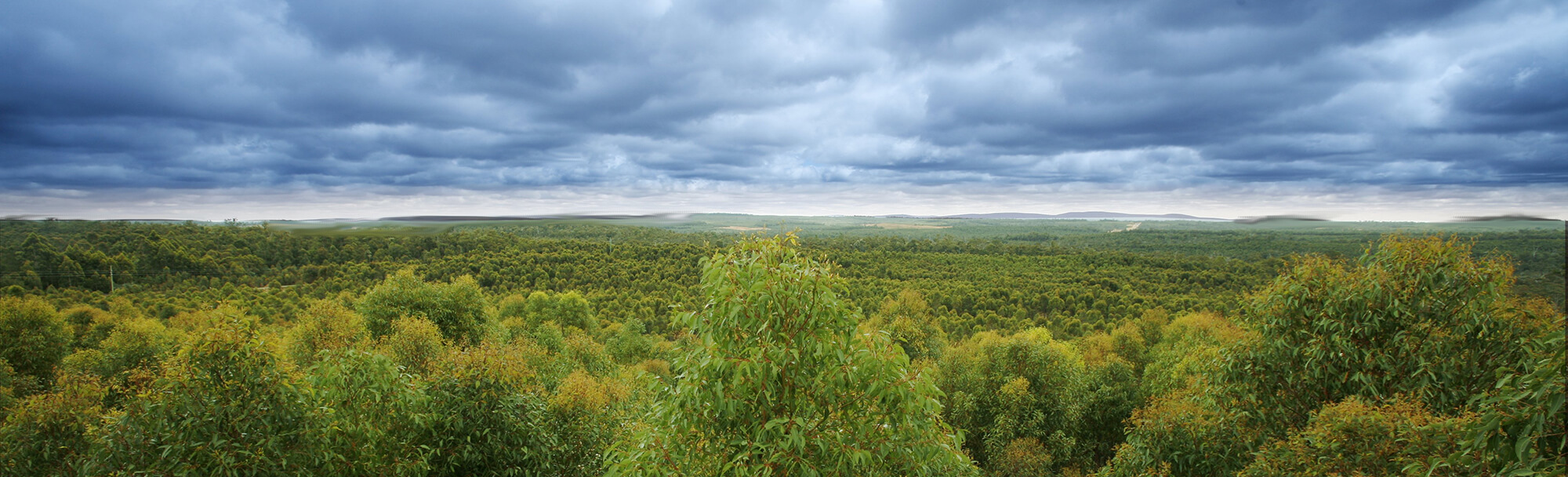
And we’re a recognised world leader in minesite rehabilitation.
 
We were the first mining company in the world to return 100 per cent of species diversity in our rehabilitated areas in Western Australia.
 
Our minesite rehabilitation program was recognised by United Nations Environmental Program which included Alcoa in its Global 500 Roll of Honour.
 
Greenhouse improvements through new technology
 
Alcoa’s greenhouse improvements have been underpinned by technological innovation.
 
Our experience is that technology offers the best solution in the global fight against climate change.
 
For example, Alcoa and Alinta Limited are partnering to build environmentally-friendly cogeneration power plants at our Pinjarra and Wagerup refineries. 
 
The plants produce both electricity and heat from the same fuel source, delivering greenhouse benefits.
 
Cogeneration plants at the Pinjarra and Wagerup refineries could save 1.8 million tonnes of greenhouse gas emissions each year compared to conventional plants.
 
This is equivalent to taking 450,000 cars off the road in Australia – or one out of every two cars in Perth.
 
Another project that offers significant greenhouse benefits is residue carbonation.
 
Alumina refineries produce large volumes of bauxite residue which requires long-term storage.
 
Alcoa has developed innovative technology that reduces the residue’s alkalinity by mixing it with carbon dioxide. 
 
The process locks up large volumes of carbon dioxide that would otherwise have been emitted into the atmosphere.
 
We have established the world’s first residue carbonation plant at our Kwinana refinery and are currently carbonating 25 per cent of the refinery’s residue output.
 
This will increase to 100 per cent by the end of this year with the installation of a pipeline to bring waste gas from a nearby ammonia plant.
 
The greenhouse emission reduction for the Kwinana refinery alone will be equivalent to taking over 12,000 cars off the road.
 
We’re now looking at ways to apply the technology across our operations in Western Australia and worldwide.
 
It therefore interests me every time I read about proposals to trial carbon sequestration or carbon sinks.
 
We’re already doing this here today at our Kwinana refinery.
 
Aluminium – part of the solution on climate change
 
I’ve spoken about finding more sustainable ways to make our product.
I should mention that aluminium itself has the potential to be part of the solution on climate change.
 
For example, aluminium is endlessly recyclable and recycling saves 95 per cent of the energy it would take to make new metal.
 
We’re the largest recycler of aluminium in Australia and recycle 70,000 tonnes of aluminium each year.
 
Aluminium is also light-weight which means significant energy savings in transport.
 
Every kilogram of aluminium used in a car can save a net 20 kilograms of greenhouse emissions over the car’s life.
 
We believe that recycling and the use of aluminium in transport have the potential to make aluminium climate neutral by 2020.
 
This means that emissions from making aluminium will be fully offset by emissions saved from recycling and use in transport.

CONCLUSION
 
So to conclude, our ability to operate and grow as an industry depends on a commitment to sustainability.
 
This is especially critical at a time of rapid transformation and growth.
I’ve shared with you some of Alcoa’s experiences as we grow our operations in Australia.
 
Other resource companies are also pushing the boundaries and you’ll hear from some of them over the next few days.
 
Current market conditions present once-in-a-generation opportunities for industry.
 
However, growth can only be truly sustained if pursued in close partnership with the community and environment where we live and work.
 
This is our challenge as we invest and grow as an industry.


Copyright © 2008 Alcoa Inc.
country sites

customer login