alcoa.com

Alcoa in Australia
 
May 12, 2005

Launching the Australian Aluminium Industry’s First Sustainability Report

Wayne Osborn,
Managing Director of Alcoa World Alumina Australia and Chairman of the Australian Aluminium Council
Presentation to International Aluminium Institute Forum
Brisbane
May 12, 2005

Members of the International Aluminium Institute (IAI) distinguished guests and fellow members of the Australian Aluminium Council – welcome to what I believe to be a very significant occasion.
 
Today, I have the welcome task of launching the Australian Aluminium Council’s Industry’s 2004 Sustainability Report.
 
I’d like first to recognise the valuable role and contribution that Ron Knapp, Executive Director and his team at the Australian Aluminium Council make to our industry. Ron’s leadership and direction have given our industry a respected voice and influence in policy debates.
 
Ron, we don’t often pause to say thank you but I’d like to do so this morning and congratulate you on your achievement with this Report.
 
Before launching this report card on our industry I thought it might be instructive to give you a quick overview of the Australian Aluminium industry. While I appreciate that many of you will be very familiar with the industry through your local operations I suspect that the size and scope of the industry here is something that is frequently overlooked as a consequence of that familiarity.
 
The Aluminium industry has been a major investor in this country for more than 50 years. Throughout that time the industry has been a significant contributor to the economic well being of the regional communities in which it operates.
 
The Aluminium industry is an important part of the industrial base of Australia.
 
From its modest beginnings at the Bell Bay smelter in Tasmania the Australian aluminium industry has grown to be one of Australia’s major sources of export income. Its annual earnings now average close to A$8 billion dollars. It has a capital replacement value of more than A$30 billion dollars and employs around 17,000 people – mostly in the regional areas of Australia.
 
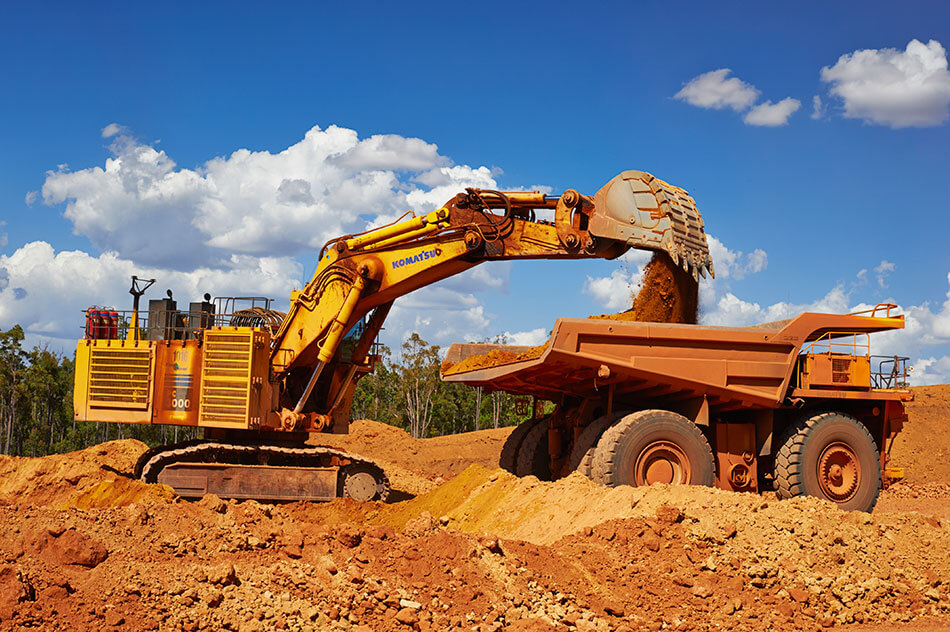
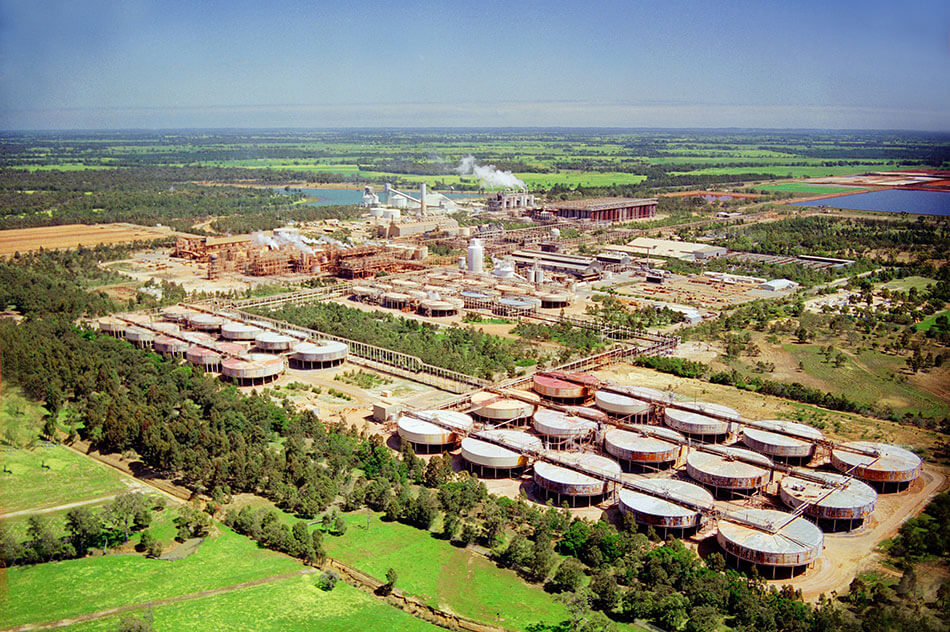
The Australian aluminium industry is the world’s largest producer of bauxite, 59 million tonnes in 2004, it is also the world’s leading producer of smelter grade alumina with 17 million tonnes in 2004.
 
Alumina production will increase in 2005 with the new Comalco refinery at Gladstone and incremental production increases from other Australian refineries. Aluminium metal production in 2004 of 1.9 million tonnes was at its highest recorded level.
 
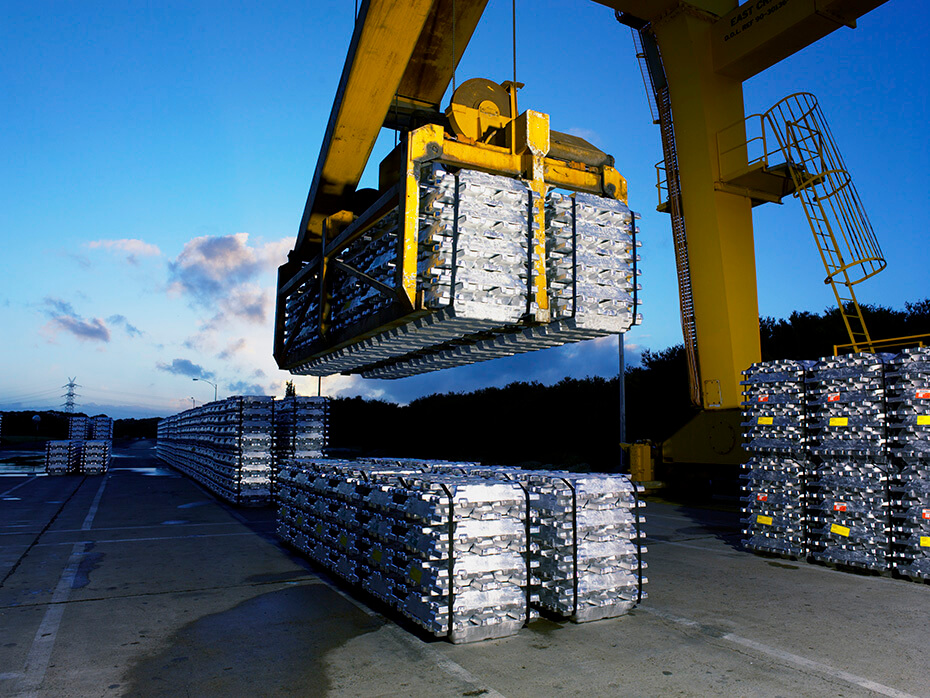
The Australian industry has a healthy downstream sector in rolling, extrusions and die casting with two rolling mills, 16 extrusion plants and 30 die casting facilities.
 
The continuing role of the Australian industry in the global aluminium market is dependent on its ability to remain competitive across all areas of operations – if we fail in one area then we put at risk our ability to be successful in others.
 
The Aluminium industry has set benchmarks in excellence at managing the process side of our businesses, whether it is business systems, statistical control, quality assurance or environmental performance.
 
However, despite our size and performance we have not been an industry which is seen as a keystone of the Australian economy. Nor have we managed to build a clear industry profile in the broader community commensurate with the value proposition we represent for Australia.
 
This Sustainability Report is a critical step in changing that. We must use it to open up dialogue with the industry’s stakeholders. For the first time we have a Report which details how the Australian aluminium industry uses its resource base in the production of primary and secondary products. It is a frank assessment of both the economic benefits the industry delivers to Australia and the impact the industry has on the communities and the environment in which it operates.
 
The Report sets out to meet the expectations of government and community to be informed about how the Aluminium industry goes about its business. It provides real data to allow for meaningful measurement of both benefit and impact.
 
On any analysis, I think it is fair to say that the Australian aluminium industry is progressing very well when measured against the criteria of sustainable development principles.
 
Our continued growth is dependent on that. We need to engage and secure the support of employees, local communities and government at all levels around this concept of sustainability of the Aluminium industry.
 
Meaningful engagement with our communities requires a constructive relationship, where the community recognises the purpose of the industry. All stakeholders need to feel part of an active partnership that contributes to their economic and social well-being and delivers product they see as integral to their needs.
 
The industry’s partnership with Governments at all levels is about providing a strong and public commitment to industrial development.
 
We look to governments to create the necessary regulatory frameworks for industry to thrive. Government needs to facilitate competitiveness and provide infrastructure, environmental management, industrial relations and social development.
 
Each of the key players in the industry in Australia has developed our own approaches to defining the sustainability of our operations and of our industry.
 
I believe we have been successful in this. The financial performance of the industry and the strong drive to invest in growth is a sign of that success. However, as an industry we need to be more upfront about sustainability.
 
This report is an important means of achieving this. It shows the performance of the Australian aluminium industry as a whole in the key areas of greenhouse gas emissions, recycling, energy use, energy efficiency, use of water and land, spent pot lining and fluoride emissions.
 
The report demonstrates that we have made substantial progress, and in a number of instances the Australian aluminium industry is a global leader.
 
In land use and rehabilitation for example Australian alumina producers began the process of rehabilitating mined bauxite areas in the 1960’s and are now regarded as the international benchmark.
 
In 1990 the United Nations Environment Program (UNEP) recognised the "outstanding practical achievements in the protection and improvement of the environment" by electing Alcoa of Australia to the Global 500 Roll of Honour. That commitment to land stewardship is just as strong today. In 2003 the Society for Ecological Restoration International (SERI) gave Alcoa its Model Project Award for the company’s work in successfully returning the botanical richness of Jarrah forest in rehabilitated bauxite mines in Western Australia.
 
On greenhouse gas emissions the Australian industry’s performance has been equally impressive. In smelting there has been a substantial reduction in our direct emissions from 6.2 million tonnes in 1990 to 4.8 million tonnes in 2003 – a some 22.5 % reduction. Perhaps more impressive is the reduction in direct emissions per unit of production over the same period, going from 5.1 tonnes of CO2 –e per tonne of metal produced to 2.6 tonnes of CO2 –e per tonne of metal, or a staggering 48%. The driver behind these figures has been the industry’s focus on the management of perfluorocarbon gas emissions (PFC) with an Australian industry reduction in PFCs of some 74% frofrom our 1990 levels – we are now running at a level well below the IAI global objective for 2010 of 0.88 tonnes of CO2-e per tonne of metal.
 
Norsk Hydro is presently investing some $40 million at its Kurri Kurri smelter to upgrade its remaining side worked prebake potline, with an expectation of further significant PFC reductions when complete.
 
Other major development projects are aimed at further reductions in our greenhouse footprint.
 
Queensland Alumina, currently the world’s largest alumina refinery located in this great state of Queensland – and one that many of you have been involved with as participants and indeed customers - has recently completed a major re-fit to its calcination process to deliver substantial future greenhouse emissions reductions.
 
One of the truly exciting projects currently being developed is the Alcan Gove gas pipeline to deliver natural gas to the Gove refinery. This will replace the existing use of oil products for the production of heat and electricity. It is another step forward in reducing direct emissions per unit of output.
 
At Alcoa we are continuing to introduce gas-fired co-generation with our partner Alinta at our Western Australian refineries.
 
Again, all this is taking us in the right direction of continuing improvement in energy efficiency. Many of us are involved in some of the specialist co-operative research centres established by the Australian Government. One example is the CRC for Clean Coal Technology, which is addressing, among other things, the opportunities to reduce the moisture content of Victorian brown coal prior to combustion.
 
The Victorian Government announced last week matching funding for the development of a pre-commercial Mechanical Thermal Expression pilot plant. This initiative has the potential to reduce greenhouse gas emissions by up to 30% in the generation of electricity from brown coal.
 
A key feature of Aluminium is its ability to be endlessly re-used. In Australia the most visible face of this recycling is in can production where some 63% of cans produced come back for reprocessing. The industry refers to this process as "above ground mining" or an "energy bank" where material on one hand is used again and again, and the original significant energy content is also used again and again, with as little as 5% per cent of the original energy required for recycling.
 
Recycled metal presently accounts for more than 30% of world aluminium demand and based on the increasing re-use of metal from transport, building and other applications we believe could provide up to 50% of world demand within 20 years.
 
I would like to take this opportunity to congratulate the IAI, for innovative work that has been done to define the positive contribution from the use of aluminium in the transport sector and the work on the global aluminium model on metal flows, as well as in the area of recycling. This work is invaluable to our industry.
 
The industry now needs to do more to communicate the greenhouse benefits aluminium offers. We all know that light-weighting of cars through increased use of aluminium reduces fuel consumption and greenhouse gas emissions. We can all cite the statistic that every kilogram used to replace heavier materials in car production can save 20kilograms of carbon dioxide over the life of the car. The IAI’s work on life cycle analysis tells us that it should be possible for aluminium to become climate positive within 20 years.
 
We now need to get that message out. We should not stop until we’re hearing it from every parrot in the petshop (to quote a former Australian Prime Minister).
 
The Australian industry’s initiatives on spent pot linings and water use are further examples of proactive management by companies. You will note in the report the focus on reuse of water in alumina refining. Both Alcoa and Queensland Alumina are working with local water authorities to reduce use of fresh water and increase the use of grey water. Last year, the industry use of grey water increased to 43%. The industry is also focussed on finding and developing alternative sources of water, including lower quality water and using this where feasible.
 
This focus on finding better and more efficient ways of using our resources is at the heart of the industry’s commitment to a sustainable future.
 
The commitment is more than a nod in the direction of policy settings. It is a real and substantial commitment to science and its application to reduce our environmental footprint. The Australian industry spends more than A$40 million each year on research and is one of the country’s largest employers of scientists.
 
Both Alcoa and Alcan have located their global research and development facilities in Australia – Alcan’s is here in Brisbane and Alcoa’s at Kwinana in West Australia. Rio Tinto Aluminium also maintains a substantial research presence in Australia.
 
There are a number of striking features about the industry’s initiatives in sustainability: the first is that these aren’t recent decisions by companies to respond to current perceptions about the environment or sustainability.
 
The second and perhaps most important feature is that all of these initiatives have been voluntary. There have been no mandatory PFC reduction targets or metal recycling targets. Perhaps, and most importantly, the companies have engaged their employees and local communities as the first step in the process.
 
The Aluminium industry shares the view that climate change is the most central and the highest sustainability issue for the industry globally as well as here in Australia.
 
As an energy intensive industry, we are often portrayed as being part of the problem. In fact by its very nature, Aluminium is and must continue to be part of the solution.
 
The industry has shown the way through its commitment to and achievement of significant reductions in the absolute levels of direct greenhouse gas emissions.
 
The Australian industry has also shown itself as a leader in energy efficiency and reducing the emissions intensity of its final primary metal product. This sustainability report sets out this performance clearly.
 
It is a performance we are justifiably proud of.
 
However, the significance of the challenge into the future is one that none of us should take lightly.
 
The coming into force of the Kyoto Protocol and the division of the world into those pursuing cap and trade policies and those adopting other measures to reduce energy emissions has brought with it a new geopolitical and cost dynamic for the industry globally.
 
Here in Australia we have seen the Federal government decide that the country’s long term interests would not be served by ratifying Kyoto.
 
Instead it would pursue policies which whilst meeting the 108 percent Kyoto target would engage industry in a way which addressed the longer term issues and which also preserved the competitiveness of the Australian industry and economy.
 
The Energy White Paper’s focus on technology and long term solutions to sustainable greenhouse abatement is in line with the industry’s view.
 
The Australian aluminium industry’s record in delivering reductions in emissions via technology, innovation and investment has been amply demonstrated in the voluntary Greenhouse challenge.
 
The industry looks forward to enhancing this under Greenhouse Challenge Plus. We have already begun long term investment programs to improve energy efficiency, reduce the energy intensity of our products and deliver sustainable abatement of greenhouse gases.
 
Globally the industry is committed to new investment in technologies needed to deliver the long term reductions required if we are to make any real progress on our goal of climate neutral production.
 
As I noted earlier, the real need in this quest for a sustainable future is a shared accountability. We as an industry need to establish in the mind of our stakeholders the true notion of the sustainability of our industry. Our relationship with our employees, the community and government as well as our customers and shareholders needs to be based on this.
 
But before I address the three pillars of what that sustainability means, I want to talk about two specific issues of critical importance to our industry.
 
First Governance, Governance is now a key driver for the community and governments. All companies are expected to have a well developed, robust and transparent system of accountability.
 
Governance criteria against which our performance is judged every day, includes:
- Our Vision and Values;
- Policies and standards;
- Our legal compliance in safety, health, economic, social and environment.
 
And it requires a culture of accountability, management excellence and comprehensive systems of reporting.
 
Second, I want to highlight the importance of Safety and Health.
 
Safety & Health is a priority for every one of us, as well as for our employees and the community. We demand of ourselves that we provide safe and healthy places of work for all employees and a safe and healthy environment for our neighbours and a safe and healthy product for our customers.
 
These provide the foundations for the triple bottom line. The three pillars of sustainability against which corporations and industry are judged.
 
Economic strength is critical to any company’s ability to meet the expectations of shareholders, employees, the community and government. It is dependent on a sound capital base with a strong market presence; a competitive advantage and importantly, profitability and a proper return to investors.
 
Social accountability requires a company to accept its role as a responsible citizen in the communities in which it operates. This translates to a commitment to employees to provide development, learning, opportunity for growth, recognition and self esteem. It also requires recognition of the human dimension of the relationship with the community. We need to be driven by people as individuals, not processes.
 
Environmental accountability requires every company to set itself strong goals for environmental performance and to put in place measures to achieve them. We must work to promote recycling/reuse and eliminate waste. We must minimise emissions to land, water and air and pursue energy and resource efficiency to deliver sustainable greenhouse emission abatement, achieve energy savings, conserve water and manage land responsibly. We must continue to develop and maintain conservation and rehabilitation practices to maximise product values through initiatives such as life cycle analysis and "cradle to grave" product stewardship.
 
With the right policy settings, sound investment and market conditions, and the support of our communities the Australian aluminium industry will continue to develop as a key producer for the global markets. Our role as producers is to ensure that we communicate effectively with our stakeholders so that they the value the opportunities for growth as much as we do. The Australian industry’s first sustainability report is a sound start to that process and I look forward to being part of its future.
 
END.

Copyright © 2009 Alcoa Inc.
country sites

customer login