alcoa.com

Alcoa in Australia
News From Australia 
News From Australia
Awards
Reports
Image Library
Community e-news
Public Tours and Education
Media Contacts
Cransberg Says
October 24, 2008

RE: WA DEC Report Release (Winter 2006 Study: Intensive Air Quality Investigations at Wagerup Report)

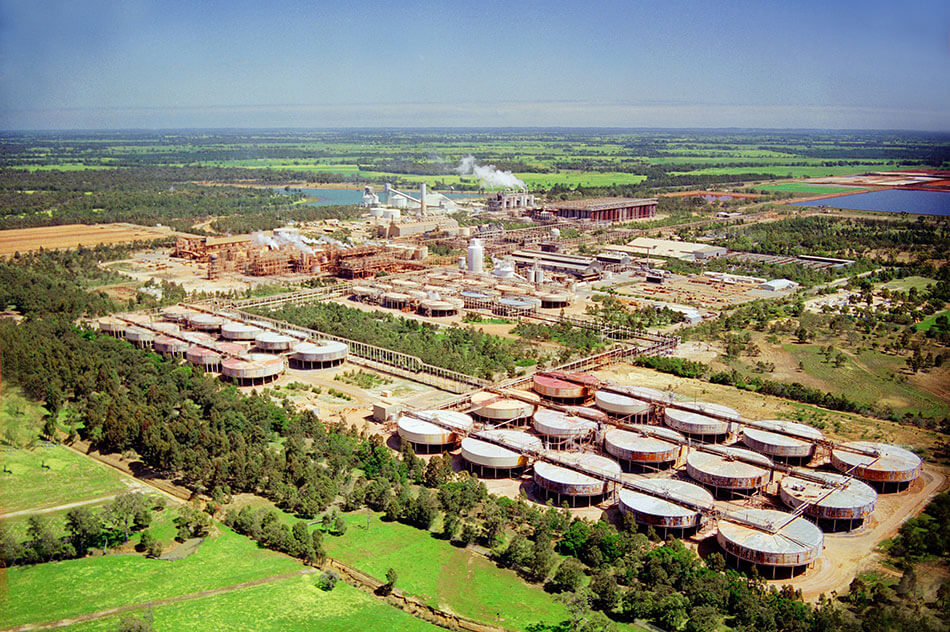
The report released today by DEC confirms Alcoa’s understanding of Wagerup refinery’s air monitoring and modelling processes. It also offers greater insight into the meteorological processes around the refinery, and how emissions are dispersed.

The report focuses on the dispersion of emissions on a number of days when odour was detected and explains how meteorological conditions (wind speed and direction) in winter can contribute to odour impact.
 
Kim Horne, Executive Director, Environment, Health and Safety said: “The report considers a handful of days during winter 2006 that odour was present, and shows how these plumes travel on the wind.
 
“It does not provide information on the concentrations of refinery emissions, and we know from extensive monitoring programs by CSIRO and others that the air around the refinery is safe and meets ambient guideline levels
 
“Much of the report confirms what we already know about the way air transports emissions around our site, and it helps us further understand why people smell the refinery at certain times.”
 
An independent report from the same study period (winter 2006) released 18 July 2008 by CSIRO Chief Research Scientist Ian Galbally confirmed that organic compounds in the air around Yarloop, near Alcoa’s Wagerup Alumina Refinery are typical of a rural environment. 
 
Mr Galbally said the VOCs measured in air around the refinery are at the low end of measurements taken from other rural environments.
 
He said that odour events observed during the study were probably caused by gases with very low odour detection thresholds, present in concentrations of a fraction of one part per billion in the air that could not be detected, even with the highly sensitive equipment.
 
What this means is the human nose is more sensitive than the most sophisticated equipment, sometimes detecting tiny concentrations that the technical equipment does not pick up.
 
“Wagerup refinery is the most studied industrial facility in Australia.  These studies show time and again that  the air around the refinery is safe, for our people and our community,” said Mr Horne.
 
Alcoa will continue to work collaboratively with the DEC and all stakeholders to ensure its monitoring programs are beneficial to its operations and the community.
 
Visit www.alcoa.com.au/healthandwellbeing  for information on studies and air monitoring at Wagerup refinery.
 
Media contact: Michaela Southby, 0400 127 427

Background
This DEC study conducted atmospheric measurement programs around the Wagerup Refinery from July 7th to October 10th 2006, using a scanning Doppler lidar system in coordination with other instrumentation to assess the behaviour of aerosol plumes emanating from the refinery.
 
A Doppler lidar was deployed by the Arizona State University lidar group in collaboration with the DEC to investigate dispersion pathways and meteorological mechanisms in the area surrounding the refinery. 
Since 1998, Alcoa has spent more than A$54 million on new technologies and other improvements at the refinery to reduce emissions and odour. This has made Wagerup the most environmentally advanced alumina refinery in the world regarding emissions and odour.  In 2006 Alcoa installed a $10M Regenerative Thermal Oxidiser (RTO) to further reduce emissions and odour from the liquor burner which destroys around 99% of VOC from the liquor burner output. 
 
Alcoa is undertaking a range of studies and investigations to satisfy the environmental approval conditions.  These have included meteorological monitoring, air dispersion modelling studies, water investigations and comprehensive air quality monitoring.

Copyright © 2009 Alcoa Inc.
country sites

customer login