Alcoa in Australia
News From Australia 
News From Australia
Awards
Reports
Image Library
Community e-news
Public Tours and Education
Media Contacts
Cransberg Says
July 18, 2008

CSIRO Report Confirms Air Quality

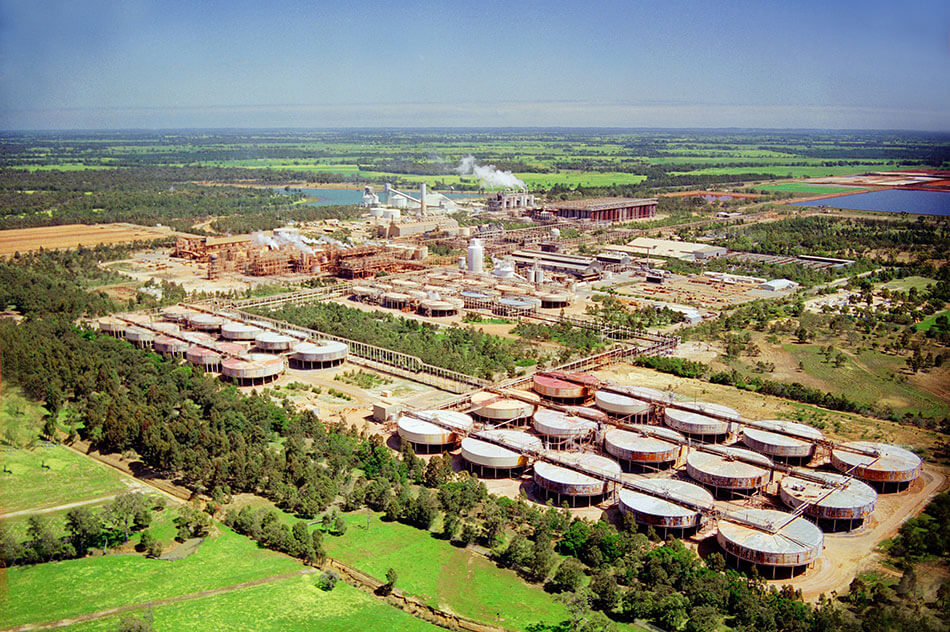
An independent report released today by CSIRO Chief Research Scientist Ian Galbally confirms that organic compounds in the air around Yarloop, near Alcoa’s Wagerup Alumina Refinery are typical of a rural environment.

CSIRO undertook an intensive eight week air monitoring study from August 10, 2006 - October 7, 2006, to further understand air quality in the region around the refinery.  Monitoring was undertaken using CSIRO’s high-tech Proton Transfer Reaction Mass Spectrometer (PTRMS), which can continuously monitor at very low levels for volatile organic compounds (VOCs) in the air. 
 
Mr Galbally said the VOCs measured in air around the refinery are at the low end of measurements taken from other rural environments. He said that odour events observed during the study were probably caused by gases with very low odour detection thresholds, present in concentrations of a fraction of one part per billion in the air that could not be detected, even with the highly sensitive equipment.
 
Alcoa’s WA Operations Manager Simon Butterworth said the CSIRO report is consistent with previous studies showing the refinery to be safe for Alcoa employees and the community, and local air quality to be typical of a rural Australian environment. The refinery remains a small contributor to ambient air quality, with VOCs coming from many other sources, such as:
  • natural emissions from plants and grasses, decomposition of leaf litter,
  • wood heaters, tobacco smoke, combustion engines,
  • solvents, landfill sites and vehicle exhaust.
 
“The results of the CSIRO report are consistent with a large number of studies previously undertaken by Alcoa and independent experts using sophisticated air testing equipment. These studies confirm that the Wagerup refinery is a very small contributor to ambient air quality and the air quality is typical of a rural environment,” Mr Butterworth said.
 
Since 1998, Alcoa has spent more than A$54 million on new technologies and other improvements at the refinery to reduce emissions and odour. This has made Wagerup the most advanced alumina refinery in the world in this respect.
 
Improvements included fitting multi stage dust collectors to the calciners which reduce peak dust emissions, installation of a system to capture gases from various sources within the digestion area of the plant, and increasing the height of the Multiflue (set of 5 stacks) to enable better dispersion of emissions to reduce the concentration of emissions at ground level.
 
An improvement was also made to the liquor burner – equipment required to remove organic matter during the refining process. While emissions from the liquor burner have previously been successfully controlled by a Catalytic Thermal Oxidizer (CTO), which eliminated a high percentage of VOCs, the opportunity for further improvement in emissions management was taken with the installation of more sophisticated emission control equipment - a $10M Regenerative Thermal Oxidiser (RTO). This RTO destroys about 99% of VOC emissions, and was installed during the period of the study.  
 
Alcoa’s community engagement is part of its core business and it welcomes interest in its operations.  The Alcoa website, www.alcoa.com.au, provides full information on Alcoa values, operations and product, and community engagement. The Public Tours section details how anyone can visit any of its sites.

Media contact:
Michaela Southby
Communications Manager
0400 127 427

 
Click here to read the CSIRO report

Copyright © 2008 Alcoa Inc.
country sites

customer login