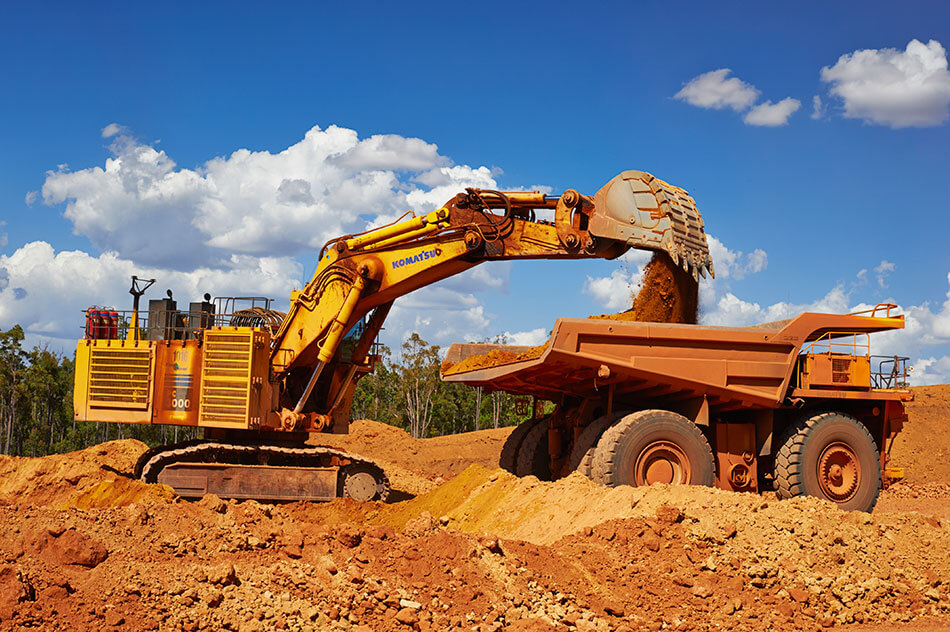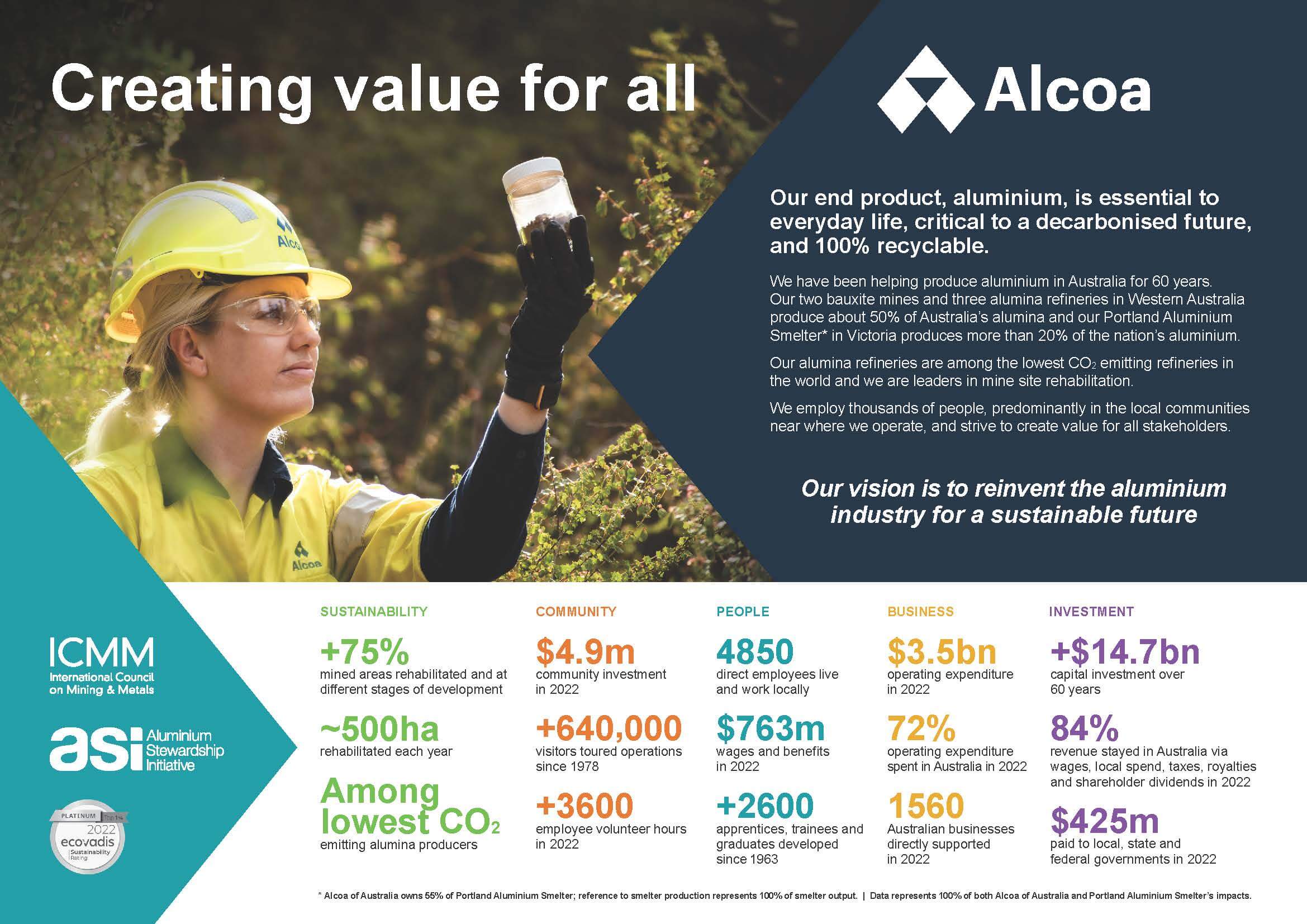
An excavator loads a truck with bauxite at Huntly, Western Australia - the world’s largest bauxite mine
Order?
Bauxite is off loaded into the crusher where it is crushed ready for travelling via the conveyor to the refineries for processing.
Order?
A bauxite mining area near the South Dandalup dam in 1980.
Order?
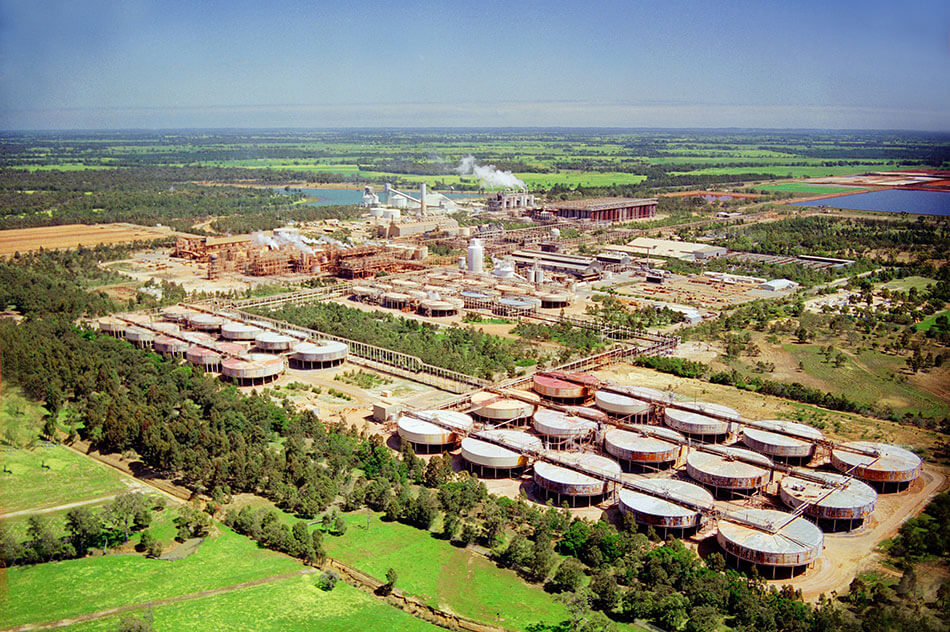
Bauxite arrives at the Pinjarra alumina refinery via the conveyor and is stockpiled for processing.
Order?
Alcoa’s Wagerup refinery in the south west of Western Australia was commissioned in 1984 and today produces around 2.6 million tonnes of alumina per annum. The Wagerup refinery employs 630 people, more than 85% of whom live in the local region.
Order?
Alcoa has partnered Alinta Limited to develop cogeneration plants at our refineries in Western Australia. A year’s electricity from each cogeneration unit saves around 450,000 tonnes of greenhouse gas emissions compared to a similar sized coal fired plant – equivalent to taking 112,000 cars off the road.
Order?
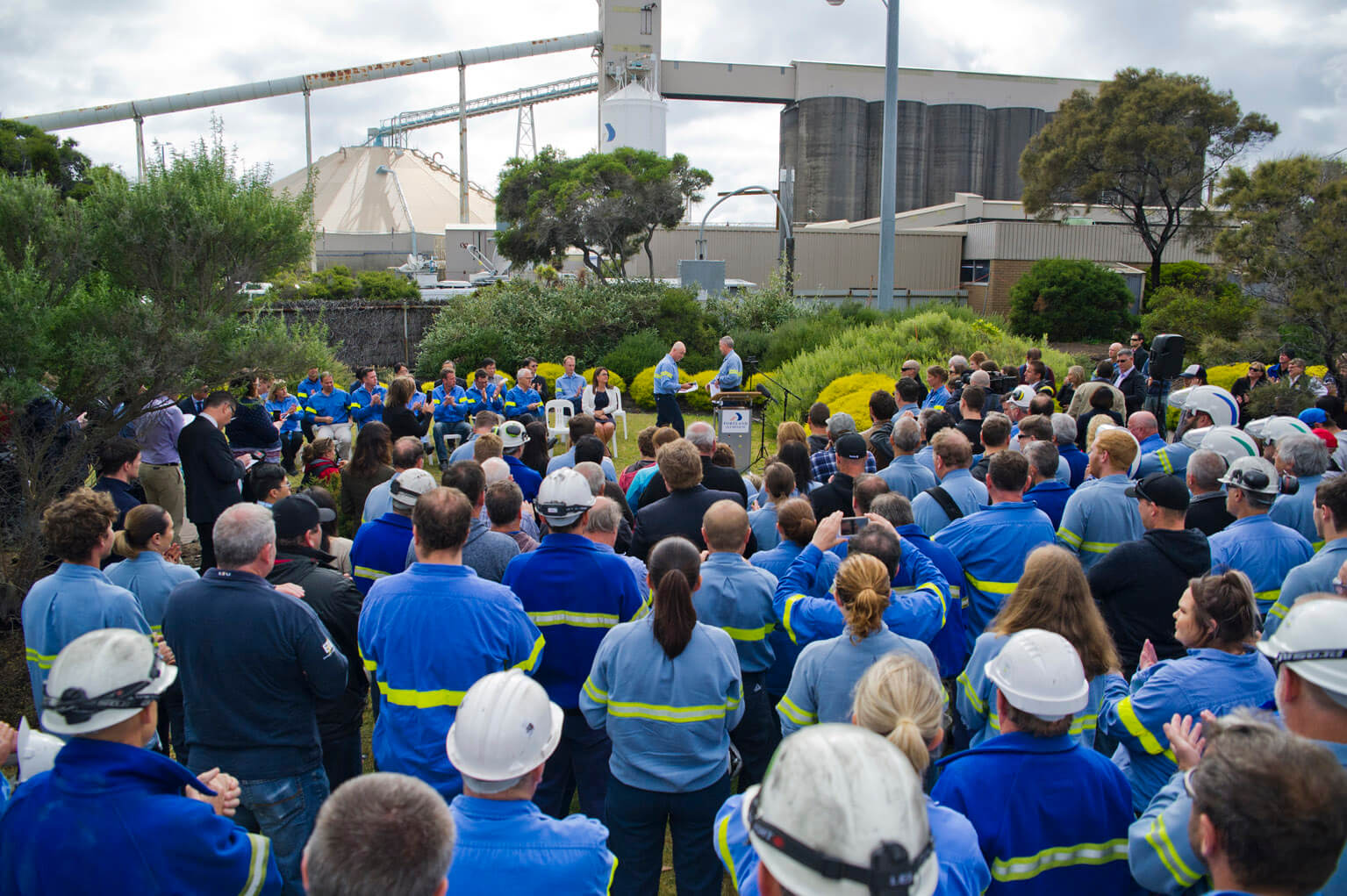
The Portland Aluminium smelter in south west Victoria is known as the ‘Smelter in the Park’ and recognised worldwide as a benchmark for industrial and environmental harmony.
Order?
Alcoa is Victoria’s largest single exporter, accounting for around 6% of the states merchandise exports. 70% of the aluminium produced by Alcoa in Victoria is exported overseas.
Order?
In all areas of transport aluminium is reducing fuel consumption and greenhouse emissions by reducing vehicle weight. An aluminium component is 40-50% lighter than an equivalent steel component and every 10% reduction in weight produces a 6-8% reduction in fuel consumption.
Order?
Levelling banks of the bauxite mine pit at McCoy project –Huntly mine Western Australia
Order?
A conveyor carries bauxite from the Huntly mine throughthe Darling Range in Western Australia to the Pinjarra alumina refinery
Order?
Anglesea Power Station in Victoria began operating in 1969. Today, the plant employs approximately 80 people and supplies more than 40 percent of the power required by the Point Henry smelter.
Order?
The Pinjarra alumina refinery is located 86km south of Perth at the foot of the Darling Scarp. The refinery provides employment for more than 1100 people, more than 65% of whom have worked with Alcoa for 10 years or more.
Order?
Pinjarra refinery has a production capacity of about 4.2 million tonnes per year, making it one of the world's biggest alumina refinery.
Order?
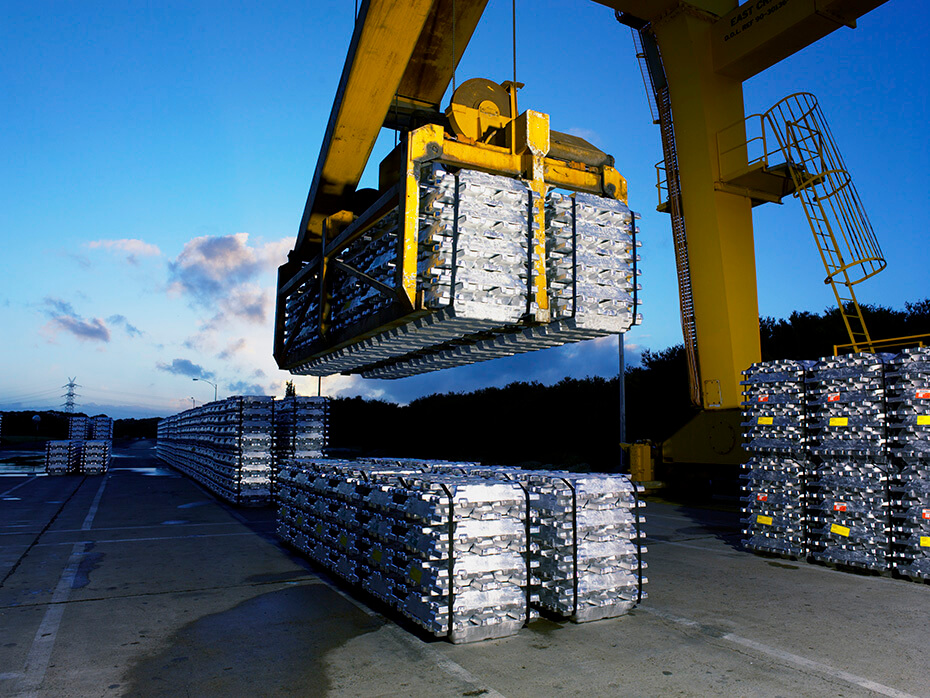
Following the refining process , alumina is shipped from dedicated port facilities at Kwinana and Bunbury to Alcoa’s smelters in Victoria and overseas customers.
Order?
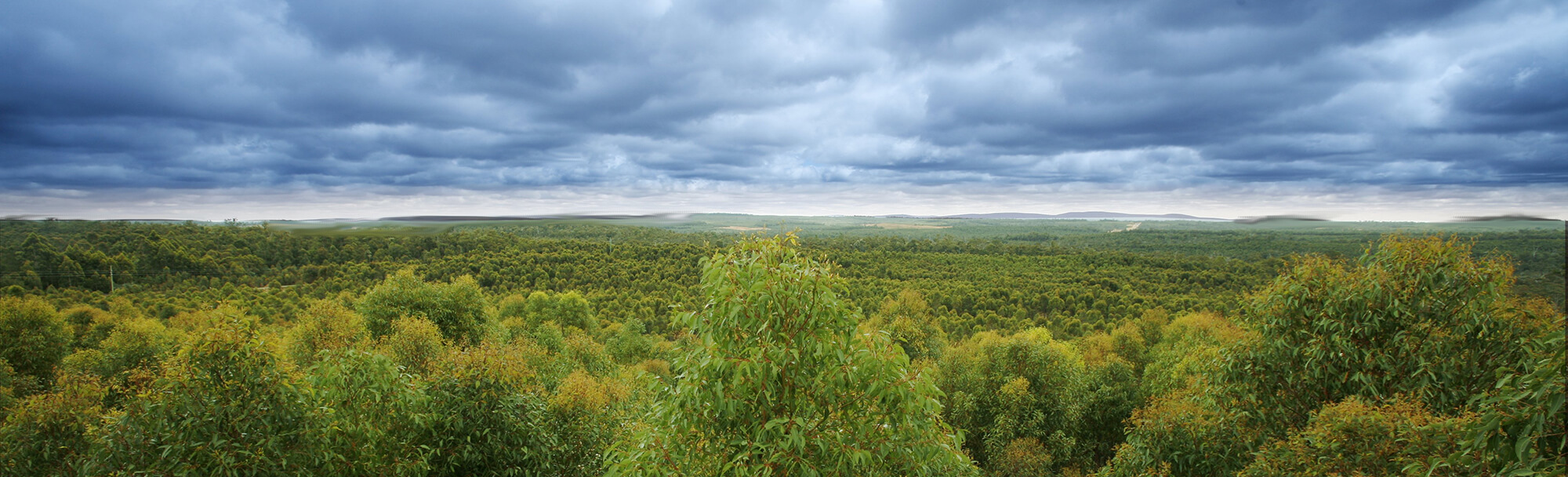
By 2001, rehabilitation is becoming difficult to distinguish from the surrounding forest.
Order?
Alcoa Australia Rolled Products operates two rolling mills at Point Henry near Geelong in Victoria and Yennora in Western Sydney, NSW. Alcoa ARP is the largest supplier of aluminium rolled products to the Australian market.
Order?
As a lightweight metal that is endlessly recyclable, aluminium plays a key role in our everyday lives. Aluminium is used in everything from light bulbs and TV antennae to boats , cars and space shuttles. One tonne of aluminium could make more than 60,000 soft drink cans or the frames for seven full size cars.
Order?
A truck loaded with bauxite travels back to the crusher at Huntly mine, Western Australia
Order?
Alcoa environmental scientists monitor a rehabilitated mined area at Huntly. Alcoa was the first company to return 100% species diversity in mined areas.
Order?
Today visitors to Alcoa’s mining operations in the south west of Western Australia can view successfully rehabilitated mined areas from a spectacular lookout point.
Order?
Alcoa’s Kwinana refinery has been a major contributor to Western Australia since 1963. Around 2.2 million tonnes of alumina are produced at the refinery each year – enough to make 15,000 jumbo jets or 74 billion recyclable drink cans.
Order?
Alcoa’s Point Henry smelter near Geelong in Victoria was established in 1963 and produces 190,000 tonnes of aluminium each year.
Order?
Alcoa produces around 546,000 tonnes of aluminium per year at the Portland and Point Henry smelters representing around 30 percent of Australia’s aluminium production.
Order?
The Alcoa Australia Rolled Products recycling facility at Yennora in Western Sydney is the largest of its kind in Australia and recycles approximately 70,000 tonnes of scrap aluminium each year.
Order?
Aluminium is endlessly recyclable and two thirds of the aluminium produced since 1886 is still in use today. In Australia Alcoa recycles around half a billion aluminium cans each year. Recycling only uses 5% of the energy needed to make new metal.