Alcoa in Australia
Sustainability Home 
Overview
Managing Director's Overview, 2007 Production Summary
Sustainability Framework
Climate Change
Conservation and Sustainability Partnerships
Centre of Excellence for Pinjarra
River Recovery
Contact Information
Case Studies


Climate Change

At Alcoa sustainability is ingrained in our business, embracing both our own operations and also the communities in which we operate. A good example is how we—a major energy and water user—are addressing the challenge of climate change both within and without our operations.

Our greenhouse gas reduction efforts focus on projects, technology and programs that make significant efficiency gains and reduce both our direct and total greenhouse gas (GHG) intensity per tonne of alumina and aluminium produced.

Direct greenhouse gas emissions (GHG) are those released directly, while indirect emissions are those that result from power stations that supply energy to be used in production or manufacturing, such as a smelter or refinery. Both direct and indirect emissions are added to calculate total greenhouse gas emissions. Alcoa has been able to make significant efficiency gains in both direct and total emissions per tonne of product (GHG intensity).

Since 1990 our Victorian smelters have achieved a direct emissions reduction of 61 per cent per tonne of aluminium produced, while our alumina refineries in Western Australia have reduced their direct GHG intensity by 11 per cent. Our rolled products plants have reduced direct GHG intensity by 16 per cent.

We have also reduced our total GHG intensity since 1990. Our Victorian smelters achieved a 16 per cent reduction per tonne of aluminium produced, while our alumina refineries in Western Australia have reduced their total GHG intensity by 12 per cent. Our rolled products plants have reduced total GHG intensity by 21 per cent on 1990 levels.

In 2007 we reduced our greenhouse intensity per unit of production across our entire business, while achieving record production levels for our refinery group in Western Australia and an increase in aluminium production from our smelters. For a full report on our 2007 greenhouse performance, please see the environmental section of our sustainability reporting.

Greenhouse Intensity - Internal Tonnes of Greenhouse Gas Per Unit of Production (tonnes)
Year 1990 2002 2003 2004 2005 2006 2007
Alumina refining 0.63 0.591 0.588 0.594 0.582 0.57 0.56
Aluminium smelting 5.21 2.04 1.97 2.08 2.14 2.07 2.01
Anglesea power 1.34 1.21 1.21 1.2 1.21 1.2 1.18
Alcoa ARP (Point Henry and Yennora) 0.878 0.689 0.671 0.727 0.725 0.83 0.74


Total greenhouse gas emissions (kt CO2e)
Year 1990 2002 2003 2004 2005 2006 2007
Direct 6,185 5,861 5,889 5,954 6,042 6,101 5,668
Indirect 10,487 10,725 10,832 10,813 10,553 10,409 11,110


At the beginning of the year we commissioned the second gas-fired cogeneration power plant at our Pinjarra alumina refinery.

The cogeneration power plants have so far resulted in an overall reduction of Pinjarra’s greenhouse emissions by around 270,000 tonnes per year. These plants, built in partnership with Alinta Limited, provide energy for the refinery and power to the WA power grid.

Alcoa will continue to lead the way, globally and in Australia, to develop new efficiencies for reduced emissions. See details on Alcoa as Part of the Solution to Climate Change.

For example, at two mine sites, on opposite sides of the country, biodiesel has been trialled to help reduce the greenhouse gas emissions of our mining equipment.

At the Willowdale bauxite mine in Western Australia and the Anglesea coal mine in Victoria, biodiesel, a renewable energy source, has been blended with diesel with the hope the alternative fuel will lower greenhouse gas emissions, as well as reduce reliance on fossil fuels.

Biodiesel is a non-fossil fuel produced from renewable resources including animal fats (tallow) and vegetable oils (canola, soy, sunflower, coconut or palm oils). It is usually blended with conventional petroleum diesel, rather than used as pure biodiesel.  It is also non-toxic and biodegradable.

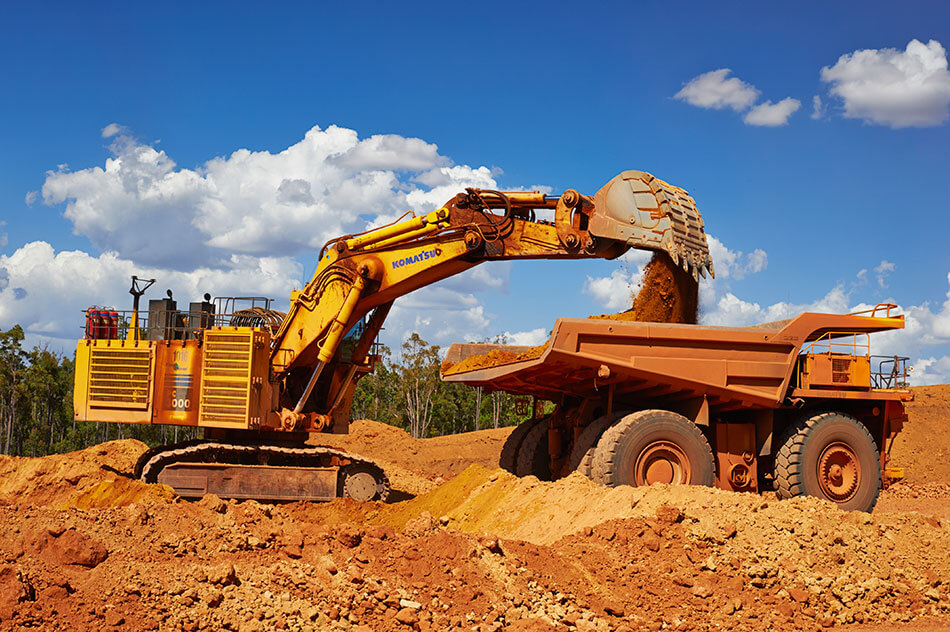
The Willowdale and Anglesea trials used a total of 3.4 million litres of biodiesel blend, used in all of or operating equipment including trucks, front end loaders, excavators, graders, scrapers and bulldozers.

The trial has shown preliminary signs of success and a biodiesel supplier needs to be secured for longer term research and development.

And, it isn’t just what our employees are doing at work that’s making a difference. In fact, for the Alcoa Global Month of Service in 2007 our employees were encouraged to volunteer in their community in a Climate Change Challenge, building on the success of our Make an Impact program.

Forty nine events, most with an environmental sustainability theme, were held across eight locations with a 30 per cent overall employee participation rate. More than 66 community organisations were positively supported by Alcoa’s program, with over 3000 community members involved.  Activities centred on making a positive environmental difference and included employees coming together to plants trees, saving greenhouse emissions by riding to work, protecting jarrah trees against dieback and learning how to be more waste and water wise at home.

The month’s activities resulted in greenhouse gas savings equivalent to taking 432 cars off the road.

The Month of Service is an Alcoa Foundation initiative, to support and encourage volunteering in communities where Alcoa operates. To find out more about our employees volunteering efforts visit Social - Our People  section.


Case study:


Carbon capture the clever way to cut CO2
more


Click image to enlarge.


Dr. David Cooling surveying the bauxite residue area at the Kwinana refinery, which is now an important carbon sink – cutting 70,000 tonnes of CO2 from the air.

Copyright © 2008 Alcoa Inc.
country sites

customer login