alcoa.com

Alcoa in Australia
Sustainability Reporting 08 
Sustainability & AlcoaManaging Director's Overview 2008Australia's AluminiumCorporate GovernanceEnvironmentOur PeoplePartnering CommunitiesEconomic
Overview
Waste Management
Air Quality
Energy Efficiency
Greenhouse Gas Intensity Reduction
Non-Compliance Incidents
Environmental Excellence
Case Studies


Air Quality

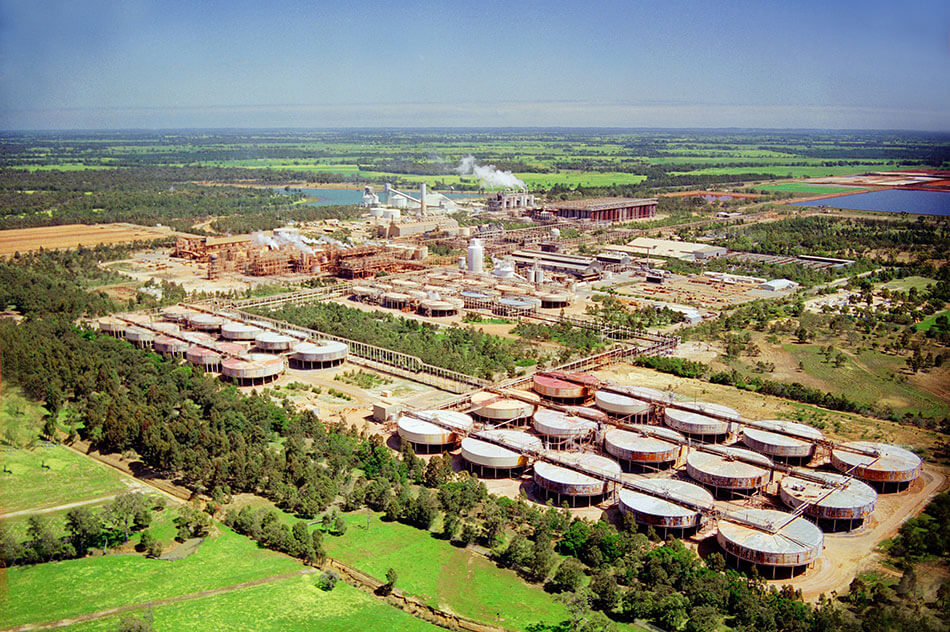
In 2008, the Commonwealth Scientific and Industrial Research Organisation (CSIRO) and the Western Australian Department of Environment and Conservation (DEC) released two significant studies that are helping us identify where we need to focus future efforts to continually improve air quality, specifically odour management surrounding the Wagerup alumina refinery.

The DEC’s report confirmed our understanding of the Wagerup refinery’s air monitoring and modelling processes. It also offered greater insight into the meteorological processes around the refinery, and how emissions are dispersed. The report provided further understanding of why odour issues from our refineries seem more prevalent at certain times.

The CSIRO report explained that odour events observed during its study were probably caused by gases with very low odour detection thresholds. What this means is the human nose is more sensitive than the most sophisticated equipment, sometimes detecting tiny concentrations that technical equipment does not pick up.

We also know from extensive monitoring programs by CSIRO and others that the air around the Wagerup refinery meets ambient guideline levels and is safe for our employees and the surrounding community.

The research into odour events at Wagerup has been strongly driven by our Technology Delivery Group (TDG). We invests around $20 million a year in research and development and employ over 80 scientists, engineers and support staff to work on developing processes and equipment to support cleaner production and maximum efficiency at Alcoa refineries worldwide.

The TDG, based in Kwinana, Western Australia, is the western world’s largest refining research and development group. It is also the largest gathering of industrial scientists and engineers in WA, and has the largest number of PhD’s working together in WA outside of a university or CSIRO.

Their work was acknowledged in the 2008 Australian Mining Prospect Awards in which our Kwinana alumina refinery also in Western Australia was named ‘Minerals Processing Plant of the Year’.

The Awards recognise excellence in the Australian mining industry, while the ‘Minerals Processing Plant of the Year’ award is presented to an organisation which has improved productivity, safety, and environmental standards or has reached notable milestones using new technology, innovative processes or techniques.

The Kwinana refinery was recognised largely for our innovative carbon capture technology developed by the TDG group. This process locks up significant amounts of carbon dioxide that would otherwise be released into the atmosphere.

The Kwinana plant has the capacity to lock up 70,000 tonnes of carbon dioxide each year.

Through the TDG and Alcoa’s membership of the Kwinana Industries Council, we continue to contribute to research into how other industries can achieve ‘waste’ synergies by using each others’ by-products - carbon capture is one of those ways.

Our Kwinana refinery locks up carbon dioxide from a nearby ammonia plant, demonstrating how industry can form sustainability partnerships to re-use waste products.

In 2008, a key achievement in emissions reduction was the successful commissioning of the Point Henry Carbon Bake Upgrade.
The $89 million rebuild of the anode baking plant, included refurbishing the furnace scrubber system and replacing the refractory lining. It was completed in November 2007 with full commissioning completed in February 2008.

The project has improved emissions management through more efficient combustion of volatile organic compounds and polycyclic aromatic hydrocarbons (PAHs).

Monitoring throughout 2008 has shown the Carbon Bake project has resulted in better combustion and a point source reduction in PAH emissions of 98%, VOC emissions of 90%, carbon monoxide by 70% and significant reductions in particulates and metal emissions.

Other improvements expected as a result of the rebuild are a decrease in scrubber downtime, the ability to perform online maintenance, a higher draft capacity and a reduction in required cleaning from three times per year to once.

In addition, our smelters continue to purchase and blend lower sulphur cokes with traditional fuels. During the Carbon Bake rebuild, low sulphur anodes were purchased.

Improvements in 2008 were also made to the Point Henry smelter’s fluoride emissions control with increased effectiveness of fume capture in the smelting cells.

The Point Henry and Portland Aluminium smelters are working to reduce anode effects which produce perfluorocarbon emissions. Anode effects are caused by low alumina levels in smelting pots and are a main source of direct greenhouse gas emissions from aluminium smelting.

During the year, both Point Henry and Portland Aluminium’s fluoride emissions performance improved.

Point Henry reduced emissions to 0.44kg per tonne of aluminium produced, down from 0.47kg/t. This is the smelter’s best ever fluoride performance since 1990. In addition, Portland Aluminium’s fluoride emissions of 0.29kg per tonne of aluminium produced were also lower than 2007.

Smelter fluoride emissions
go


Click image to enlarge.


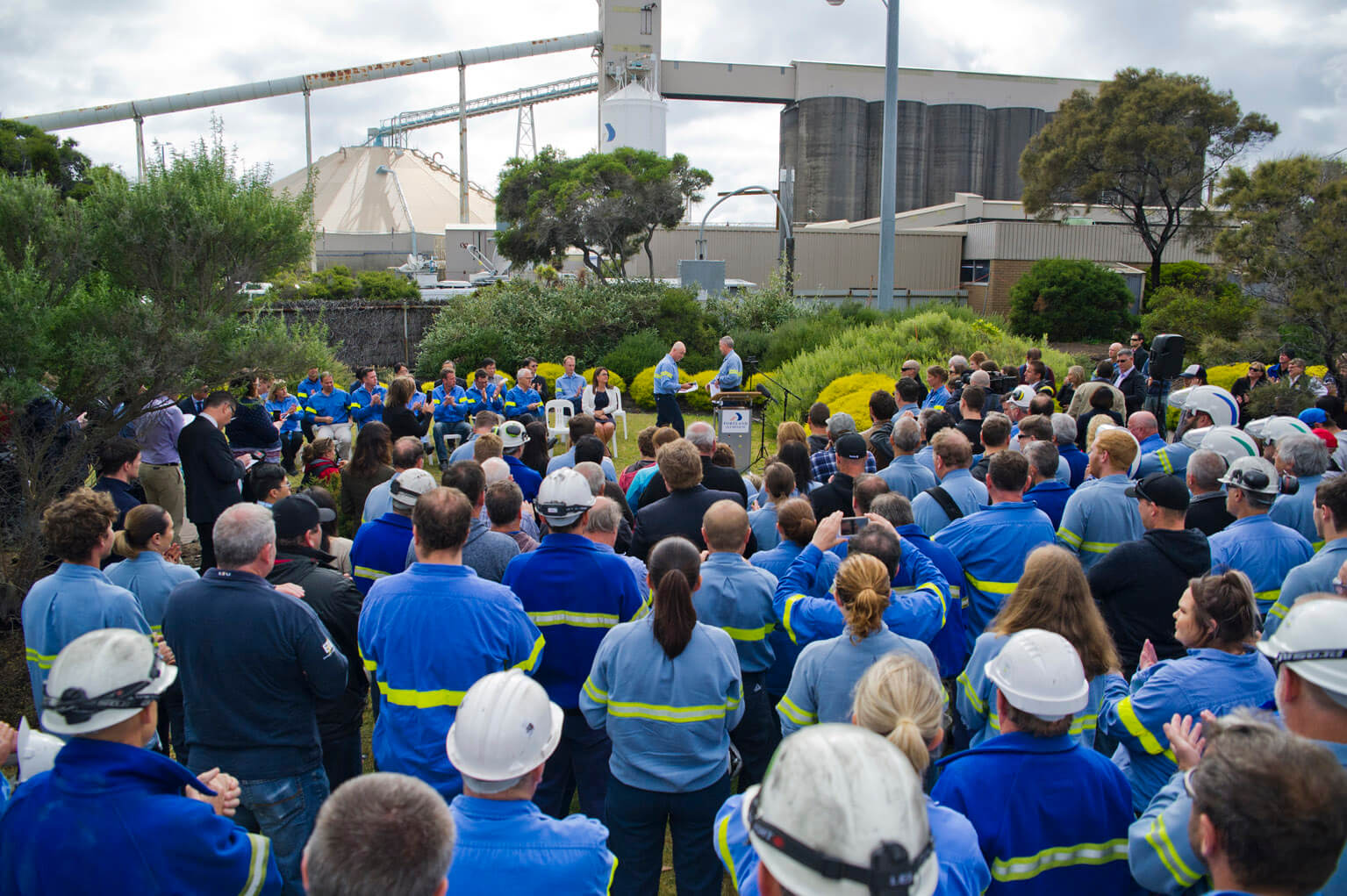
The successful commissioning of the Point Henry Carbon Bake project early in 2008 has reduced PAH emissions by 98%, VOC emissions by 90% and carbon monoxide by 70%. Left to right: Antonio Coito (Construction Manager); Manfred Stelz (Director Primary Aluminium – Beroa); David Brown (Forter Supervisor); Dr Jenny Purdie (past Point Henry plant manager).

Copyright © 2009 Alcoa Inc.
country sites

customer login