 |
 |
|
 |
 |
 |
 |
Rehabilitation & Biodiversity
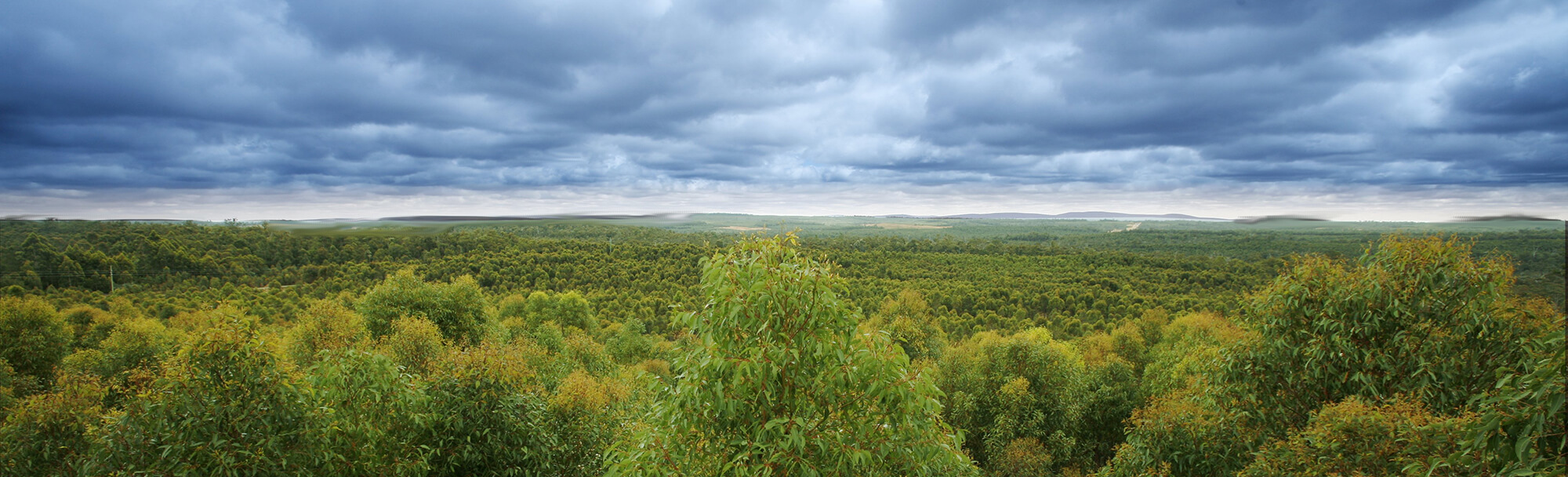
Mining is a transient land use and rehabilitating disturbed areas is important to the long term sustainability of the jarrah forest. Our rehabilitation objective is to re-establish a functional jarrah forest ecosystem that will fulfil the forest land uses including conservation, timber production, water catchment and recreation. Re-establishing a jarrah forest on mined areas, as similar to the original forest as possible, is the best way to achieve all of these goals. To return the conservation value and recreation value of the jarrah forest after mining, it is necessary to re-establish plant diversity. Research and monitoring of our rehabilitated bauxite mines have shown the plant species that establish first determine the long term vegetation community that grows in the area. This vegetation and the individual plant species are very resilient to natural forms of disturbance, so it is vital to establish the correct flora early on to ensure the long term viability of the rehabilitated areas. The first stage of our rehabilitation management program is to develop clear measurable targets that would be understood and endorsed by employees at all levels throughout Alcoa. Our year 2000 target was “The average number of indigenous plant species in 15 month old rehabilitation is 100 per cent of the number found in representative jarrah forest sites, with at least 20 per cent of these from the recalcitrant species priority list”. Recalcitrant species are important plant species from the jarrah forest that are difficult to establish in the rehabilitated areas. They are often resprouting species which give the forest vegetation resilience to natural disturbances such as fire, grazing and drought. We focus on improving the contribution of plant species from three sources: applied seed, the natural seed in the topsoil, and by planting. 1. Applied seed – Various seed treatments are tested and applied, including heat, smoke and plant hormones. Research into improved seed treatments is ongoing. 2. Natural seed – To maximise the contribution of plants from the returned topsoil we use a combination of directly returned topsoil, diluted direct return topsoil and screened topsoil. 3. Planting – ‘Recalcitrant’ species that do not return from the soil seed bank or do not produce enough seed for broadcasting are grown in the nursery from scarce seed, cuttings and tissue culture. Monitoring of plant species richness is carried out annually to measure performance against our target. We aim to restore all jarrah forest plant species to rehabilitated areas. In 2001 rehabilitated areas we achieved the result of 100 per cent of the species richness of jarrah forest control plots. This was achieved by maximising the contribution of species from applied seed, returned topsoil and by planting ‘recalcitrant’ species. A value of greater than 100 per cent is possible if rehabilitated areas have a greater number of plant species than that found in the unmined jarrah forest control plots. In 2002 rehabilitated areas we did not meet the target due to ripping operations being delayed until late autumn and winter when the soils were wet. In 2003 the target wasn’t met due to decreased natural soil seed banks as a result of poor flowering and seed set in 2001, which was an exceptionally dry year. In areas rehabilitated in 2006 (monitored in 2007) we achieved a value of 99% plant diversity. Although just short of the target the result was still high and was attributed to substantial areas using direct returned topsoil or fresh screened topsoil.
|
 |


|
|
 |