Land Use - FAQs
Residue Planning
Managing bauxite residue requires long-term planning and Alcoa is working with stakeholders to ensure this is done responsibly. Alcoa is committed to a long term strategy to ensure the environmental and social impact of residue is minimised and significant research and development resources are devoted to finding new technology options and alternative uses for residue. Forest clearing and mining
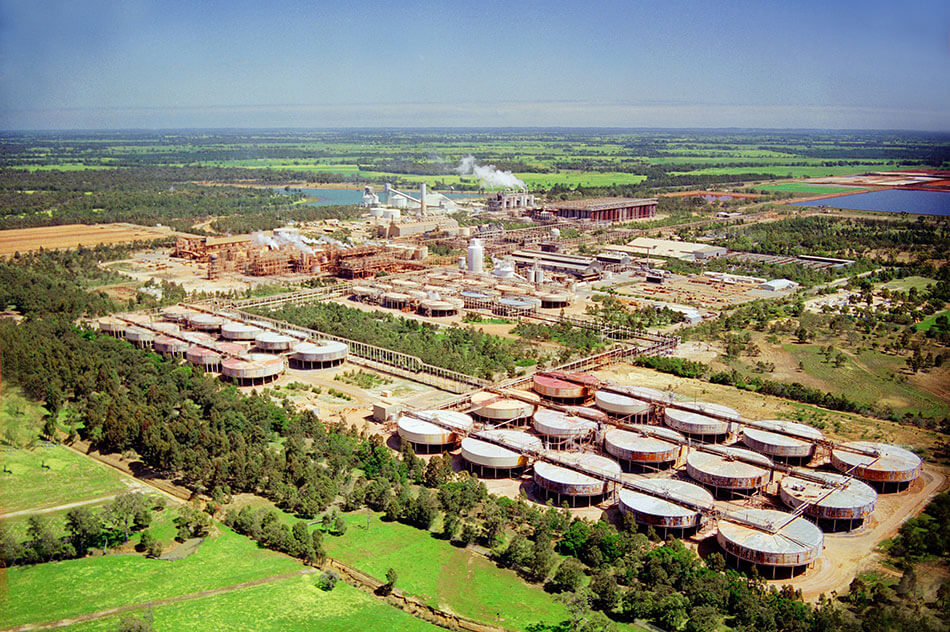
Alcoa uses environmental consultants to conduct pre-mining flora and fauna surveys and heritage surveys prior to clearing for mining. Information from these surveys is used to avoid or protect significant sites during mining. Alcoa identifies areas to be cleared for mining and seeks approval from the State Government. Representatives review proposed clearing areas and apply conditions were appropriate before approval is granted. Alcoa also undertakes a comprehensive rehabilitation program of areas affected by mining which is also monitored by the State Government. Q Why does Alcoa need a long term plan for bauxite residue? Alcoa produces two tonnes of bauxite residue for every tonne of alumina at the Pinjarra refinery. This results in a significant amount of residue produced each year. Bauxite residue is a mixture of mud, sand and water left behind after the removal of the alumina. Because the residue contains remnants of caustic soda and lime used in extracting the alumina it is very alkaline and must be carefully managed both in the short and longer term.
The residue is currently stored in sealed drying areas adjacent to the refinery. The areas are sealed to ensure alkalinity is contained. Over the life of the refinery, a considerable amount of residue requires drying. A long term planning strategy, which examines the total land requirements, expansion, rehabilitation and closure strategies is essential in balancing the environmental, social and economic issues. Q What is the Long Term Residue Management Plan (LTRMP)? The purpose of the LTRMP, which is undertaken every five years, is to identify future requirements for residue drying and ensure the location and design of new drying areas has minimum environmental and social impact. The Minister for the Environment endorsed the last Pinjarra refinery LTRMP in 1997 and a further review of the refinery's future residue drying requirements is currently underway as part of this long term planning process. Q What issues is the current review of the LTRMP considering? The current review is considering the future location of residue drying areas and their visual impact on the local environment. The expansion in geographic coverage of the residue drying area is also being considered taking into account issues such as the impact on important ecology, vegetation and indigenous and European heritage sites.
In addition, research and development undertaken by Alcoa is looking at future uses for residue. This is an important part of the long term plan because this work may have implications for the future size of residue drying areas. Q How large will the residue drying areas grow to? The height and overall footprint of the residue drying areas are also issues considered as part of the LTRMP consultation process. Q Does the community have any involvement in the LTRMP process?
Long term residue management was the first item considered by the Pinjarra refinery Community Consultative Network when it formed in 1994. As part of the current review of the LTRMP process, Alcoa plans to broaden this community consultation to ensure the current views of the community are considered in the long term residue planning process. Q What is the residue planning liaison group (RPLG)? Long term residue use plans are reviewed and endorsed by a special committee called the Residue Planning Liaison Group (RPLG). This group consists of representatives from the Department of Industry and Resources, Department of Environment, Ministry of Planning, Department of Agriculture WA, Peel Development Commission, Department of Conservation and Land Management as well as Alcoa. The residue planning liaison group and the Minister for Environment must approve the LTRMP before it can be implemented. Q Will the Efficiency Upgrade have an impact on the amount of residue to be stored?
The Efficiency Upgrade will result in an acceleration of the process for residue drying rather than cause an increase in the overall size of the residue area. This will mean that the LTRMP process will be brought forward by one year so the new drying areas around the refinery can be made available in 2006 rather than 2007.
Q Can residue be reused?
Alcoa has been exploring a number of options for the re-use of bauxite residue for many years. This strategy is based upon ensuring that the re-use of the residue is sustainable, taking into account economic, social and environmental considerations.
One of the more promising uses for residue is for agricultural use. Because dry residue can absorb nutrients, when it is added to sandy soil it can substantially decrease the rate at which the nutrients leach to groundwater and into local water systems, leaving them available for plant use.
The Environmental Protection Authority recommended the use of Alkaloam (the commercial name given to bauxite residue used in soil amendment) for broad acre and horticultural nutrient control following a Public Environmental Review. However, Alcoa suspended the Alkaloam program subject to further clarifications about the product's future use. For the past six years bauxite residue, blended with gypsum has been used in Ecomax septic systems. These systems are required in areas that are prone to environmental problems, which result from nutrients entering waterways such as the Peel Harvey Catchment. Other uses considered for residue include, pigments for cement products and as a possible future source of iron ore. Q What is carbonation?
Carbonation is a process developed by the Alcoa research and development facility where carbon dioxide gas is mixed with the bauxite residue. The carbon dioxide neutralises the alkalinity of the residue, lowering the pH. This has a number of benefits over the existing process, such as assisting in the residue drying process.
A prototype of this carbonation system was constructed in mid 2000 at Alcoa's Kwinana refinery and after a two year evaluation process, preliminary approval has been given to build a full scale operational facility at this location. There is also the potential to extend this carbonation system to other Alcoa refineries in Western Australia depending on Kwinana's success.
Alcoa's research and development facility has developed this carbonation process as part of the ongoing research program to identify ways to reuse residue. Other research and development projects involve removing the sand component of residue so it can be used as a replacement material for natural sand along the coastal plan.
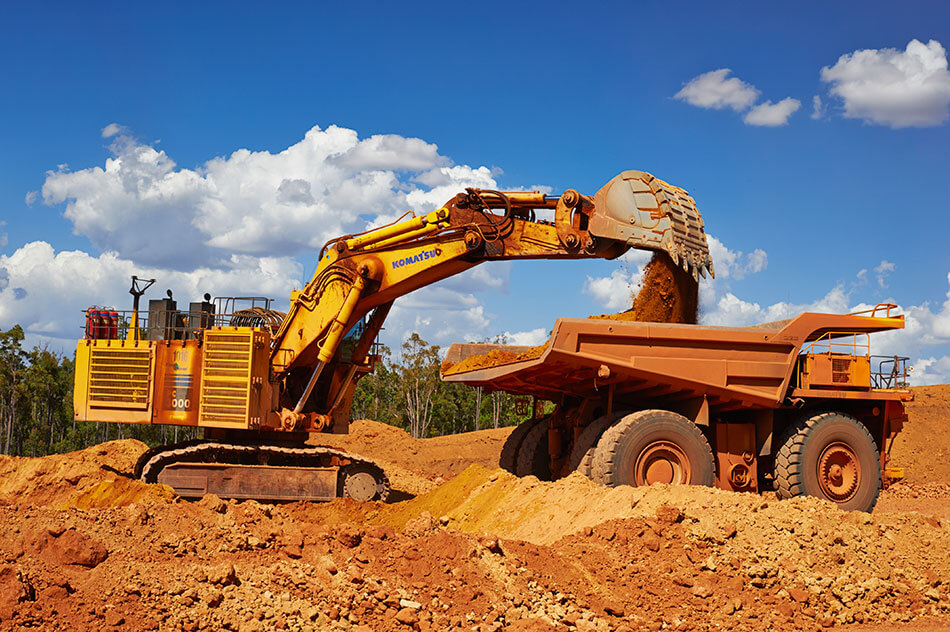
Q What happens to the residue drying areas after Alcoa finishes production? Alcoa has long term responsibility for the residue drying area. Financial provision is being made for the future rehabilitation and management of the area. Q Why does Alcoa have to clear land? Bauxite is the ore used to make alumina, which in turn is used to make aluminium. Bauxite occurs on mid to upper slopes in the Darling Range. The mining lease granted by the State Government to Alcoa in 1961 for the mining of bauxite encompasses an area in the Darling Range from east of Perth to east of Bunbury, which is predominantly jarrah forest vegetation. The trees and vegetation in the mining area therefore have to be removed so mining operations can proceed. Q Who owns the land where the bauxite is mined? The land is owned by the State Government and Alcoa has negotiated a long term agreement to mine bauxite in the Darling Range lease area. The State Government receives money or ‘royalties’ for allowing Alcoa to use this area for bauxite mining. Q Does Alcoa have to comply with any regulations when clearing land? Before Alcoa clears any land it must receive approval from the State Government which imposes conditions for mining operations in Western Australia. These rules ensure the area of forest or vegetation to be cleared is kept to a minimum and environmental issues are managed when mining bauxite deposits. All mining proposals have to be approved by a special intra government committee (Mining and Management Programme Liaison Group – MMPLG). The Group is assisted by a working group called the Mine Operations Group (MOG) who review and approve clearing plans. MOG representatives include CALM, the Department of Industry and Resources and the Water Corporation. The members of MOG conduct audits and inspections of proposed clearing areas, mining operations and rehabilitation. Q Does Alcoa have its own standards for clearing land? Alcoa aims to minimise clearing by constructing roads over areas of ore and rehabilitating the areas as soon as practical after mining. The rehabilitation is completed progressively to reduce the amount of “open” or cleared areas. Prior to clearing surveys are carried out to ensure significant areas of flora, fauna or heritage are avoided or managed to minimise the impact of mining operations. To ensure this occurs, Alcoa implements an environmental management plan for the area, keeping disturbance to a minimum, undertaking baseline studies and impact assessments on the habitat and also ensuring that endangered and threatened species are protected. Q Why are reserves protected from clearing? Since 1961, Alcoa has worked with the State Government to identify areas in mining leases which should be protected to conserve the region’s biodiversity. Alcoa will not mine these conservation reserves, which account for around 15% of the known bauxite resources. In addition, Alcoa also has a policy of not disturbing old growth forest. There are also areas within the forest designated as Informal CAR (Comprehensive, Adequate and Representative Reserves) by the State Government. These informal reserves are often located along streams, swamps and granite outcrops. Mining does not usually occur in these areas as bauxite is located in mid to upper slopes away from the streamzone vegetation. However, if these reserves need to be entered when constructing haul roads and conveyors, Alcoa seeks approval from regulatory authorities. Q How much land does Alcoa clear for mining bauxite? Since 1963, Alcoa has cleared around 0.67% of Western Australia’s 20,000 sq km jarrah-marri forest. Since 1970, a total of 6,665 hectares of jarrah-marri forest have been cleared at the Huntly mine of which 5252 hectares has been rehabilitated. If all currently commercial grades of bauxite are mined in the forest Alcoa will have mined less than 5 % of the total jarrah forest. It is currently forecast that during the five period 2003 - 2007 an average of 360 hectares of land will be cleared each year at the Huntly mine. There are periods when clearing increases such as during construction of roads or conveyor and crusher areas for new mining regions. For example clearing in 2003 will increase to approximately 425 hectares as the conveyor is being extended and a new crusher location is being built. This is offset by an increase in rehabilitation when the old roads are removed. For example the annual rehabilitation target in 2005 is 450 hectares which exceeds the planned annual clearing of 350 hectares. Q How much more land will be cleared as a result of the Efficiency Upgrade? The Efficiency Upgrade will result in an increase in mining, clearing and subsequent rehabilitation rates. An additional 30 hectares will be cleared each year. However, this additional area would have been cleared without the Efficiency Upgrade except that it would have occurred at a slower rate. Q How long does the land remain cleared? The average period the land remains cleared is between one and two years. It can take several months to prepare the land for mining by removing remaining vegetation and constructing access roads. In addition, mining of the ore is likely to take several months because the ore from a number of areas must be blended to ensure there is a consistent quality of bauxite being supplied to the refinery. Q What happens to the trees that are cleared? When Alcoa has received approval from the MMPLG to clear an area for mining, the Forest Products Commission will include this area in their annual logging plans. The Forest Products Commission removes trees for saw logs and posts and rails for fencing and firewood. Q What happens to the remaining vegetation? The unusable forest debris such as tree stumps, tree tops and undergrowth vegetation is collected and burnt on site. To reduce waste and smoke pollution, Alcoa is working with the Forest Products Commission and other interested groups to find alternative uses for the debris. Alcoa has also carried out trials for producing wood mulch, and to use it as additional material for fauna habitats. Alcoa is also working with Simcoa to investigate whether the wood debris can be processed into charcoal for use during silicon production.
|
 |
Your question not answered?

 If you have an specific question that is not covered here please email pinjarraupgrade@alcoa.com.au or visit the Pinjarra Refinery Efficiency Upgrade website. New questions and answers will be posted to this page on a regular basis.
go
More FAQs

 Use this link to return back to the FAQ list.
go
|
 |