Mine Rehabilitation - FAQs
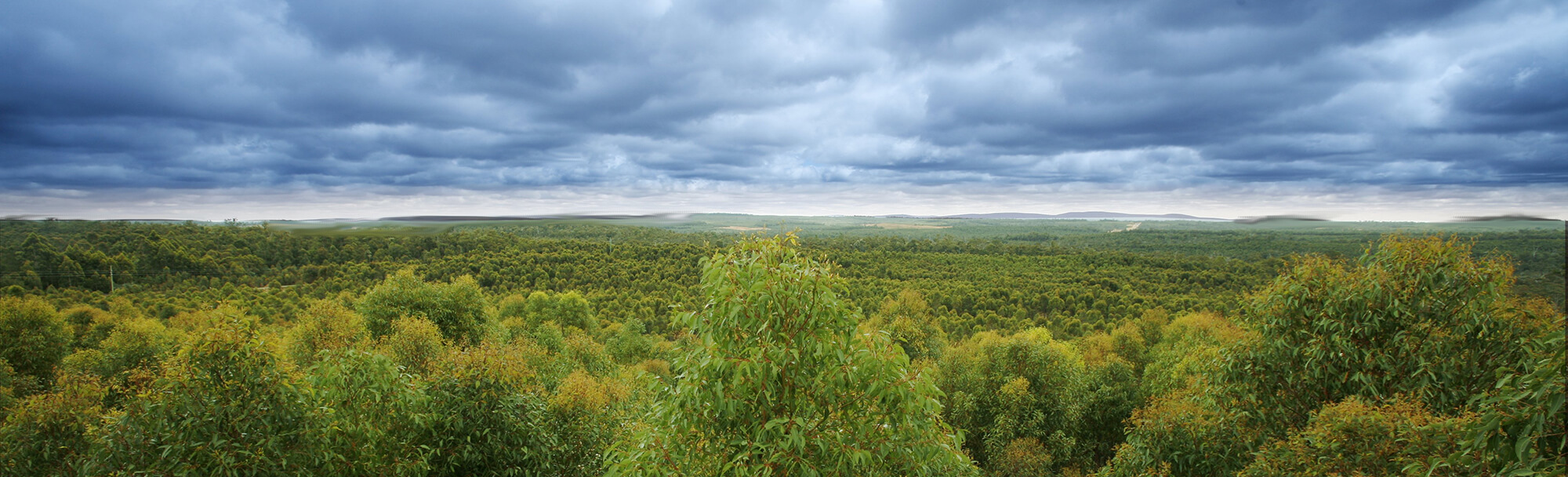
Alcoa sets a high standard for rehabilitation of areas cleared for bauxite mining. The company employs a large number of environmental specialists and consultants and works closely with the Department of Conservation and Land Management and Water Corporation to minimise the impact of mining on the environment and to ensure that affected areas are restored to a self sustaining jarrah forest. Q How long has Alcoa been committed to mine rehabilitation? Alcoa has been involved in mine rehabilitation and jarrah forest research since 1963. Early plantation style rehabilitation rapidly evolved into the award winning jarrah forest rehabilitation we have today as a result of extensive research and experience. Q What is the current objective of Alcoa's rehabilitation program? The current objective of the Alcoa mine rehabilitation program is to establish a self-sustaining jarrah forest ecosystem, which enhances or maintains water, timber, recreation and conservation values. Q How does bauxite mining impact the environment? Bauxite mining occurs in isolated pods of 1 to 100 hectares in a specific area, averaging 10 to 20 hectares. Mining involves clearing of the forest vegetation and the removal of soil and a layer of bauxite below (approximately 4 metres deep). Q How does Alcoa minimise the impact of mining on the forest? Alcoa aims to minimise forest clearing by constructing roads over future mining areas. Areas that are cleared for mining are also rehabilitated as soon as possible after mining. The gravely sand surface covering the bauxite is removed before mining and used for rehabilitation. Usually it is removed in two layers (known as double-stripping): the upper 10 -15 cm is referred to as topsoil, and the remainder, usually about 40 cm, is known as overburden. Where possible the topsoil, which contains much of the soil organic matter, nutrients, micro-organisms and seeds, is removed and used immediately to rehabilitate a nearby pit. This is called "direct return". Where direct return is not possible the topsoil is stockpiled and conserved for use in rehabilitation at a later date. Q What does the rehabilitation process involve? The first step in the rehabilitation process is to batter down the mine pit walls and landscape the pit to blend into the surrounding forest areas. The overburden and then topsoil are returned and the pit is then deep ripped on contour to approximately 1.2 metres deep using a winged tine. Ripping with the winged tine encourages water infiltration, reduces the risk of erosion and relieves soil compaction that could restrict root growth. Q Where do the new plants come from? Following the earthworks, the areas are seeded with a mix that may contain more than 60 jarrah forest species. Plant species that do not readily establish from broadcast seed are propagated by tissue culture or cuttings in Alcoa's nursery at Marrinup and planted in winter. Those plants that are susceptible to grazing are protected with a mesh guard. Finally, fertiliser is applied by helicopter in spring to assist plant growth. The rehabilitated areas are monitored at 9 and 15 months to determine eucalypt, legume and weed density, as well as species richness. Q Does Alcoa have a target for re-establishing plants in rehabilitation? The target for plant diversity is that the average number of indigenous plant species found in 15 month old rehabilitation is 100% of the number found in representative jarrah forest sites. This target was achieved in the 2000 and 2001 rehabilitation areas. Alcoa also works to completion criteria that have been developed and endorsed by stakeholders. These criteria determine when land has been successfully rehabilitated and can be handed back to CALM to manage as state forest. Q Has Alcoa undertaken any major mining rehabilitation projects in recent years? Alcoa's rehabilitation program is ongoing. However, Alcoa recently completed the rehabilitation of the Jarrahdale mine site after operations ceased in 1998. The Jarrahdale mine produced more than 167 million tonnes of bauxite during its 30 year life. Alcoa rehabilitated each of the 4,090 hectares of disturbed land at Jarrahdale, and some of the early rehabilitation that did not meet the completion criteria was re-worked to jarrah forest rehabilitation. When all the areas have been reviewed and meet the completion criteria requirements they will be handed back to the government. Q Is Alcoa undertaking research to improve mine rehabilitation? Alcoa is involved in a large number of ongoing research projects aimed at improving bauxite mine rehabilitation. Many of these are conducted in partnership with other organisations, including the University of Western Australia, Curtin University, Murdoch University, Kings Park and Botanic Garden, and the CSIRO. What is the objective of the research program? The research program studies the establishment, development, and management of the rehabilitation. The program is divided into three sub-programs. These are botanical diversity, plant establishment and rehabilitation productivity and sustainability. For example, about one third of the jarrah forest plant species have seeds that are difficult to germinate, and the research is experimenting with different germination methods for many of these species. These include smoke treatments, ageing of seed in the soil, hormone treatments and different mechanical treatments. Q How sophisticated is this research? Currently, Alcoa aims to use 'local' seeds and plants in its rehabilitation because they are more likely to be adapted to suit the local environment. To find out what 'local' really means, DNA analysis of plants is being carried out to identify the scale of genetic differences throughout the jarrah forest. This sophisticated research will tell us how far from our mines we can collect 'local' seed or plant material. Q Is Alcoa undertaking any longer term research on mine rehabilitation? Alcoa is involved in a large number of research projects examining rehabilitation productivity and sustainability. These projects include studies of long-term changes in vegetation in rehabilitated mined areas to determine if the new ecosystem is sustainable and whether growth or productivity is similar to the surrounding forest. Other studies include the effect of burning on rehabilitated mined areas. This project is examining the effects of controlled burns and wildfires on a wide range of factors including the jarrah trees, the understorey plants, the native animals and insects, and the soil and leaf litter nutrients.
Q What is Alcoa's policy on protecting Flora and Fauna? Alcoa recognises the importance of ensuring that flora and fauna are properly protected during the mining process. Alcoa works closely with relevant agencies to ensure this occurs and also invests significant resources into the long term protection of flora and fauna species in Western Australia. Q What types of flora does mining impact? The forest area that covers the bauxite deposits is dominated by the jarrah tree and to a lesser extent the marri tree. There are other trees species such as the blackbutt and flooded gum, which are found in wet areas such as swamps. Banksia and persoonia species are found at a lower level and the ground level of the forest also contains a rich variety of flora. Q Why does Alcoa conduct surveys of flora? Alcoa conducts flora surveys every five to ten years in advance of mining. The surveys identify the vegetation in specific areas and find rare or important flora. Following the surveys, mining plans are modified, where appropriate, to avoid rare flora. The information gathered from flora surveys is used for future rehabilitation strategies. Q Are there any surveys of fauna? Alcoa also undertakes surveys of fauna in unmined as well as rehabilitated areas to measure fauna populations and estimate long-term population trends. The information from these surveys is used to identify rare fauna and minimise the impact of mining on fauna as well as to monitor the return of fauna to rehabilitated areas. Monitoring also includes a long term program, which began in 1992 to monitor mammals, birds, reptiles and ants while a frog monitoring programme began in 1993. Q How useful are the fauna and flora surveys? The information has a much broader use in vegetation and wildlife conservation. For example, Alcoa contributed a significant amount of data on flora and fauna from its monitoring programs to a major environmental review of the forest reserve system called CAR – Comprehensive Adequate and Representative. Surveys have also assisted in identifying and protecting rare types of vegetation and species. Q What happens to fauna impacted by mining? Fauna is directly impacted upon because their habitat is removed by mining operations. For nearly two decades, there has been an ongoing program to monitor fauna returning to rehabilitated areas after mining has ceased. Alcoa has found that as new forests begin to grow, they are a suitable habitat for most fauna although some animals and birds still remain dependent on surrounding unmined areas for some of their needs. Q What measures are taken to make rehabilitated areas more suitable for fauna? Rehabilitated areas in the forest have less timber debris on the surface compared to unmined forest. To overcome this, rehabilitated areas have log debris scattered over them or small rock or log structures built on them to provide cover and dens for small animals. Habitat develops over time in the rehabilitation. Once habitat develops fauna returns to the area. Monitoring to date has found the following animals are returning to the rehabilitation; mammals - 100%, birds - 90%, reptiles - 78% and ants - 80%. Q What is Operation Foxglove? Alcoa is a major sponsor of Operation Foxglove, which is a feral animal control program to remove the threat of foxes to small and medium sized native animals. Operation Foxglove is part of a wider feral animal control program throughout WA called Western Shield. The Western Shield program covers an area of 3 million hectares and has led to the recovery and reintroduction of a number of endangered species such as the noisy scrub bird and tammar wallaby. Q Will the Efficiency Upgrade have any impact on fauna or flora? It is planned that the same amount of forest will be cleared although at a slightly faster rate as a result of the Efficiency Upgrade. Rehabilitation of mined areas will match the increased rate of clearing so the Efficiency Upgrade is not expected to have any additional impact on fauna or flora. Q What is dieback? Dieback is a disease that kills jarrah trees and a wide range of other plants including banksias, grass trees and zamia palms. It is an exotic fungus that was accidentally introduced in imported fruit trees from south-east Asia about 80 years ago. Like all fungi, it thrives in warm wet conditions and in the south west of WA it is spread mainly by the movement of contaminated soil or by the flow of water. Q How does Alcoa monitor dieback? Before Alcoa carries out any forest mining activities, the jarrah forest area is mapped for the presence of dieback disease. Consultants who are trained by the Department of Conservation and Land Management (CALM) conduct this dieback mapping and the quality of their work is also supervised by CALM. To ensure accurate and up to date information is used, mapping is re-checked if it is more than 12 months old before any mining operation commences. Alcoa also conducts a long term ongoing research program together with CALM, CSIRO and Murdoch University to improve the understanding of dieback and develop ways to control it. Q Do Alcoa’s operations spread dieback? Alcoa routinely measures the amount of dieback spread caused by mining operations. It has been determined that for every hectare mined by Alcoa, dieback is spread to 0.01 hectares of forest. This figure includes the total potential spread from the infected areas. Q What measures does Alcoa undertake to reduce the risk of dieback? All exploration drilling by Alcoa stops in winter to avoid the increased risk of spreading the disease during the wet season. The Huntly mine also operates under a ‘Dieback Free Mining System’ where all the haul roads are constructed as dieback free and any vehicle entering the mine must pass through a washdown facility. The movement of mining equipment between different dieback categories of forest or cleared forest is strictly controlled. Procedures are enforced for movement of equipment between dieback categories including washdown of equipment and a number of mobile washdown units are available for field use. All mine operations are planned to minimise the number of times that vehicles or machines must cross dieback boundaries. Q Will the Efficiency Upgrade increase the rate of dieback? Because the same amount of land will be cleared, the rate of dieback will not increase as a result of the Efficiency Upgrade.
|
 |
Your question not answered?

 If you have an specific question that is not covered here please email pinjarraupgrade@alcoa.com.au or visit the Pinjarra Refinery Efficiency Upgrade website. New questions and answers will be posted to this page on a regular basis.
go
More FAQs

 Use this link to return back to the FAQ list.
go
|
 |