Alcoa in Australia
 
Energy Consumption - FAQs
Alumina production requires significant amounts of energy. Alcoa constantly reviews its energy usage and works towards reducing energy consumption. Internationally, Alcoa is committed to reducing greenhouse gas emissions by employing the most advanced technology in energy efficiency.
 
Q  What forms of energy does the Pinjarra refinery use?
 
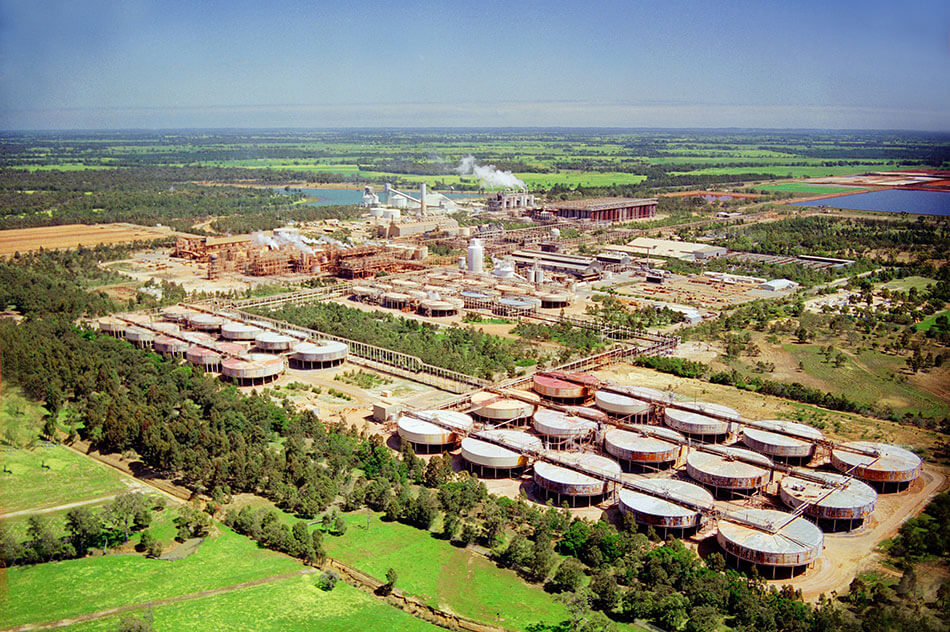
The refinery uses three forms of energy; natural gas, steam and electricity in the alumina refining process. The refinery has its own powerhouse boilers that are fuelled by natural gas, which produce steam for the process to remove the alumina from the bauxite. Natural gas is also used for heat in the final stage of the process, for removing water from the alumina. The steam produced by the boilers generates electricity before being used in the process. The electricity is used to drive the electric motors of equipment such as pumps that are essential to the alumina refining process.
 
Q  How much energy does the Pinjarra refinery use?
 
The refinery currently consumes about 90 MegaWatts of energy every hour, which is enough energy to power 50,000 homes during the same period.
 
Q  Why does the refinery use so much energy?
 
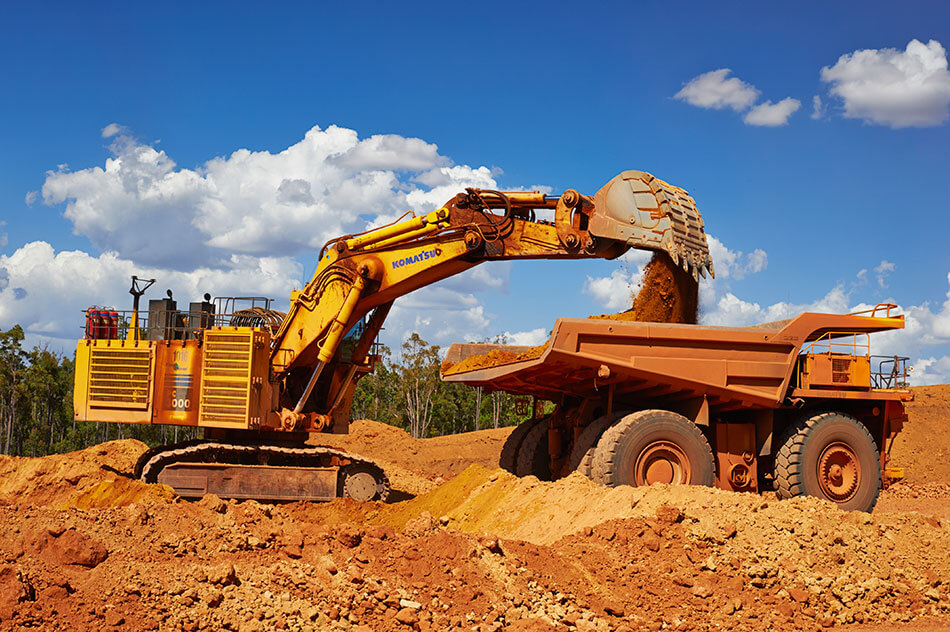
The bauxite recovered from the Darling Range is of a low quality. For every three tonnes of bauxite mined only one tonne of alumina is recovered.  This means that a higher level of energy has to be used to remove the alumina from this low grade ore compared to other alumina refineries with higher grade ore.
 
Does the Pinjarra refinery monitor the amount of energy it uses?
The refinery has a number of meters located in different production areas that measure energy use in a similar way as a household gas or electric meter. The readings from these meters are checked every month and the results are compared with previous readings to provide an overall trend in energy use.  The information that is collected is then used to determine how energy can be more efficiently used throughout the refinery.
 
Q  Does Alcoa have any energy efficiency programs?
 
Although the refinery is a high energy user, the process is energy efficient when compared to other energy users. For instance, a coal fired power station is 35% efficient, whereas the alumina process is 80% efficient. Alcoa is constantly examining ways to reduce energy costs through energy conservation. For example, a major effort is made to re-use energy during the various processes of production and the refinery uses some of the most efficient energy equipment in the world.  In addition, a major effort is also made to ensure there is no loss of energy throughout the production process. These energy efficiency programs were benchmarked and they resulted in the energy efficiency of Alcoa's Australian alumina refineries improving by 8% during the period 1990 to 2000.
 
Q  What energy efficiency improvements will be implemented as a result of the Efficiency Upgrade?
 
The main energy improvement will be the installation of a co-generation unit at the Pinjarra powerhouse in conjunction with Alinta Gas. The principal atmospheric emissions from the cogeneration unit will be water vapour, carbon dioxide (CO2) and oxides of nitrogen (NOx). The co-generation units will burn natural gas and will therefore emit very low levels of particulates, carbon monoxide, sulphur dioxide and volatile organic compounds (VOCs). Further, as one of Alcoa's powerhouse boilers will be fitted with low NOx burners as part of the refinery Efficiency Upgrade, the increase in general refinery oxides of nitrogen (NOx) emissions will be offset.
 
The co-generation project is expected to reduce greenhouse gas emissions as the result of more efficient steam generation and use.
 
Q  What impact will the Upgrade have on greenhouse gas emissions?
 
Co-generation is more thermally efficient than other forms of power generation using fossil fuels, and so produces less greenhouse gas per unit of energy. Generating power close to a facility that can use the heat energy that normally goes to waste, in this case the Pinjarra alumina refinery, creates this efficiency.  Alcoa will use the heat energy in the form of steam and Alinta will sell the power to third party customers.
 
The overall greenhouse impact of the Alinta co-generation project can be expressed in terms of the greenhouse gas emissions associated with the burning of gas in the gas turbine co-generation units, less emissions saved from the displacement of steam produced in the refinery boilers and from the reduced refinery steam demand as a result of more efficient utilisation of heat.
 
Hence the annual net average CO2 emission from the cogeneration unit at Pinjarra is estimated to be 474,500 tonnes. Producing the same amount of power for the State from existing South-West Interconnected System assets would produce about 1,037,000 tonnes of CO2 per annum.
 
The Efficiency Upgrade and the Alinta co-generation project will result in an overall improvement of about 14% in the greenhouse intensity of the Pinjarra refinery (kilograms of CO2 per tonne of alumina).
 
Q  What is the Greenhouse Challenge?
 
Alcoa supports a Commonwealth Government agreement on greenhouse gas emissions, which is known as the Greenhouse Challenge program. Under this agreement, Alcoa's three refineries, including Pinjarra, agree to pursue greenhouse reduction strategies, which are most appropriate to each refinery.
 
Q  Does Alcoa have any targets for greenhouse gas emissions?
 
Alcoa's overall level of greenhouse gas emissions are currently 22% below emissions recorded during 1990.  Alcoa's future goal is to reduce direct greenhouse reductions to 25% below the 1990 levels with the potential for significant additional reductions through the use of technology improvements.
 
Q  Can alumina production assist greenhouse gas emissions?
 
The production of alumina into lightweight aluminium does have a number of long term benefits in reducing greenhouse gas emissions. For example, aluminium is most commonly used in the manufacture of motor vehicles and it is estimated that for every kilo of lightweight aluminium used in a car will save 20 kilograms of greenhouse gas over the life of the vehicle because less energy is required to fuel the vehicle. It is also estimated that each kilogram of aluminium used in a long haul truck can save 200 kilograms of greenhouse gas over the truck's life.

Your question not answered?


If you have an specific question that is not covered here please email pinjarraupgrade@alcoa.com.au or visit the Pinjarra Refinery Efficiency Upgrade website.  New questions and answers will be posted to this page on a regular basis.
go

More FAQs


Use this link to return back to the FAQ list.
go

Copyright © 2008 Alcoa Inc.
country sites

customer login