Alcoa in Australia
 
Air Quality - FAQs
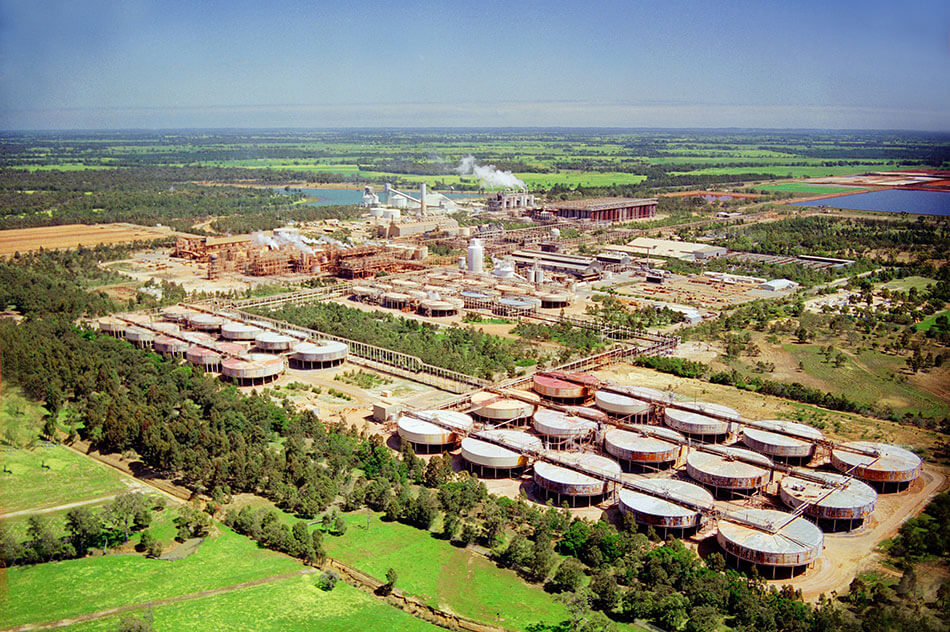
Alcoa devotes substantial resources each year to monitor air emissions from the Pinjarra refinery. This monitoring helps us understand our emissions and the effectiveness of our emissions control work. It also helps us develop improvements to ensure that over the longer term, air emissions are reduced. 
 
Q  What is an emissions inventory?
 
An emissions inventory is a detailed sampling and analysis of substances and chemical compounds emitted to air at a facility or group of facilities, in this case Alcoa’s WA refineries. A comprehensive study of Wagerup refinery and selected sources at Pinjarra and Kwinana refineries was undertaken in 2002.
 
Q Why did Alcoa undertake an emissions inventory?
 
A. While Alcoa understands which substances make up the vast majority of refinery emissions, the emissions inventory helped to identify substances that may be present in very small or ‘trace quantities.’ This study measured the substances and also identified where in the plants they are emitted.
 
The 2002 emissions inventory used the most sophisticated air monitoring systems to measure more than 20 separate compound classes which form the basis of the refining process. Samples were taken from key emissions areas such as the powerhouse, calciners and residue areas. 
 
Following on from the 2002 emissions inventory additional dedicated sampling was undertaken for a range of Pinjarra refinery sources.  This was done to (a) confirm the results of similar sources found at Wagerup, or to (b) supplement the Wagerup results with data for sources where process differences led to an expectation that the emissions composition or amounts might be different to that found at Wagerup.
 
Q  Who conducted the emissions inventory?
 
The samples were collected by independent environmental consultants using internationally recognised methods and sent to Australian and overseas laboratories for analysis. Upon completion the 2002 inventory results were provided to the Department of Environment, an independent auditor and local stakeholders.
 
Q What did the emissions inventory find?
 
The inventory found that 98% of refinery air emissions by volume are water vapour and carbon dioxide.  The remaining emissions are composed mainly of combustion products such as methane NOx, CO and volatile organic compounds (VOCs). It also found that aldehydes and ketones are the major VOC emission components that cause odour.
 
Q  What is the major source of emissions from the refinery?
 
The emissions inventory found that calciners and the powerhouse were the main sources of emissions. The major contributors to refinery odour were the calciners. Cooling towers are also a high emission area and account for 25% of Pinjarra’s VOC emissions.
 
Q  How did Alcoa use the results?
 
The results were used by Alcoa to identify the most significant emission points and prioritise ongoing emissions reduction projects within WA refineries, and to provide focus in our monitoring programs.
 
Emissions monitoring for dust particles from the calciners is ongoing, while other regular emissions monitoring is conducted at least every three months. Regular monitoring measures refinery emissions of the major chemicals identified by the emissions inventory such as oxides of nitrogen (NOx) and odour causing VOCs.
 
Q  What is air emissions modelling?
 
The latest computer technology can be used to predict ground level concentrations of emissions after factoring in a range of circumstances that affect their dispersion following release, such as wind conditions. Independent environmental consultants undertake this air emissions simulation – or dispersion modelling. The simulation is widely regarded as providing realistic estimates of emissions impacts and is confidently used to predict the environmental impact of changes to refinery processes.
 
Q  Can the community trust the emissions testing process?
 
Independent specialists and laboratories conducted all testing. Consultants who undertake sampling and air emission modelling must comply with recognised industry standards certification. This includes being registered with the National Association of Testing Authorities who can independently audit their work. The emissions inventory testing was performed using the best technology, resources and standards available to date.
 
Q  Are the air emissions dangerous to health?
 
There is no evidence from the emissions inventory or the ongoing emissions monitoring program that any emissions from the refinery exceed health or environmental standards inside or outside the refinery. The emissions inventory showed some compounds (VOC’s) will contribute to refinery odour, even at low levels.
 
Q  What has Alcoa done to reduce emissions as a result of the emissions inventory?
 
Since the completion of the emissions inventory, Alcoa has implemented emissions reduction projects totaling $36 million at the Wagerup refinery. This included completely removing five emission sources, reducing ground level emissions by modification to the calciner and liquor burner stacks, and reducing NOx emissions from the powerhouse boilers.  As a result of these projects, Wagerup has decreased emission levels, eliminated several emission sources and improved the dispersion of emissions.
 
Q  What measures will be taken to reduce emissions at the Pinjarra Refinery as part of the Efficiency Upgrade?
 
Specialised equipment will be installed to collect vapours from four sections of the process and treat them with regenerative thermal oxiders (RTO’s).
 
The two RTO’s, representing a combined investment of over $8 million, will destroy VOCs and reduce odour.. One RTO will be installed on the oxalate kiln and the other will collect emissions from a number of sources from around the refinery (25A, 30 vacuum pumps, 40 vacuum pumps, 42 vacuum pumps). The powerhouse will also be upgraded with the installation of low NOx burners on two boilers and the calciners will be upgraded to reduce dust emissions. Also vapour emissions will be significantly reduced from the digestion area B7 using the vapour to heat a process stream.
 
Q  What impact will these changes have on emissions from the Pinjarra refinery?
 
It is expected that the Efficiency Upgrade will result in about a 10% reduction in VOC’s and an overall reduction of refinery odour from current conditions. Even though production levels will increase, NOx emissions will reduce, as emissions control technology will be installed at the powerhouse. Dust from calciners will reduce by about 25%.

Question not answered?


If you have an specific question that is not covered here please email or visit the Pinjarra Refinery Efficiency Upgrade website.  New questions and answers will be posted to this page on a regular basis.
go

More FAQs


Use this link to return back to the FAQ list.
go

More info on Air Emissions


Learn more about how Alcoa is implementing emission control technology as part of the Pinjarra Efficiency Upgrade.
go

Copyright © 2008 Alcoa Inc.
country sites

customer login